
 Back
BackAnnual Forum 2026: Mind the Gap – Permanent Cross-Border Platforms as silo-breakers between Regions and the EU
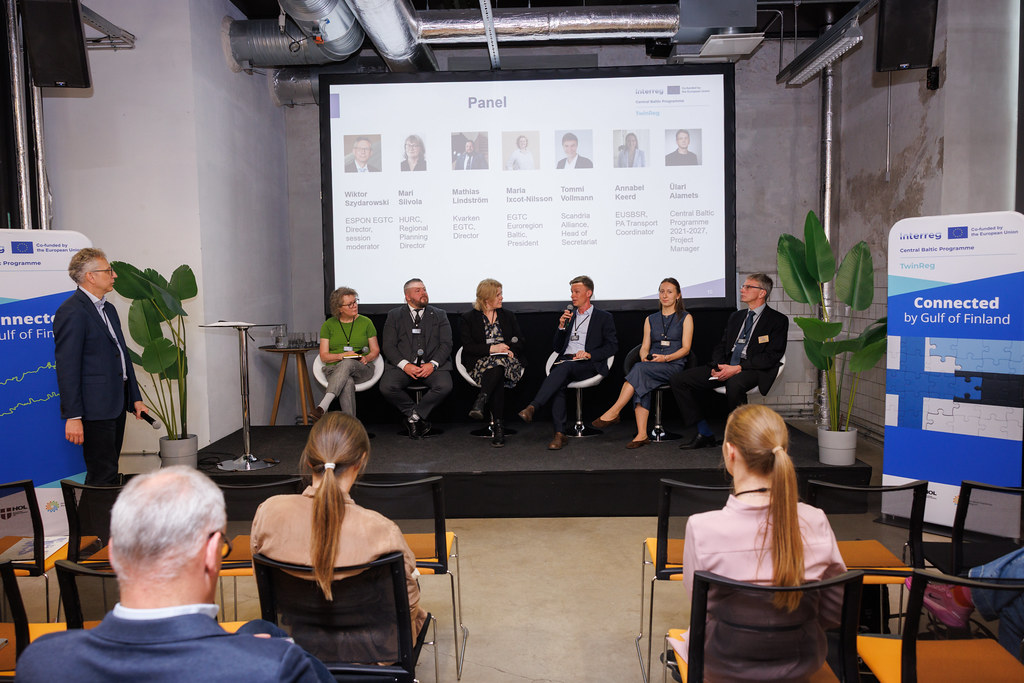
How can cross-border cooperation strengthen resilience and bridge the gap between regional realities and macro-regional/EU-level frameworks? At the EUSBSR Annual Forum 2026, Interreg Central Baltic Programme project TwinReg organised the breakout session “Mind the Gap”, that brought together key actors from across the Baltic Sea Region to explore this question.
Moderated by Wiktor Szydarowski, Director of ESPON EGTC, the session provided a dynamic platform for exchanging perspectives on how governance structures can better connect local, regional, and macro-regional levels. The discussion highlighted that resilience—whether in transport, spatial planning, or crisis response—depends on well-functioning cooperation models that extend beyond administrative borders.
The scene was set by Olle Järv, Visiting professor at University of Tartu, with an introduction of results from ESPON CROSSGOV research project on governance mechanisms for cross-border functional areas. This presentation provided further insights into how cooperation structures can support more effective multi-level governance.
The panel discussion featured:
- Mari Siivola, Regional Planning Director, Helsinki-Uusimaa Regional Council
- Mathias Lindström, Director, Kvarken EGTC
- Maria Ixcot-Nilsson, President, Euroregion Baltic EGTC
- Tommi Vollmann, Head of Secretariat, Scandria Alliance
- Annabel Keerd, Policy Areas Transport Coordinator, EUSBSR
- Ülari Alamets, Project Manager, Central Baltic Programme 2021–2027
From Diverse Experiences to Common Priorities
The discussion demonstrated the value of diverse cross-border experiences and concrete examples in shaping more effective cooperation. Panelists emphasized that choosing the right cooperation structures—such as EGTCs or thematic alliances—can significantly improve coordination, trust-building, and long-term impact. A key takeaway was the importance of focusing on shared priorities.
While regional contexts vary, identifying common challenges—particularly in transport connectivity, resilience, and regional development—enables more coherent and impactful actions across borders.
Cross-Border Cooperation as a Foundation for Resilience
Participants stressed that cross-border cooperation is not only a tool for project-based collaboration but a fundamental building block of regional resilience. Effective cooperation structures enable:
- coordinated responses to disruptions,
- continuity of essential connections across borders, and
- joint development of long-term solutions.
The discussion also highlighted that co-operation must be understood broadly—as the capacity to adapt, cooperate, and respond collectively to evolving challenges.
A central theme of the session was the persistent gap between regional needs and macro-regional/EU-level policy frameworks. Panelists discussed that regions and their cooperation structures play an important role in generating practical solutions, yet their insights are not always sufficiently reflected at higher policy levels.
Looking Ahead: Continuing the Dialogue
The session was marked by an open and constructive exchange, underlining the strong cooperation culture in the Baltic Sea Region. Participants agreed that continued dialogue and knowledge-sharing are important or refining cooperation models and strengthening links between levels of governance.
The insights also highlighted the relevance of better co-operation in functional areas such as the Helsinki–Tallinn metropolitan region, which can benefit from existing experiences when developing its own cross-border cooperation structures and defining common priorities.
Strengthening these connections will be key to building a more resilient, integrated, and future-ready Baltic Sea Region.
Annual Forum 2026 parallel sessions
The regional recipe for a strategic environmental assessment in maritime spatial planning
Hidden treasures of the Baltic Sea and where to find them
SmartAging 2040 – Ageing as a driver of resilience in the Baltic Sea Region
Ukraine cooperation at local level – from crisis response to practical capacity-building
Flood simulation exercise showcases crisis response roles
Resilience is built, not assumed – sustaining the health and care workforce under pressure
Mind the Gap – Permanent Cross-Border Platforms as silo-breakers between Regions and the EU
Advancing Spatial Resilience in the Baltic Sea Region
How can regional food systems contribute to Nordic and Baltic resilience?
Strengthening crisis communication and cooperation in the Central Baltic Region
Co-creating Resilience – How Interreg Cooperation Helps the Baltic Sea Region Stay Strong Together