
 Back
BackBaltic Sea Region cooperation contributes to the recovery of Ukraine
Russia’s unprovoked and unjustified war of aggression against Ukraine has prompted a significant re-evaluation of EU and regional strategic priorities and goals. Contributing to the recovery of Ukraine has been one of the priorities of the EU Strategy for the Baltic Sea Region (EUSBSR) since December 2022, when the first initiatives for cooperation between the Baltic Sea Region and Ukrainian stakeholders were launched.
The updated Action Plan, approved by the National Coordinators Group on 3 March 2026, reinforces the commitment to strengthen cooperation between the Baltic Sea Region countries and Ukraine.
EU membership comes with several requirements related to environmental standards and practices. Reconstruction efforts should not only consider existing standards but also future developments. The EUSBSR provides a unique platform to prepare Ukraine by building local-level know-how now, so that future reconstruction meets tomorrow’s standards. Constructive cooperation with neighbouring countries – including Ukraine – remains a fundamental principle guiding the implementation of the Strategy.
Saving the sea together – environmental cooperation
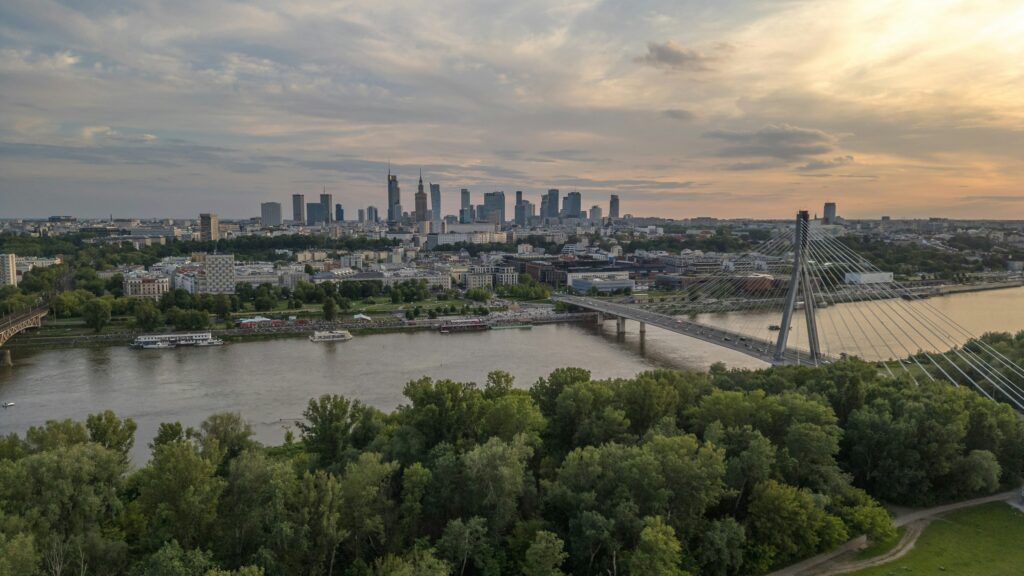
A part of Ukraine around the city of Lviv belongs to the catchment area of the Baltic Sea through the Vistula River, making cooperation on wastewater treatment, nutrient flows, hazardous substances and bioeconomy particularly relevant. Policy Areas Nutri, Hazards, Ship and Bioeconomy continue to join forces to address these topics. Concrete progress between 2022 and 2025 includes:
The Clean Baltic Source project, initiated by Policy Area Nutri, received seed funding from the Swedish Institute’s Baltic Sea Neighbourhood Programme in June 2023 to modernise wastewater treatment in the Lviv region – one of the HELCOM hot spots for pollution to the Baltic Sea. The follow-up project LIFE Ukrainian Urban Water Management Capability Springboard, coordinated with the Finnish Water Forum, received a positive funding decision in January 2025 and entered the contracting phase.
The project Achieving Zero PFAS, supported by the Swedish Institute, is connected to the Baltic Sea PFAS Network and Policy Area Hazards, as well as a part of the HAZGONE project platform. The project aims to take action against PFAS by facilitating cooperation and knowledge-sharing among the partners, coming from Sweden, Finland, Germany, Lithuania and Ukraine (Lviv Polytechnic National University). The project will educate students and share methods for upgrading of wastewater treatment plants. A baseline and PFAS strategy will be developed.
The updated Action Plan explicitly embeds cooperation with the Lviv region into wastewater agenda and mentions Ukraine as a neighbouring region of particular importance. Ukraine is also encouraged to participate as an observer in the working groups of the Baltic Marine Environment Protection Commission (HELCOM), enabling it to monitor progress and identify suitable cooperation partners.
Civil protection and societal resilience
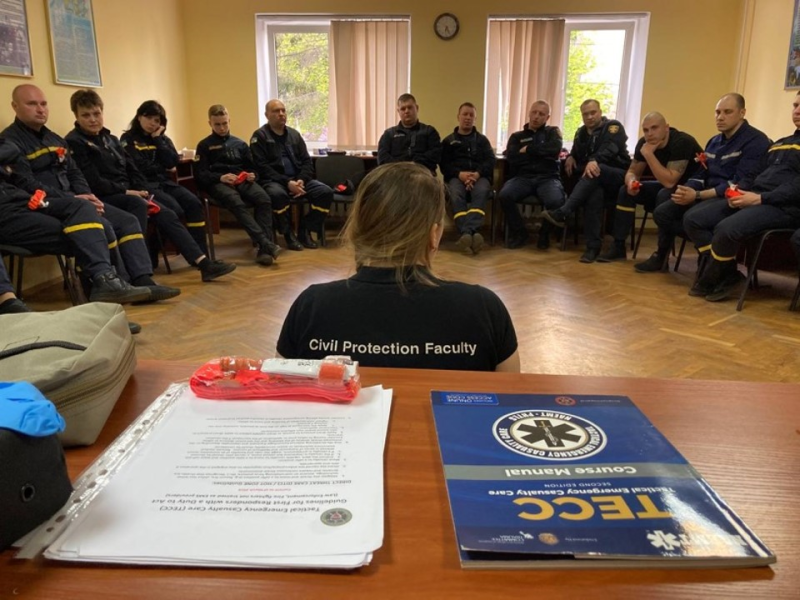
Building on the Swedish Civil Contingencies Agency’s (MSB) initiative to train Ukrainian medics, Policy Areas Secure and Education jointly launched the Civil Protection Faculty project in September 2023 – funded by the Swedish Institute. The project resulted in the establishment of the faculty at Vovchok Folk High School, a non-formal education and the first such school in Ukraine. The faculty provide educations in tactical and emergency medicine, mine safety, and psychological resilience. Close to 100 000 Ukrainians have so far been trained by the faculty.
Policy Area Education supports active citizenship in line with the updated Action Plan. A network of Folk High Schools in Denmark, Finland, Norway, Poland, Sweden and Ukraine has been launched in 2025 with two objectives: to share experiences on how Folk High Schools support local development and to support the establishment of Folk High Schools in Ukraine. Folk High Schools play an important role in democratic schooling engaging people in societal development.
The project RiA-ENGAGE Resilience in Action – Advancing Disaster Preparedness through Civil Society Engagement has introduced a strong Ukraine perspective into Baltic Sea Region volunteerism work and supports mutual learning on volunteer–authority cooperation models. The BALTinnoSEC initiative included a delegation from the Ukrainian State Emergency Service sharing crisis and risk communication experience from wartime conditions.
Policy Area Health engages with Ukrainian partners on societal resilience and health across several of its activities, particularly through three projects. The Latent Tuberculosis Infections Inventory (LTBI) project, funded by the Norwegian Ministry of Health and Care Services, mapped Tuberculosis Infection management across the Nordic-Baltic countries, as well as in Ukraine and among Ukrainian refugees, generating evidence-based policy advice and strengthening cooperation between Nordic-Baltic and Ukrainian experts. Effectively Prepared in Crisis (EPIC), funded by the Swedish Institute, strengthens the resilience of the health and care workforce in the Baltic Sea Region, drawing on lessons from Ukraine. ArtWell Net (Arts for Health and Well-being Network), also Swedish Institute-funded, brings the Kolomyia City Council together with partners from Sweden and Poland to use arts- and culture-based approaches for mental well-being, social connection, and community resilience.
The 2026 Action Plan reflects these experiences, noting that drawing on lessons from crisis-affected areas such as Ukraine strengthens preparedness systems and ensures that mental and physical well-being is systematically integrated into resilience planning.
Transport – a new North-South orientation
The profound impacts of the war have realigned transport priorities from an East–West to a North–South orientation. Policy Area Transport has organised ministerial meetings between Estonia, Latvia, Lithuania and Poland on transport cooperation with Ukraine. Policy Area Transport also supports the launch of Ukraine Transport Support Fund, which was discussed at the International Transport Fund – a high-level meeting for ministers and transport leaders from Ukraine, the European Union and other countries.
The updated Action Plan explicitly extends the North–South corridors to include linkages to Ukraine, the European Arctic and the EU neighbourhood, and identifies growth in trade volumes along the Solidarity Lanes with Ukraine as an expected long-term impact.
Energy security, resilience and sustainable transition
Cooperation with Ukraine is increasingly relevant in light of the current geopolitical context and the urgent need to ensure secure, reliable, and diversified energy systems. Policy Area Energy supports knowledge exchange and dialogue on topics such as energy infrastructure protection, system resilience, renewable energy integration, and regional cooperation mechanisms.
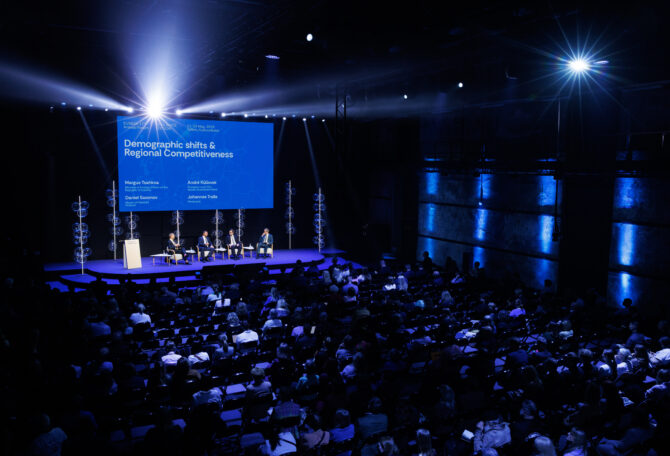
Recent engagement highlights include the EUSBSR Annual Forum on May 12, 2026, in Tallinn, where during the session Defending energy infrastructure – Baltic Sea region responses to hybrid and geopolitical threats, speakers explicitly addressed the topic of energy infrastructure security, underscoring its critical importance in the broader Baltic Sea Region and beyond, including Ukraine. Ukrainian perspectives and the wider regional implications of safeguarding critical energy infrastructure were reflected in the discussions, fostering mutual understanding and identifying shared challenges and cooperation opportunities.
Education, research, health and maritime cooperation
Policy Area Education cooperates with the Ministry of Education and Science of Ukraine, co-coordinator of People and Skills in the EU Strategy for the Danube Region. Area of cooperation is primarily adult education. The Baltic Science Network strengthens cooperation in peace and conflict research, including with the Institute for Peace Research and Security Policy at the University of Hamburg.
Policy Area Maritime Safety supports Ukrainian maritime students in completing their studies in Baltic Sea Region countries.
Policy Area Transport continues to promote the Ukrainian Maritime Recovery Plan (jointly developed by Estonia and Ukraine) by informing the new interested parties at the Ukraine Recovery Conference 2026.