
 Back
BackAnnual Forum 2026: Creative economies in the Baltic Sea Region – what regions gain from deeper connection and active cooperation
Smart Specialisation Strategies (S3) aim to strengthen regional competitiveness by building on local strengths and fostering innovation through collaboration. Increasingly, there is recognition that these strategies would greatly benefit from embracing the creative economy. Yet across the Baltic Sea Region and beyond, creative and cultural industries (CCI) still struggle to find a clear and consistent place within regional planning. This creates a paradox; Creative ecosystems are already contributing to talent retention, startup creation, and regional attractiveness, but they often remain only loosely connected to the strategic frameworks that are meant to guide regional development.
The REAVES platform project, which brings together 22 initiatives across Europe, offers a useful lens on this issue. Focusing on film, games, and music, REAVES highlights industries that combine artistic creativity with technological innovation, operate in global markets, and depend on strong digital skills. These are not marginal sectors but dynamic, business-driven parts of regional economies that rely on continuous interaction between companies, universities, public authorities, and support organisations.
Ecosystems as the True Driver of Creative Growth
What becomes evident through this work is that the real strength of CCI lies not in individual actors or projects, but in ecosystems—interconnected networks that enable knowledge exchange, experimentation, and growth. However, while these ecosystems exist and function in practice, their role is often insufficiently recognised in regional strategies.
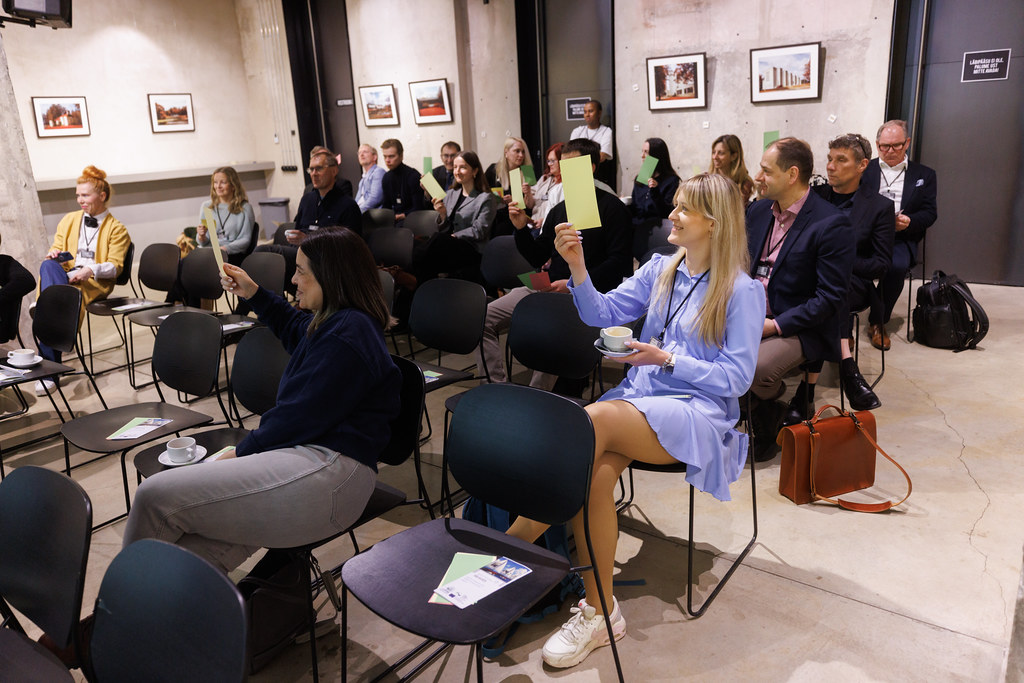
This became particularly clear during a breakout session organised at the European Union’s Strategy for the Baltic Sea Region Annual Forum when participants were invited to reflect on their own regional realities. The discussion was guided by three simple but revealing questions: who are the key drivers of CCI in your region, what kind of strategic initiatives are in place, and if none, how could the situation be improved?
What emerged across the discussion was strikingly consistent. Regions do not lack creative activity. Instead, they often lack shared visibility and strategic alignment. Participants could identify vibrant communities, entrepreneurial actors, educational hubs, and networks, yet struggled to connect these elements to formal planning frameworks. In some cases, initiatives existed but were fragmented; in others, they were largely informal or dependent on individual actors rather than structured support.
A key takeaway from the session was the need to strengthen dialogue and raise awareness among policymakers. Without a clearer understanding of how CCI ecosystems operate and who is active in them they remain difficult to position within regional priorities. As a result, even strong ecosystems risk remaining peripheral to decision-making processes. The consequence is a familiar pattern: ecosystems exist but are not systematically mapped; actors collaborate but are not strategically coordinated; value is generated but not fully recognised. In other words, CCI are present in regions, but not fully visible in regional economies and strategic economic planning.
Public Authorities as Ecosystem Facilitators
The REAVES perspective suggests that addressing this gap requires a shift from focusing on individual projects towards enabling ecosystems. Creative economies do not develop through isolated interventions but through long-term investments in networks, skills, infrastructures, and collaboration. This includes education pathways, incubators, community-building activities, and platforms for exchange between sectors. Where public authorities, universities, and industry actors have built sustained connections, creative ecosystems have led to tangible outcomes—new companies, job creation, and increased regional attractiveness. These developments are not accidental; they result from recognising the ecosystem as a whole and supporting it accordingly.
In this context, the role of public authorities becomes critical. Beyond funding, they act as facilitators of cooperation, enablers of networks, and coordinators of long-term development processes. This aligns directly with the quadruple helix model, where innovation emerges from the interaction between public sector, academia, industry, and citizens.
Returning to the questions raised in the breakout session, the path forward becomes clearer. Regions need to better understand their own ecosystems: who the key actors are, how they are connected, and where opportunities for collaboration lie. Stronger links between creative communities and policy processes can ensure that insights from practice inform strategic decisions – CCI should not be perceived as a ‘one’ nor as an add-on, but as integral to achieving broader goals such as innovation, employment, and regional attractiveness through building on regional strengths and cross-sectoral synergies.
Annual Forum 2026 parallel sessions
The regional recipe for a strategic environmental assessment in maritime spatial planning
Hidden treasures of the Baltic Sea and where to find them
SmartAging 2040 – Ageing as a driver of resilience in the Baltic Sea Region
Ukraine cooperation at local level – from crisis response to practical capacity-building
Flood simulation exercise showcases crisis response roles
Resilience is built, not assumed – sustaining the health and care workforce under pressure
Mind the Gap – Permanent Cross-Border Platforms as silo-breakers between Regions and the EU
Advancing Spatial Resilience in the Baltic Sea Region
How can regional food systems contribute to Nordic and Baltic resilience?
Strengthening crisis communication and cooperation in the Central Baltic Region
Co-creating Resilience – How Interreg Cooperation Helps the Baltic Sea Region Stay Strong Together