
 Back
BackAnnual Forum 2026: How can regional food systems contribute to Nordic and Baltic resilience?

The parallel session “How can regional food systems contribute to Nordic and Baltic resilience?” aimed to set up the scene and dynamically discuss long–term regional food systems resilience and preparedness in the Nordics and Baltics.
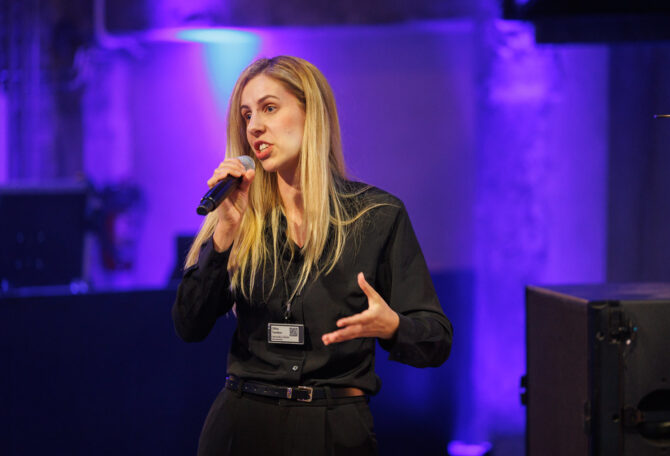
Recognizing the siloed sectoral approach to food policies, 4 experts coming from Nordic and Baltic countries – Silvia Gaiani (Ruralia Institute, University of Helsinki), Aleksandra Kekkonen (Estonian Business School), Torfi Johannesson (Nordic Insights, Denmark) and Ants-Hannes Viira (Centre of Estonian Rural Research and Knowledge) with the moderation of Jennifer Avci (Sustainable Gastro, Lithuania) – have given place to an interesting debate among themselves and the audience.
Relevant activities like EUSBSR Action Plan and RegioFoods project – a recent funded project in the framework of FutureFoodS – were quickly introduced, so to sparkle discussion on how food supply chains could be made more adaptive, self-reliant, and sustainable in the face of crises such as climate shocks, geopolitical tensions, pandemics, and energy disruptions. Short supply chains and increased local production, processing, and distribution capacity may, as a matter of fact, reduce vulnerability to disruptions in global trade, shipping, or international conflicts.
What emerged as an important topic is the need to increase Nordic and Baltic ecological resilience by promotingdiversified farming, shorter transport distances and circular use of nutrients and waste streams. Based on a short mentimeter survey shared with the audience, participants agreed that a Nordic Baltic unified approach to sustainable and resilient food system might be possible and that some strategies should be put in place to make it possible, for instance focusing on coordinated crisis preparedness, common resilience indicators, regional planning through 2050 and the exchange of data and best practices.
A networked resilience model where Nordic and Baltic countries can support one another during shortages or disruptions was suggested to be put in place. A strong Nordic–Baltic cooperation is key to be able to adapt to future crises.
Annual Forum 2026 parallel sessions
The regional recipe for a strategic environmental assessment in maritime spatial planning
Hidden treasures of the Baltic Sea and where to find them
SmartAging 2040 – Ageing as a driver of resilience in the Baltic Sea Region
Ukraine cooperation at local level – from crisis response to practical capacity-building
Flood simulation exercise showcases crisis response roles
Resilience is built, not assumed – sustaining the health and care workforce under pressure
Mind the Gap – Permanent Cross-Border Platforms as silo-breakers between Regions and the EU
Advancing Spatial Resilience in the Baltic Sea Region
How can regional food systems contribute to Nordic and Baltic resilience?
Strengthening crisis communication and cooperation in the Central Baltic Region
Co-creating Resilience – How Interreg Cooperation Helps the Baltic Sea Region Stay Strong Together