
 Back
BackAnnual Forum 2026: Hidden treasures and where to find them
Do you know where all the treasures are hidden? That is the question raised in the Annual Forum session “Hidden treasures of BSR – munitions and wrecks in the sea: risks, challenges and solutions” organised by the Interreg South Baltic programme.
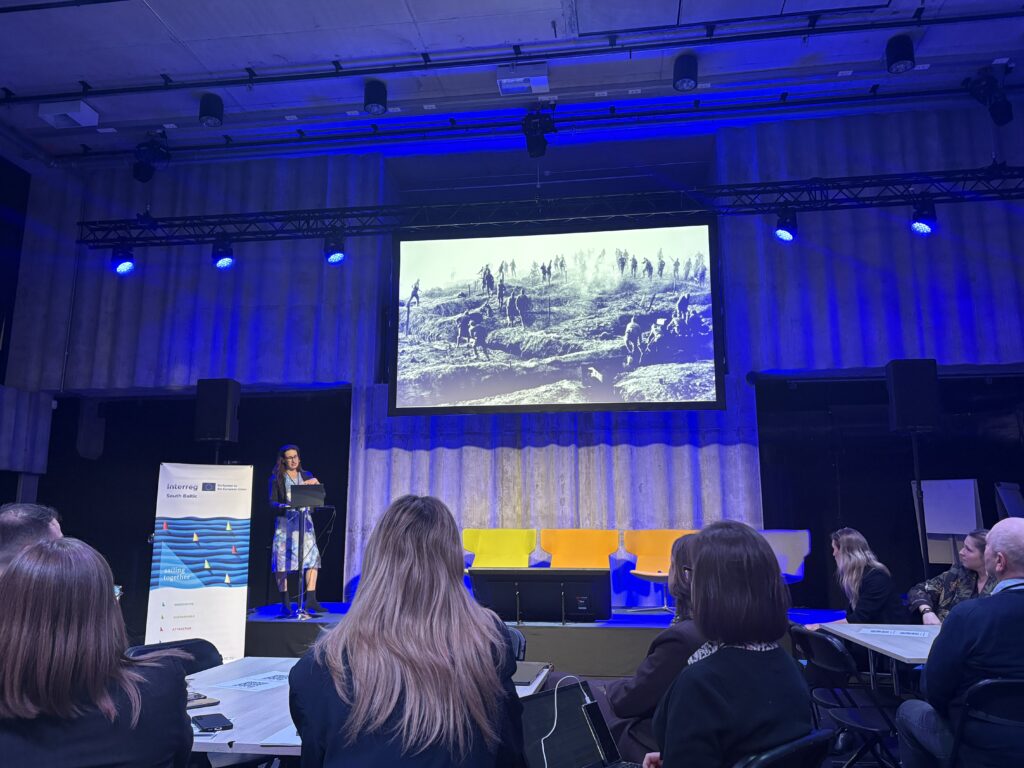
The session was facilitated by Katarzyna Fidler, MUNIMAP project coordinator, who takes us on a historical journey to learn more on how the munition ended up in the dumping sites. It is estimated that the Baltic and North Sea have 1.6 tonnes of UXO (unexploded ordnance) and 40.000 tonnes of chemical munitions. It poses a threat to the marine environment and human health, as well as a real challenge to blue economy activities and marine spatial planning.
“EUSBSR welcomes the joint action by projects, to speak with one voice, which will convey a stronger message towards decision-makers.” Louise Floman, Policy Area Coordinator, PA Hazards
Remediation, and its related policy, is scattered across policy fields as well as how it is implemented across the Baltic Sea Region. The session highlighted a few good examples, as well as suggesting a way forward.
Nora Klasen demonstrated the example of Mecklenburg-Vorpommern, Germany. Through targeted work, the state has developed an action plan, aiming at maintaining biodiversity and marine environmental protection, whilst also building up a centre of excellence for unexploded ordnances. In August 2025, for the first time in Germany and possibly in the Baltic Sea Region, dumped munitions were remediated for the purpose of environmental protection! There is no legal framework to remediate munitons for environmental reasons, only for threats to human health or infrastructure.
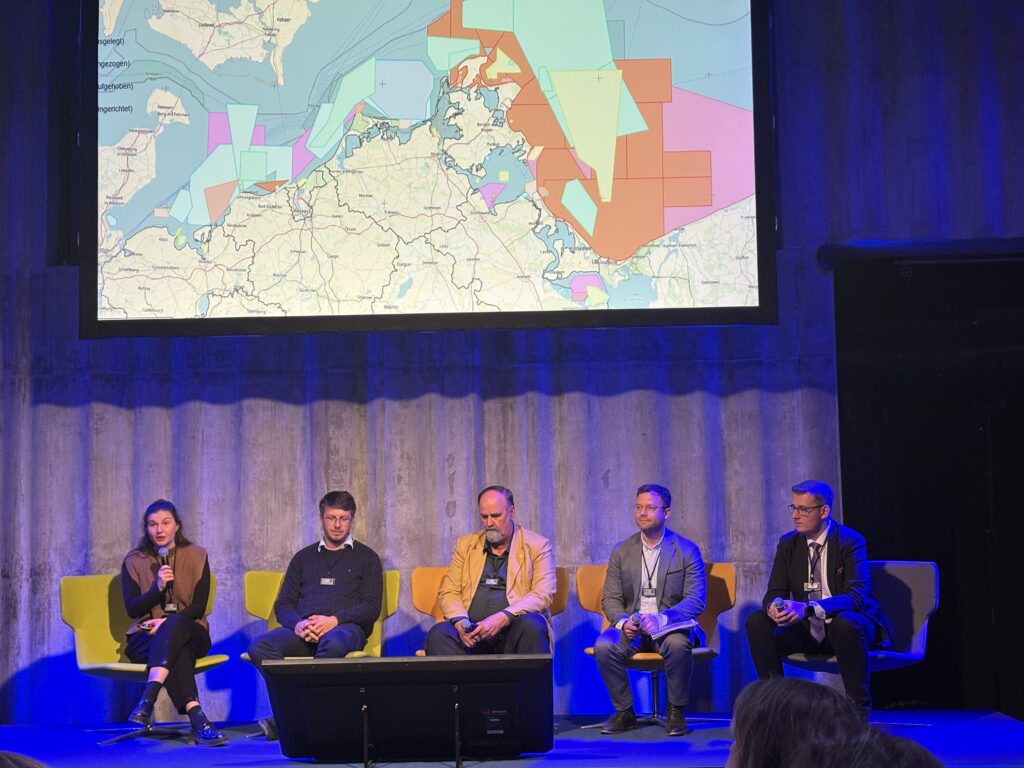
“In August 2025, for the first time, dumped munitions were remediated for the purpose of environmental protection!” Nora Klasen, Ministry of Science, Culture, Federal and European Affairs of Mecklenburg-Vorpommern
The notion of seeing munitions as an environmental problem is an important shift. Michał Czub, from the Institute of Oceanology, Policy Academy of Sciences, expands on how the problem has evolved from being a purely security and hazards issue for the military. The Helsinki Commission (HELCOM) has helped to shift the narrative to consider it also an environmental pollution threat, by demonstrating the effect on the marine environment and making the link from chemical to conventional munitions. The evolution of knowledge has also been pushed by different projects, through modelling, monitoring, remediation, risk assessment and decision-making support tools, as well as filling the science gap and developing Best Environmental Practices and Best Available Techniques for a future remediation.
“We are not doomed, because there is some resilience in nature, and we need to investigate how to support it to fully benefit from it.” Michał Czub, Institute of Oceanology, Polish Academy of Sciences
Nature is resilient, and nature-based solutions could be an option for remediation. MUNIMAP is one of the projects exploring bioremediation/biotransformation to explore how microbes can transform/degrade arsenic compounds derived from chemical warfare agents.
“Combining cross-border efforts allows us to deploy innovative, nature-based solutions where they are needed the most. This is the core value of Interreg: to transform shared environmental challenges into unified, regional action.” Belén Benzaquen, Project Officer of Baltwreck project at ISBP.
BALTWRECK is another project exploring bioremediation as clean-up technology, as well as creating artificial reef to support microbiota communities, as explained by project leader Adam Cenian. It will help to identify the most dangerous wrecks in our waters. “The main goal of the Baltwreck project in the field of bioremediation of toxic fuels is to help microorganisms flourish by protecting them and providing all necessary nutrients – then they do their job!” he explains.
“There are an estimated 8000 wrecks that are potentially dangerous. We cannot tackle all of them, so the challenge is to decide which are the most dangerous.” Adam Cenian, Institute of Fluid-Flow Machinery, Polish Academy of Science
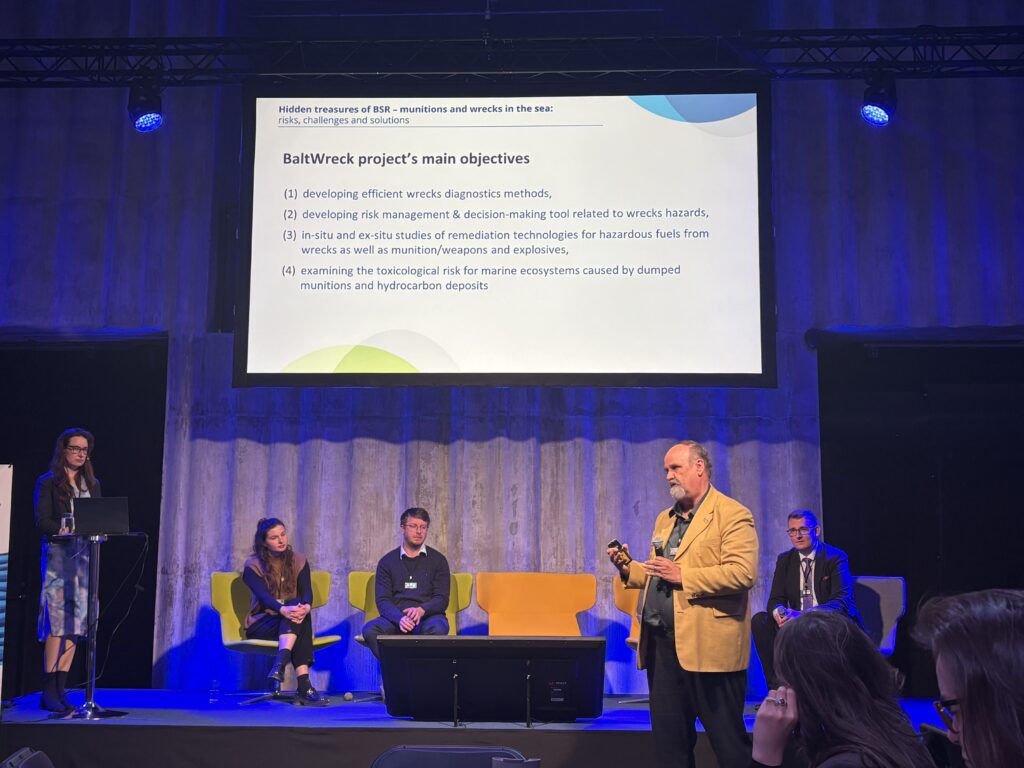
The session also tackled the legal aspects. Erik Hanstein, German Environment Agency (UBA), underlined that although the issue is increasingly well known, many legal aspects have still not been clarified. The Munimap project revealed in its comprehensive legal mapping that there is no clear obligation, nor mandate, to remediate.
“Europe needs a clear legal basis fo raction and a proactive approach to remediation with clear responsibilities.” Erik Hanstein, German Environmental Agency (UBA)
Marcin Żuchowski, Director of Secretariat of the Association of Polish Communes Baltic Euroregion, underlines that the projects work closely together, increasingly not only coordinating but also collaborating and carrying out joint activities, such as joint stakeholder activities or joint contributions to the EU consultation process and co-author scientific publications.
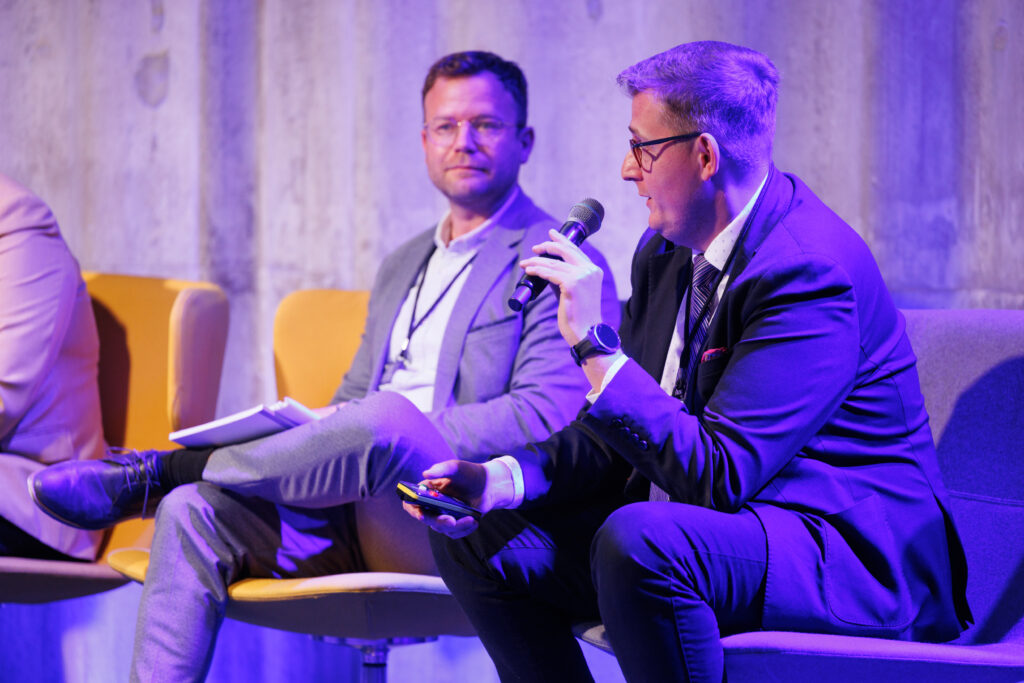
Moreover, munitions are having a moment now at the global and European stage, notably with the European Ocean Pact which foresees a European UXO Removal Strategy. This provides with new opportunities, and the projects working together can create critical mass to make a lasting impact. Policy Area Coordinator Louise Floman underlines that this is an opportunity to get munitions on the agenda for the next EU Multi-financial Framework 2028-2034 – to secure policy relevance as well as future funding!
Annual Forum 2026 parallel sessions
The regional recipe for a strategic environmental assessment in maritime spatial planning
Hidden treasures of the Baltic Sea and where to find them
SmartAging 2040 – Ageing as a driver of resilience in the Baltic Sea Region
Ukraine cooperation at local level – from crisis response to practical capacity-building
Flood simulation exercise showcases crisis response roles
Resilience is built, not assumed – sustaining the health and care workforce under pressure
Mind the Gap – Permanent Cross-Border Platforms as silo-breakers between Regions and the EU
Advancing Spatial Resilience in the Baltic Sea Region
How can regional food systems contribute to Nordic and Baltic resilience?
Strengthening crisis communication and cooperation in the Central Baltic Region
Co-creating Resilience – How Interreg Cooperation Helps the Baltic Sea Region Stay Strong Together