
 Back
BackAnnual Forum 2026: Maritime Safety Risks and Regional Preparedness in the Baltic Sea
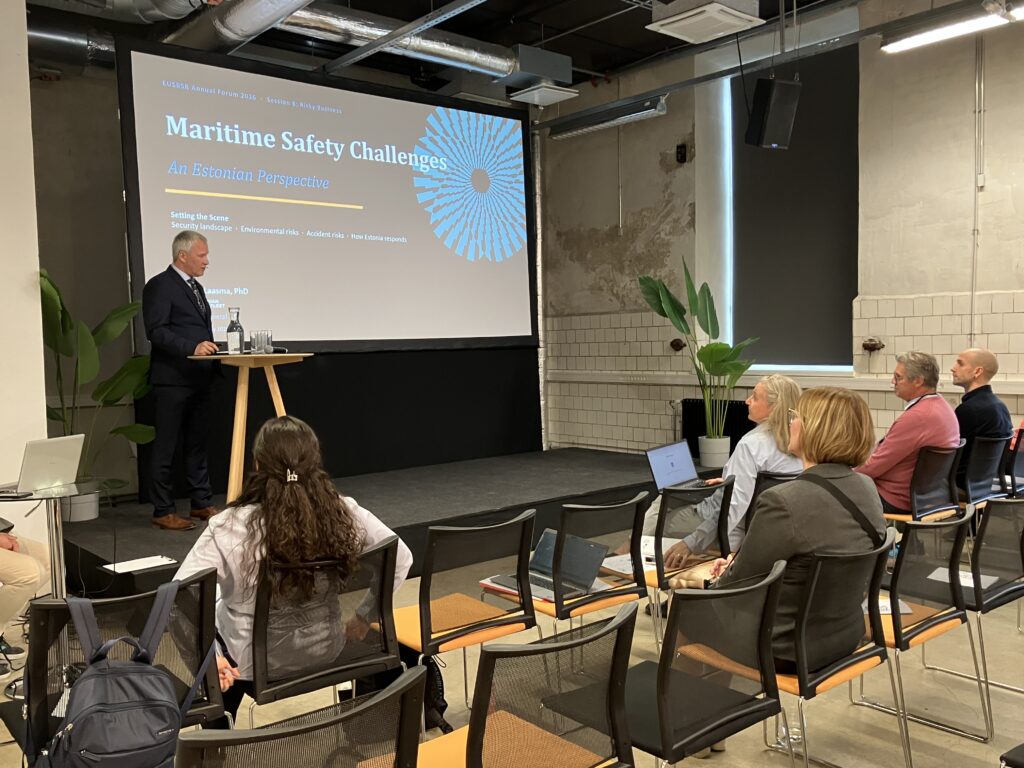
Wide variety of regional stakeholders gathered at the EUSBSR Annual Forum 2026 for the workshop “Risky Business: Strengthening Maritime Safety to Protect the Baltic Sea”. The session focused on emerging maritime safety challenges in the Baltic Sea region, with particular attention to the growing risks associated with shadow fleet operations, environmental accidents, subsea infrastructure security, as well as the need for cross-border preparedness.
The workshop organized by three Policy Areas, Safe, Ship & Transport, and projects BRISK II and OpenRisk II, combined expert presentations, scenario-based discussions, and interactive group work to examine how Baltic Sea countries can strengthen prevention, preparedness, and response capabilities in an increasingly complex geopolitical and environmental landscape.
BRISK II focuses on long-term risk analysis for oil and hazardous and noxious substances (HNS) pollution from shipping accidents to the marine environment in the Baltic Sea, whereas Open Risk II equips maritime authorities and intergovernmental organisations with risk assessment and management tools helping to minimise maritime accidents and their footprint on the marine environment.
The session highlighted how the maritime operating environment in the Baltic Sea is rapidly changing. The scene for the workshop was set by Anders Laasma from the Estonian State Fleet, by bringing forth the current situation and risks regionally. After which the participants discussed the increasing presence of aging shadow fleet vessels operating outside traditional safety and regulatory oversight, alongside growing concerns related to GNSS jamming and spoofing, spontaneous anchorage areas, subsea infrastructure incidents, and the rising of potential oil spills in the Gulf of Finland and wider Baltic Sea region.
During the workshop, participants emphasized that while some maritime risks are relatively new, many are evolving versions of long-standing regional challenges. Discussions underlined that the impacts of a major maritime accident could be severe not only environmentally, but also economically and socially, affecting port operations, tourism, fisheries, and coastal communities for years.
A recurring theme throughout the discussions was the importance of balancing accident prevention with preparedness and response. Participants noted that resilient maritime safety systems require both proactive monitoring and effective emergency response capacity. Several groups highlighted the need for stronger monitoring capabilities through satellite systems, land-based radar, drones, fibre optic technologies, and improved vessel tracking systems to better identify and monitor high-risk vessels and activities in critical maritime transport corridors.
Cross-border cooperation was identified as essential for effective maritime risk management in the Baltic Sea region. Participants stressed that maritime incidents do not respect national borders, making regional coordination, information sharing, and joint operational planning increasingly important. Existing cooperation between Finnish and Estonian vessel traffic service authorities in the Gulf of Finland was highlighted as a positive example of well-established operational collaboration.
The workshop discussions also identified several practical challenges limiting effective risk management. These included limited financial resources, fragmented coordination between authorities, lack of shared data and analytical capacity, and difficulties in obtaining reliable information on shadow fleet vessels. Moreover, the growing trend of the maritime traffic in the Baltic Sea was considered. Participants noted that while substantial amounts of maritime data already exist, there is often insufficient capacity and expertise to process and analyse the information effectively. Artificial intelligence and digital solutions were viewed as potential tools for improving situational awareness and supporting decision-making in the future.
Participants also discussed the role of the BRISK II and OpenRisk II projects in supporting regional maritime safety efforts. The projects were seen as valuable assets for strengthening risk assessment, identifying high-risk areas, supporting preparedness planning, and improving operational decision-making. In particular, participants highlighted the importance of developing a shared and dynamic regional risk picture to support both prevention and response activities across the Baltic Sea region.
Several groups emphasized that oil spill risks will remain relevant even as geopolitical circumstances evolve, reinforcing the importance of continued investment in research, preparedness, and environmental monitoring. Participants also highlighted the need for better dissemination of tools, knowledge, and best practices among all Baltic Sea countries to strengthen common preparedness levels across the region. The workshop concluded with a strong message that improving maritime safety in the Baltic Sea requires long-term cooperation, coordinated investments, and shared regional commitment. Participants agreed that strengthening maritime resilience will depend on the ability of Baltic Sea countries and organizations to work together across sectors and borders in addressing both current and emerging maritime risks.
Annual Forum 2026 parallel sessions
The regional recipe for a strategic environmental assessment in maritime spatial planning
Hidden treasures of the Baltic Sea and where to find them
SmartAging 2040 – Ageing as a driver of resilience in the Baltic Sea Region
Ukraine cooperation at local level – from crisis response to practical capacity-building
Flood simulation exercise showcases crisis response roles
Resilience is built, not assumed – sustaining the health and care workforce under pressure
Mind the Gap – Permanent Cross-Border Platforms as silo-breakers between Regions and the EU
Advancing Spatial Resilience in the Baltic Sea Region
How can regional food systems contribute to Nordic and Baltic resilience?
Strengthening crisis communication and cooperation in the Central Baltic Region
Co-creating Resilience – How Interreg Cooperation Helps the Baltic Sea Region Stay Strong Together