
 Back
BackAdvancing Green Corridors: Hamburg Hosted High-Level Workshop on Energy Transition and Decarbonisation in Maritime Transport
On 23 April 2026, senior representatives from ports, industry, and policy institutions across the Baltic Sea Region convened in Hamburg for the workshop “From Ports to Green Corridors: Energy Transition and Decarbonisation in Transport.” The event took place at the HHLA Container Terminal Tollerort, highlighting Hamburg’s role as a central hub for sustainable maritime innovation.
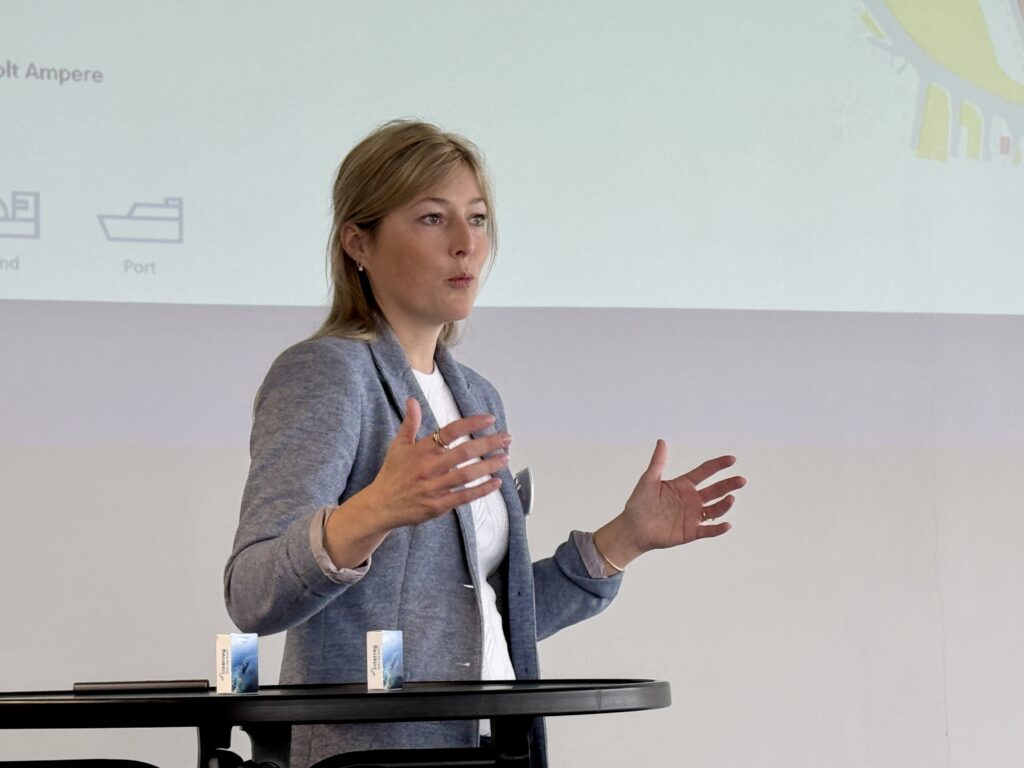
Participants highlighted the need for long-term regulatory stability as a central driver of ecarbonisation and energy transition, alongside stronger regional collaboration to share best practices, coordinate investments, and develop scalable solutions. Discussions also emphasised the importance of further promoting efficiency gains and ensuring continued funding for pilot projects and green innovation. A key takeaway was that sustainable port and logistics infrastructure are essential contributors to a resilient Baltic Sea Region.
The workshop was organised by the Free and Hanseatic City of Hamburg – Senate Chancellery – Baltic Sea Strategy Point in cooperation with Port of Hamburg Marketing, with kind support from Hamburger Hafen und Logistik Aktiengesellschaft.
Strategic Focus on Decarbonisation and Cooperation
Ports are critical geopolitical assets and key enablers of Europe’s energy transition. Against this backdrop, the workshop aimed to strengthen the visibility of port-related challenges within the EU Strategy for the Baltic Sea Region and to foster enhanced cross-sectoral collaboration among policy areas such as energy, transport, safety, and shipping.
The programme featured a series of expert-led sessions addressing both operational realities and long-term transformation pathways. Discussions focused on:
- The current status of decarbonisation efforts at the Port of Hamburg, including investments in onshore power supply, alternative fuel infrastructure, and green shipping corridors
- Market perspectives on emerging fuels such as methanol, ammonia, and hydrogen
- The role of hinterland connectivity and rail infrastructure in enabling sustainable logistics chains
- Efficiency gains through digital coordination and cross-sector collaboration
- Operational challenges in decarbonising shipping from an industry perspective
Platform for Policy Dialogue and Regional Alignment
The event also examined how the Strategy could further evolve to support more effective and sustained cooperation across sectors and national boundaries. Particular emphasis was placed on developing scalable project ideas and strengthening institutional linkages between stakeholders.
Facilitating Exchange Between Industry and Policymakers
By bringing together port authorities, logistics operators, energy providers, and policymakers, the workshop served as a targeted platform for knowledge exchange and strategic alignment. The format combined expert presentations, moderated discussions, and interactive sessions designed to generate concrete outcomes and cooperation opportunities.
The programme concluded with a guided harbour boat tour hosted by Port of Hamburg Marketing, providing participants with direct insight into port operations and ongoing transformation efforts.
The Hamburg Senate Chancellery coordinates Hamburg’s engagement in the EU Strategy for the Baltic Sea Region, fostering transnational cooperation and policy integration. Port of Hamburg Marketing supports the international positioning of the Port of Hamburg and facilitates dialogue between stakeholders in maritime logistics.