
 Back
BackImplementing the EU Strategy for the Baltic Sea Region is an act of resilience
On 3 March, the National Coordinators Group approved the updated Action Plan for the EU Strategy for the Baltic Sea Region. The Action Plan serves as a roadmap for transnational cooperation and EU funding institutions in the Baltic Sea Region. The paradigm shift is clear: Member States have elevated resilience to the centre of transnational cooperation.
Putting resilience at the centre
The update of the EU Strategy for the Baltic Sea Region Action Plan responds to key challenges faced by the Baltic Sea Region, including a rapidly evolving security environment and increasingly complex multi-hazard risks: accelerating climate change and persistent environmental pressures, demographic change, and the demands of the green and digital transitions. Most importantly, the Action Plan aims at strengthening the Baltic Sea Region’s resilience in a comprehensive and holistic manner.
The Action Plan is an outcome of experts from over 100 ministries, national agencies and EU institutions working together to find a consensus and to build the roadmap for transnational cooperation which will benefit the whole region. The Member States have now submitted the Action Plan to the European Commission for an interservice consultation before its final approval and publication later this year.
All 14 Policy Area Contribute to resilient societies in the Baltic Sea Region
In the consultations that led to the updated Action Plan with 14 thematic Policy Areas, ministries and other institutions reflected the concept of societal resilience, recognising the interlinkages between climate, security, digital and socio-economic risks. This helps to ensure that the cooperation framework remains robust and that the Member States are better equipped to anticipate and respond to any disruptions. The coordinated regional response to shared risks reinforces the EU security and resilience strategies.
It is apparent that no clear division can or should be made between the thematic areas: The challenges in the region are interlinked, and maintaining resilient societies demand a holistic approach which leaves no sector or individual behind.
Policy Areas Culture, Education, Health and Secure emphasise the societal aspect of resilience in their Actions: Accessible education, active citizenship skills, sense of belonging and social wellbeing form the foundations of the long-term prosperity, resilience and democratic stability of the Baltic Sea Region.
“Policy Areas Energy, Transport, Maritime Safety and Ship address energy independence and transition, and sustainable transport corridors, including resilience of supply chains across the macro-region. On top of that, Policy Area Bioeconomy, Nutri and Hazards emphasise increased resilience and sustainability in agriculture, forestry and water management. Macro-regional cooperation thus strengthens coherent land- and sea-use planning for sustainable development and resilience towards multiple stressors.
Innovation and economic activity, for instance in the field of tourism, is essential to the macro-region’s competitiveness, resilience and ability to manage climate, digital and demographic transitions.
“Resilience stands at the heart of regional security and shared prosperity. In the Baltic Sea Region, resilience means more than withstanding shocks – it means thriving through them by building the capacity to adapt and collaborate in an era where crises are becoming the new normal.” Chair of the EUSBSR National Coordinators Group, Tõnis Nirk, Ambassador-at-Large for Baltic Sea Cooperation, Ministry of Foreign Affairs of Estonia.
Resilience – Estonian Presidency priority 2025-2026
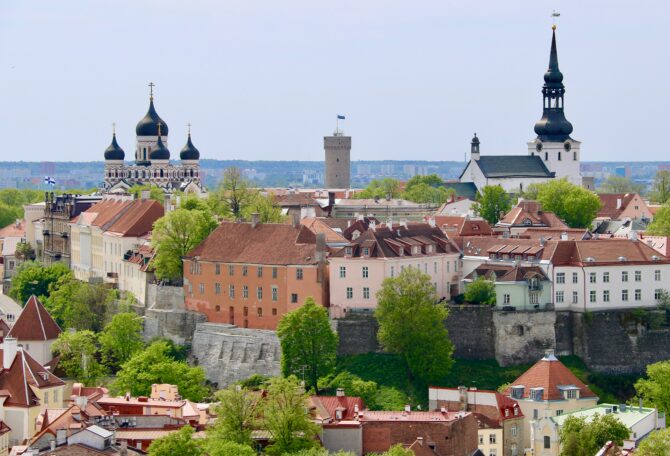
The will and the direction in the Member States is clear, and the emphasis on resilience will not wait until the final approval of the Action Plan by the European Commission. Resilience is one of the Estonian Presidency priorities for 2025-2026 and the main theme of the EUSBSR Annual Forum 2026, hosted by the City of Tallinn. The forum is organised in cooperation with the Council of the Baltic Sea States Secretariat and the Ministry of Foreign Affairs of Estonia. It is the largest annual event in the Baltic Regions, designated for transnational cooperation.
“Resilience stands at the heart of regional security and shared prosperity. In the Baltic Sea Region, resilience means more than withstanding shocks – it means thriving through them by building the capacity to adapt and collaborate in an era where crises are becoming the new normal”, states Chair of the EUSBSR National Coordinators Group, Tõnis Nirk, Ambassador-at-Large for Baltic Sea Cooperation, Ministry of Foreign Affairs of Estonia.