
 Back
BackDanish‑German Project Sparks Real Progress in Business Sustainability
A Danish German partnership has launched GrønBusiness to help small enterprises in both countries take their first steps toward sustainability, offering practical tools and guidance throughout the project period.
GrønBusiness is a Danish‑German collaboration designed to help small and medium‑sized enterprises take their first concrete steps toward sustainable business practices. When the project launched, many SMEs expressed uncertainty about where to begin. Sustainability covers a wide range of topics – from circular economy and supply‑chain requirements to ESG reporting – and expectations are rising. Few businesses felt confident about how to start.
The project partners recognised this challenge. As Anja Kujawski from the North Frisia Economic Development Agency explains, many companies know they must act but lack a clear entry point. GrønBusiness therefore focuses on inspiration, guidance and practical support rather than one‑size‑fits‑all solutions. Each business has its own starting point, and the project aims to provide clarity in a complex field.
To make sustainability tangible, GrønBusiness developed a suite of practical tools tested in both Denmark and Germany. These include an online toolbox, a handbook explaining key concepts, posters, pocket guides, an ESG flyer and complete course materials on ESG and circular economy. These resources help SMEs understand what sustainability means in practice and how it can strengthen their business. As Troels Larsen from Business Esbjerg notes, the materials make it easier for small companies to get started. In several cases, simple behavioural changes have already generated financial savings, such as reduced energy use in local construction firms.
The project’s impact is not measured in CO₂ reductions alone. It is reflected in how business development organisations now advise and support companies. Through GrønBusiness, advisers have gained new tools, methods and perspectives that they apply in their daily work. They help SMEs set priorities, define guidelines and identify their next concrete steps. A key recommendation is to begin by talking to major customers, who increasingly set specific ESG requirements that can help companies identify their own focus areas.
Dialogue and exchange have been central to the project. GrønBusiness has tested a range of formats that bring people together, including Grøn.Impuls Online Breakfasts, Round Table Sustainability Management, Barcamp for Future and CrossBorder Company Meetings. These events foster open discussion, shared learning and long‑term connections. The Barcamp format, in particular, surprised many participants with its energy and openness, demonstrating the value of peer‑to‑peer exchange.
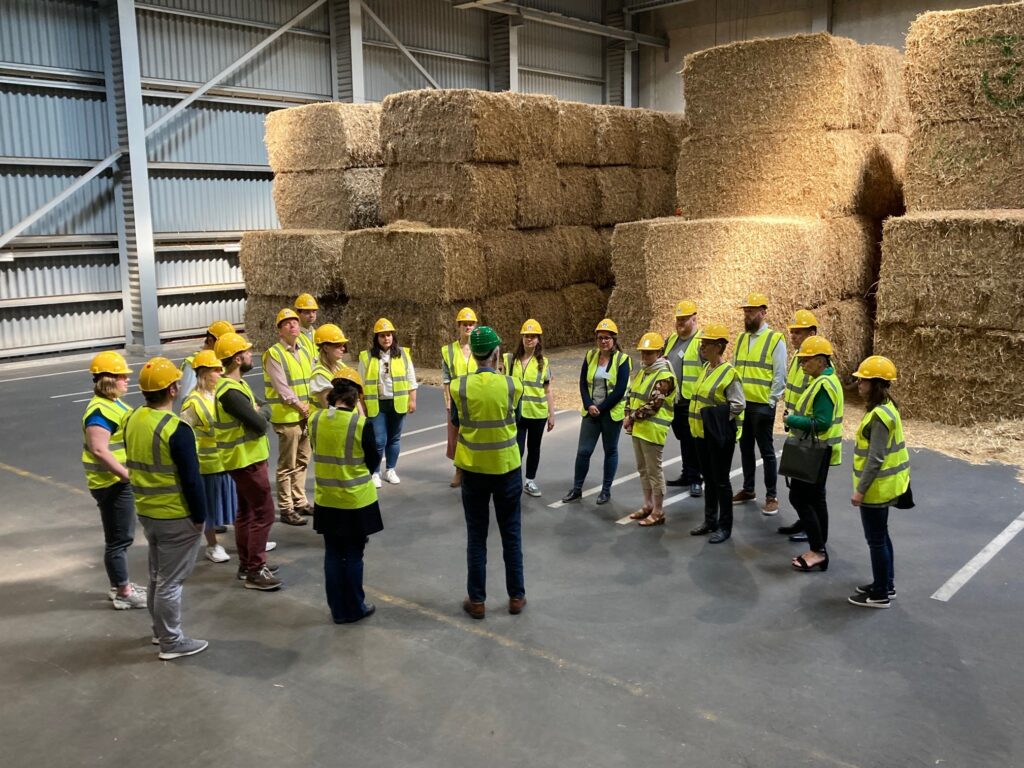
A highlight of the collaboration was the joint visit to Kalundborg Symbiosis, a world‑renowned example of industrial circular economy. Here, companies have exchanged resources, energy and by‑products for decades, creating efficient industrial cycles. The visit inspired both Danish and German partners and illustrated the potential of pragmatic, long‑term cooperation.
GrønBusiness was made possible through EUR 1.8 million in support from Interreg Germany‑Denmark and the European Union. The partnership brings together organisations from both countries, including business councils, universities, municipalities and economic development agencies. According to Project Manager Ines Rüttinger, the cross‑border collaboration has enabled new ways of thinking and working, allowing partners to develop solutions that go beyond national routines.
Through shared learning, practical tools and strong cooperation, GrønBusiness has strengthened the ability of SMEs to navigate the green transition and has built lasting capacity on both sides of the border.