
 Back
BackBuilding the Future Together: VASAB and PA Spatial Planning at the Kick-off of New Interreg BSR Project Platforms
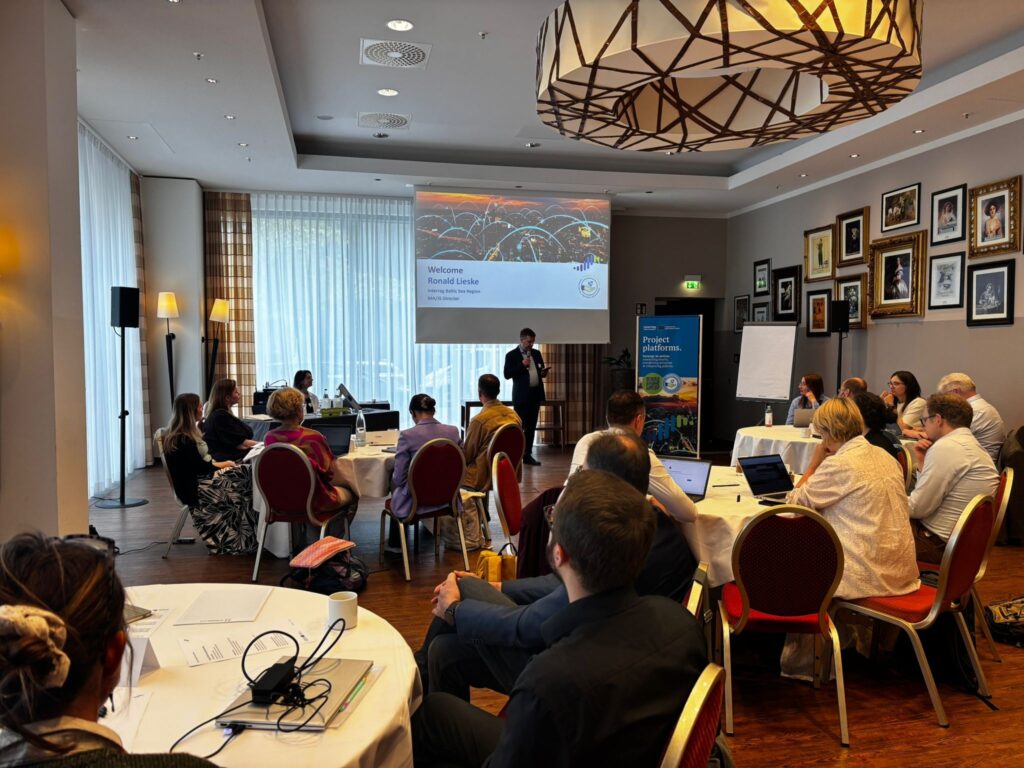
On 9-10 June 2026, Berlin hosted the kick-off meeting for the second call project platforms of the Interreg Baltic Sea Region programme. VASAB Secretariat participated as a Policy Area Coordinator for Spatial Planning and as a project partner, sharing experiences, connecting with new platforms, and reinforcing the role of spatial planning in the Baltic Sea Region’s strategic cooperation.
A New Chapter for BSR Project Platforms
The kick-off meeting brought together five new project platforms selected in the second call as Operations of Strategic Importance (OSI) – programme actions of the highest strategic value, chosen by the Monitoring Committee. They join the eight project platforms selected in the first call, bringing the total number of active OSI project platforms in the Interreg Baltic Sea Region programme to thirteen. The two-day event at the H4 Hotel Berlin Alexanderplatz was organised by the Interreg Baltic Sea Region Managing Authority/Joint Secretariat. The first day focused on supporting platforms in starting their implementation, clarifying expectations, and building a shared understanding of what it means to work as an OSI. The second day offered platforms the opportunity to meet directly with Monitoring Committee members.
Together four platforms contribute directly to the EUSBSR Policy Area Spatial Planning: Baltic PlaNet (Baltic Climate-Resilient Coastal Planning Network), SEABAS (Strategic Ecosystem-Based Planning for a Sustainable Future of the Baltic Sea), BSR Urban Mobility (Enhancing Active and Efficient Urban Mobility in the Baltic Sea Region), and Future Cities (Co-creating the future of BSR cities through culture and civic participation). Together, they mobilise results from more than 36 EU-funded projects and direct them towards public authorities across all Baltic Sea Region countries.
Learning from Experience: VASAB’s Contribution to the Kick-off
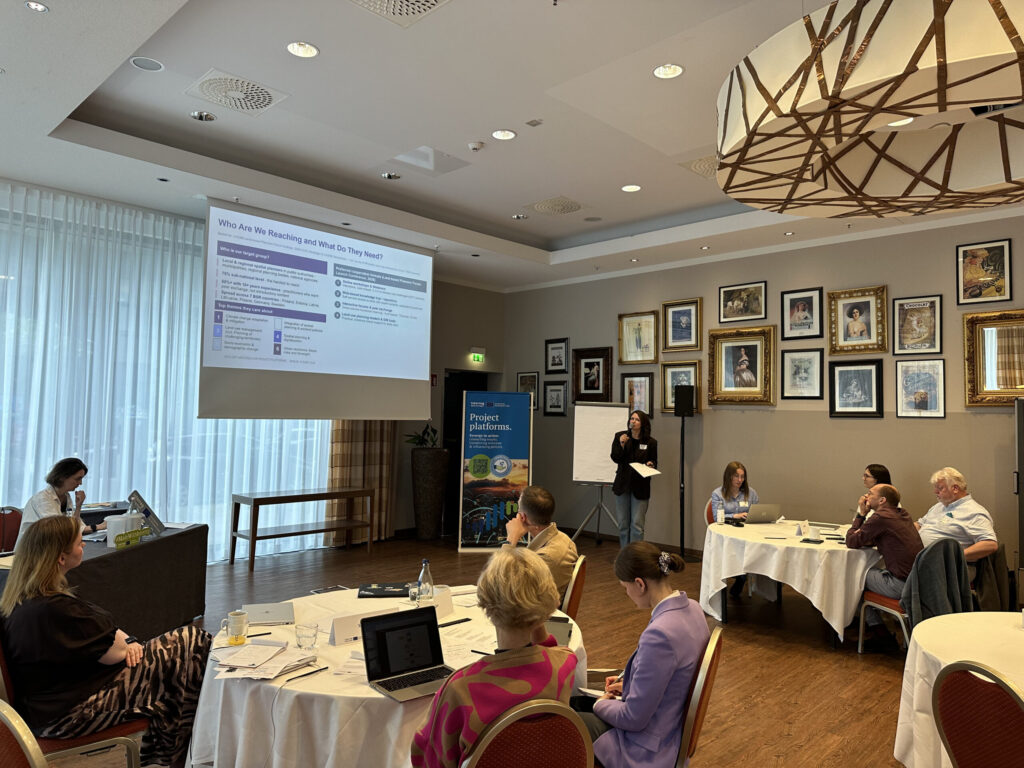
Egija Stapkēviča, Deputy Head of the VASAB Secretariat and Policy Area Coordinator for Spatial Planning, gave a presentation titled “Learning from Experience” during the session “Project platforms: from ambitions to impact.” She spoke from a unique dual perspective – as a Policy Area Coordinator for Spatial Planning and as a project platform practitioner, having served as Lead Partner of the Capacity4MSP project platform (2019-2022) and currently as a partner in the Baltic PlaNet platform, making the case for what cooperation between policy coordinators and project platforms looks like in practice.
The presentation explained why project platforms matter and what it takes to make them work for the right audience. Drawing on VASAB’s own experience of working with PA Spatial Planning’s core target group – spatial planners from all governance levels, it highlighted a persistent challenge: sub-national planners, those working in municipalities and regional authorities, are the hardest to reach through traditional Interreg channels. The presentation then gave context to the findings of the VASAB Land-based Planners’ Forum Feasibility Study, confirmed by planners at the Launch Conference in Tallinn (February 2026): spatial planners across the Baltic Sea Region need up-to-date knowledge on climate adaptation, land use and cross-sectoral integration, and they want to receive it through interactive online workshops, short peer-exchange formats, and practical tools, not lengthy project reports.
Second, the presentation drew on VASAB’s experience as Lead Partner of Capacity4MSP (2019-2022) – a project platform for which VASAB served as Lead Partner – and as partner in Baltic PlaNet (2025 – currently) to share practical lessons on what it takes to synthesise results from multiple EU-funded projects and transfer them to public authorities as usable knowledge, exactly what OSI platforms are selected by the Monitoring Committee to do. Two lessons stood out: agree on a common framework before synthesis begins; and plan dedicated time and budget for turning project outputs into tools that planners can actually use.
Third, the cooperation with PA Spatial Planning was illustrated through concrete examples from three platforms. BSR Urban Mobility highlighted how PA coordination bridges governance levels and brings local needs to the macro-regional discussion, including a joint session at the EUSBSR Annual Forum 2026 in Tallinn. SEABAS described how PA support enables access to macroregional working groups and cross-sea basin dialogues that the platform could not reach alone, directly advancing the Baltic MSP Roadmap 2030 targets. Baltic PlaNet pointed to the network of experts provided through HELCOM and VASAB as consortium partners, joint workshops and publications, and direct stakeholder outreach at EUSBSR events.
The central message of the presentation was clear: Policy Area Spatial Planning is not a reporting obligation. It is a strategic door-opener to the right audiences, policy processes, and expert networks across the Baltic Sea Region. And the relationship works in both directions: platforms give PA Spatial Planning access to practice-based evidence, local-level knowledge, and a growing community of spatial planning professionals.
Spotlight: Future Cities Platform
Among the platforms represented at the kick-off was Future Cities, an Interreg BSR Operation of Strategic Importance led by Heinrich-Böll-Stiftung Schleswig-Holstein and running from July 2026 to December 2028. Future Cities contributes to PA Spatial Planning and PA Culture as relevant EUSBSR policy areas.
The platform brings together the results of successful EU projects, including BSR Cultural Pearls, Liveability, CCI4Change, NEB-STAR and EDITUA, that have tested innovative approaches to civic participation, using culture, creativity and design to strengthen urban resilience. Its partners include the Council of the Baltic Sea States (CBSS), the Northern Dimension Partnership on Culture, the Baltic Sea Cultural Centre in Gdańsk, the City of Espoo, Nordic Edge, the Estonian Academy of Arts, and Ars Baltica.
Future Cities Platform challenges directly relevant to spatial planning: small and medium-sized cities across the Baltic Sea Region face growing pressure on multiple fronts, responding to climate change, rebuilding social cohesion, maintaining trust in public institutions, and delivering liveable, inclusive urban environments, often with limited resources. Many local authorities and civil society organisations want to work in more participatory and people-centred ways but lack the practical methods or political backing to do so. Future Cities Platform turns culture and civic co-creation into practical tools for building stronger, more resilient societies.
The platform will deliver four core outputs: a Future Cities Playbook – a practical guide for creating a shared city vision and turning it into action; a portfolio of tested tools for cultural and participatory urban work; a peer-learning community for cities and NGOs; and a policy brief on why culture and creativity are strategic investments for urban resilience and liveability.
For PA Spatial Planning, Future Cities Platform represents an important complement to ongoing platforms: it brings the perspective of civil society, culture and citizen participation into the spatial planning ecosystem, connecting planning processes to the communities they serve.
What This Means for PA Spatial Planning
The Berlin kick-off reinforced a key insight from VASAB’s experience: the value of project platforms flows in both directions. Platforms gain policy legitimacy, access to expert networks, and channels to reach the right target audiences. PA Spatial Planning gains a living implementation of its EUSBSR Action Plan commitments, a direct channel to local and regional planners, and a growing community of practice that will outlast individual project cycles.
The EUSBSR Action Plan 2026, approved by the National Coordinators Group on 3 March 2026 and pending European Commission publication, sets the overarching goal for PA Spatial Planning: strengthening coherent land- and sea-use planning for sustainable development in the Baltic Sea Region. The three platforms – Baltic PlaNet, SEABAS and BSR Urban Mobility, are now among the most concrete expressions of how that goal translates into action on the ground.
Future Cities adds another dimension: demonstrating that sustainable spatial development is not only an institutional responsibility, but a shared one – requiring the active participation of the communities that live, work and plan together in BSR cities.
Related content