
 Back
Norway’s EUSBSR accession opens new opportunities for cooperation in education and social inclusion
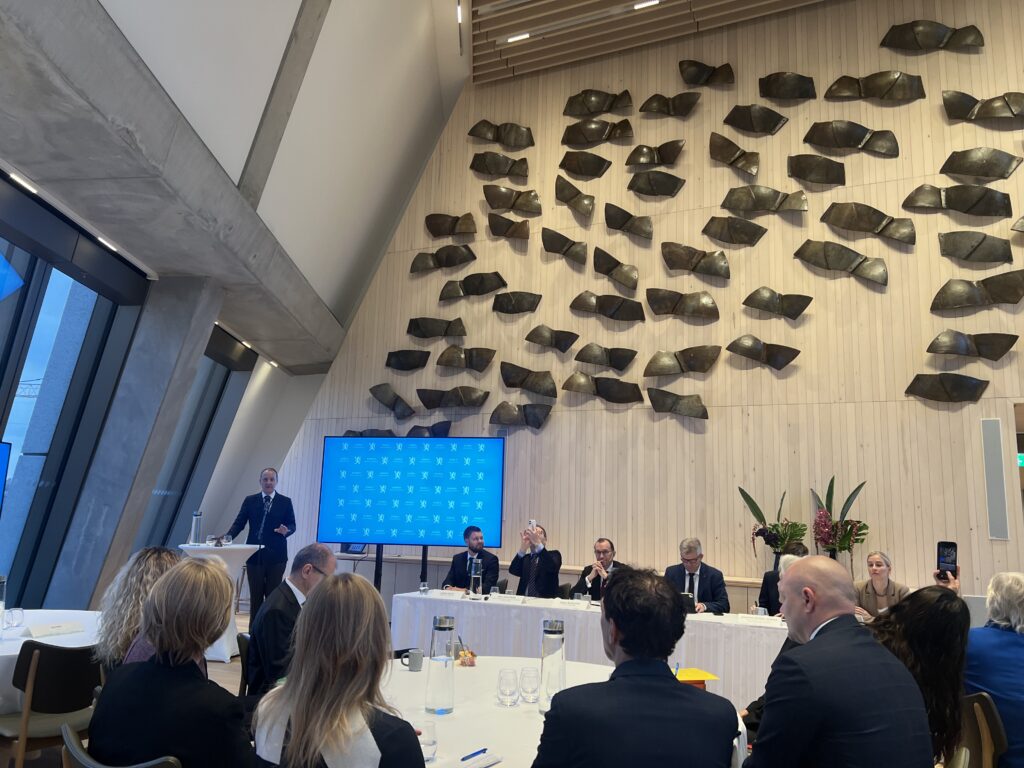
Norway’s full participation in the EU Strategy for the Baltic Sea Region (EUSBSR) was officially celebrated in Oslo on 16 October 2026. For Policy Area Education, the occasion was also an opportunity to strengthen dialogue with Norwegian stakeholders and explore new possibilities for cooperation on shared societal challenges.
A new chapter for regional cooperation
Norway became the ninth participating country in the EUSBSR on 18 May 2026, marking an important step in strengthening cooperation across the Baltic Sea Region.
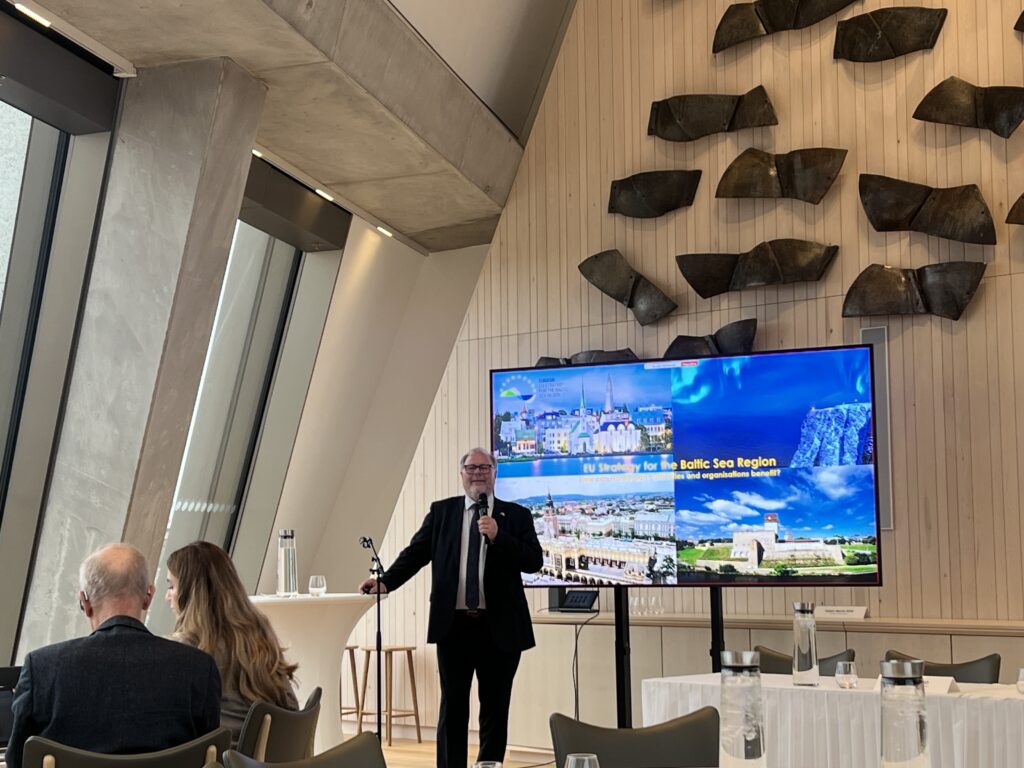
The official launch event in Oslo on 16 October brought together Norwegian Minister of Foreign Affairs Espen Barth Eide, Minister of Local Government and Regional Development Bjørnar Skjæran, representatives of the European Commission, Policy Area Coordinators and stakeholders from across the region.
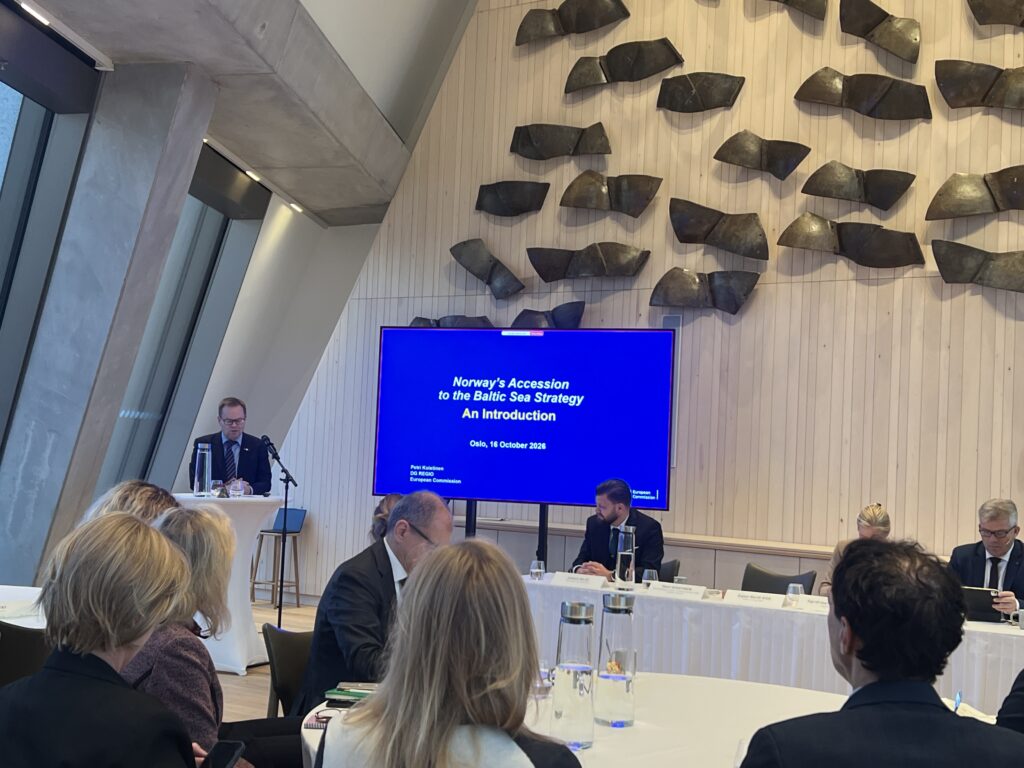
The programme focused on Norway’s role in the Strategy, its longstanding experience of Baltic Sea cooperation and the opportunities that full participation creates for contributing to shared priorities.
Anders Bergström, Policy Area Coordinator for PA Education, contributed to the afternoon programme, which explored how Norwegian authorities and organisations could benefit from the Strategy and engage in its implementation.
Connecting with Norwegian stakeholders
For Policy Area Education, the dialogue had already begun the previous day.
On 15 October, 43 participants joined a digital information and dialogue meeting facilitated by the task force for Norway’s societal mission «Ingen barn og unge utenfor!» (No Children and Young People Left Behind).
The meeting brought together stakeholders from different levels of governance, civil society and research to explore connections between Norwegian initiatives and PA Education’s work.
Anders Bergström introduced the Strategy’s approach to long-term, cross-sectoral and transnational cooperation, highlighting opportunities within inclusive education, school-to-work transitions, skills development and sustainable working life.
These priorities closely relate to challenges addressed by Norway’s societal mission, particularly the prevention of exclusion among children and young people and the development of more coordinated support across sectors.
Policy Area Education would also like to thank Solveig Korum, Head of the Task Force for Norway’s societal mission «Ingen barn og unge utenfor!», and Ole Christian Aslaksen from the Norwegian Ministry of Local Government and Regional Development for organising the meeting on 15 October and facilitating valuable dialogue with Norwegian stakeholders.
From sharing knowledge to creating lasting change
An important theme emerging from the exchanges was how to translate knowledge and promising practices into more lasting improvements.
The discussions addressed the challenges of fragmented initiatives, connecting research with practical implementation, and involving decision-makers alongside practitioners in developing solutions.
Further exchanges explored the potential for mutual learning on mission-oriented approaches, co-creation and methods for facilitating cooperation across sectors and levels of governance.
These questions are central to PA Education’s approach: bringing together actors from different countries and sectors to jointly develop responses to challenges that cannot be effectively addressed in isolation.
Existing cooperation platforms, including School to Work and Economy of Wellbeing of People, offer potential starting points for further dialogue with Norwegian stakeholders.
School to Work focuses on preventing early school leaving and supporting young people in their transition from education to employment. Economy of Wellbeing of People brings together perspectives on lifelong learning, skills development, social inclusion and sustainable working life.
Building on Norway’s experience
Norway is not starting from scratch. Norwegian regions and organisations have participated in Baltic Sea cooperation and Interreg programmes for decades. Full participation in the EUSBSR now offers new opportunities to contribute to the Strategy’s joint priorities and decision-making, while bringing valuable experience, expertise and new perspectives into regional cooperation.
Norwegian stakeholders’ experience of mission-oriented collaboration and cross-sectoral approaches can contribute to the further development of cooperation methods across the Baltic Sea Region.
The discussions in Oslo provided an encouraging starting point for continued engagement, both around shared thematic priorities and the approaches needed to turn cooperation into practical results.
For Policy Area Education, the next step is to build on these exchanges, identify areas of mutual interest and explore how Norwegian organisations can contribute to existing and emerging cooperation initiatives.
Policy Area Education would like to extend its thanks to Jens Erik Grøndahl, Margit Tveiten and Blagovestka Riiser for their efforts in organising the official launch in Oslo and facilitating valuable exchanges with Norwegian and EUSBSR stakeholders.
Norway’s participation creates new opportunities not only to strengthen regional networks, but also to learn from one another and develop more effective approaches to shared societal challenges.