
 Back
BackAnnual Forum 2026: Strengthening crisis communication and cooperation in the Central Baltic Region
The workshop “Trust under Fire”, organized by the Interreg Central Baltic Programme, focused on the challenges of maintaining public trust during crisis situations in EU eastern border regions in an increasingly complex geopolitical situation. The session explored how disinformation and uncertainty can affect societal stability, particularly in those regions where cross-border dynamics add further sensitivity.
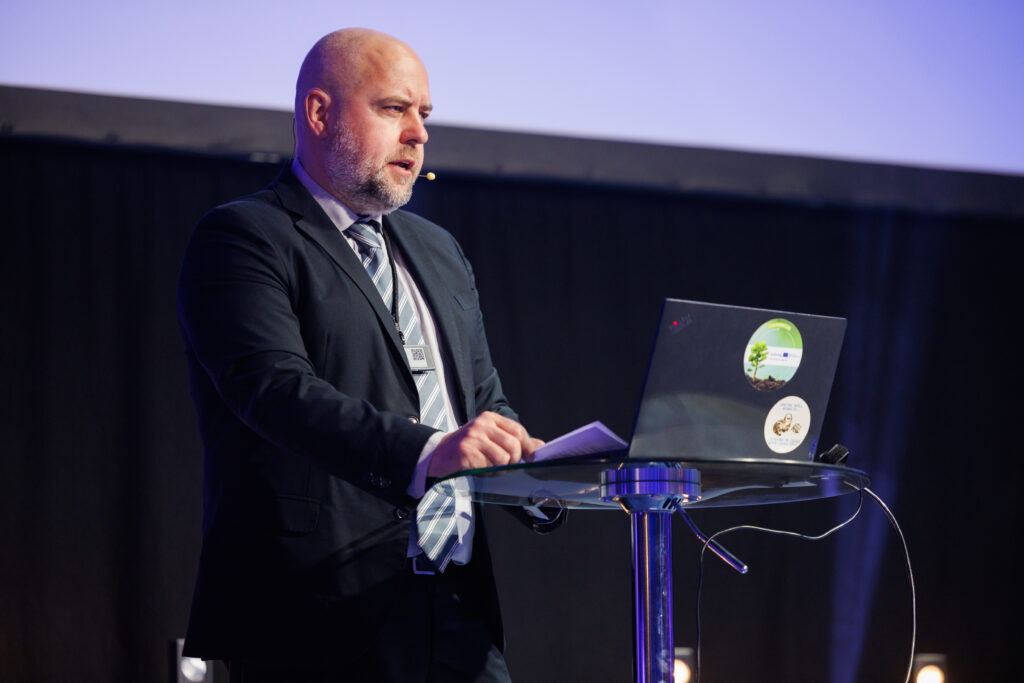
The workshop opened with a keynote speech by Marek Kohv, Head of the Security and Resilience research programme at the International Centre for Defence and Security. Kohv outlined the current security landscape of the region, emphasizing that threats are no longer limited to conventional risks but increasingly include hybrid challenges. He pointed out that for institutions and communities it is getting more difficult to respond effectively. Kohv also highlighted the essential role of strong communities and grassroots-level cooperation in protecting democratic values. Trust, both between authorities and citizens as well as across borders, is a key to resilience and security.
When information sparks panic
Following the keynote, participants engaged in a workshop built around a simulated crisis scenario. The scenario described a situation in which a message spreads rapidly on social media claiming that tap water in a border town has been contaminated due to a chemical spill in a neighboring country. The message included seemingly credible evidence, such as a photograph of emergency vehicles, a screenshot of a supposed internal email, and a warning advising people not to drink tap water.
In this made-up scenario the situation escalated significantly within hours. Supermarkets ran out of water, schools began considering closures, local authorities were overwhelmed by hundreds of concerned calls, etc. People did not know whether to cross the border as conspiracy theories started circulating, suggesting that further danger was imminent. The main challenge in this exercise was the uncertainty surrounding the threat: participants were not told whether the contamination was real or a result of disinformation.
Working in small groups, participants were tasked with analyzing and responding to the situation. The discussions focused on three central questions: identifying existing tools and mechanisms for crisis response, recognizing potential gaps and weaknesses, and outlining the cross-border cooperation required to manage such a situation effectively.
All four groups identified existing tools that could support crisis response. Those included official communication channels, emergency alert systems, established crisis management protocols, and cooperation between different authorities. Fact-checking mechanisms were also highlighted by one group as essential in quickly assessing the credibility of circulating information. In many groups it was noted that these tools are only effective if trust in institutions is already in place and if communication is clear, coordinated and fast.
One of the most significant gaps identified was the difficulty of responding quickly enough in the face of rapidly spreading information or misinformation on social media. Delays in official communication can create space for rumors to grow and erode trust. Participants also pointed out the challenge of communicating uncertainty: authorities may not always have immediate answers, yet silence or delayed messages can further fuel speculation.
Hybrid threats and the role of trust
Cross-border cooperation emerged as a central theme throughout the discussions. Participants emphasized that crises of this nature do not respect national borders. They require coordinated responses between neighboring countries. Building trust between institutions across borders was seen as crucial for an effective response. Participants also stressed the importance of engaging local communities and their leaders, media, and civil society as partners.
The workshop concluded with a reflection from Merike Niitepõld, head of the Managing Authority of the Central Baltic Programme, on the broader implications of the exercise and situation. Our workshop with a made-up scenario demonstrated how easily public trust can be destabilized, even without confirmed evidence of a real threat. Resilience is not only about technical solutions or institutional capacity. It depends on relationships and deep trust between authorities, communities, neighboring countries. Strengthening these relationships and investing in creating stronger and resilient local communities also through cross-border cooperation projects are key elements in ensuring that societies can withstand and respond to crises.
Central Baltic Programme thanks all participants for their active role and valuable insights in the workshop and their openness to discussion.
Annual Forum 2026 parallel sessions
The regional recipe for a strategic environmental assessment in maritime spatial planning
Hidden treasures of the Baltic Sea and where to find them
SmartAging 2040 – Ageing as a driver of resilience in the Baltic Sea Region
Ukraine cooperation at local level – from crisis response to practical capacity-building
Flood simulation exercise showcases crisis response roles
Resilience is built, not assumed – sustaining the health and care workforce under pressure
Mind the Gap – Permanent Cross-Border Platforms as silo-breakers between Regions and the EU
Advancing Spatial Resilience in the Baltic Sea Region
How can regional food systems contribute to Nordic and Baltic resilience?
Strengthening crisis communication and cooperation in the Central Baltic Region
Co-creating Resilience – How Interreg Cooperation Helps the Baltic Sea Region Stay Strong Together