
 Back
BackAnnual Forum 2026: Advancing Spatial Resilience in the Baltic Sea Region
“How is resilience spatial and territorial?” This guiding question framed the session “Shifting tides, resilient territories: advancing spatial resilience in the Baltic Sea Region” at the EUSBSR Annual Forum 2026 in Tallinn. Bringing together spatial planning experts, policymakers, and practitioners from across the Baltic Sea Region, the session explored how territories can better prepare for, respond to, and adapt to a rapidly changing world.
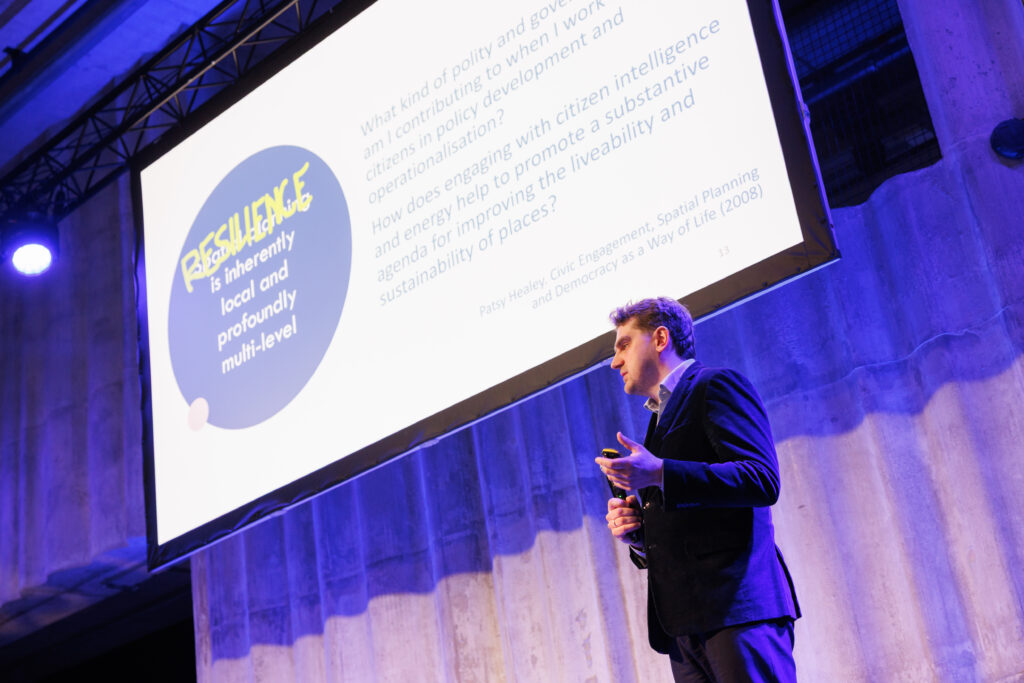
The session was organised by VASAB Secretariat and EUSBSR Policy Area Spatial Planning, with a keynote presentation delivered by Tiit Oidjärv. His presentation focused on the growing importance of spatial resilience in spatial development and planning policy, connecting strategic territorial governance with current geopolitical, environmental, and societal challenges.
Central to the discussion was the recently endorsed VASAB Ministerial Tallinn Declaration on Spatial Resilience, which highlights the increasing spatial implications of both natural and man-made hazards in the Baltic Sea Region. The declaration underlines that resilience is not only about reacting to crises, but also about ensuring that territories and communities can maintain their functional integrity, adapt to disruptions, and continue to develop under changing conditions.
In his keynote, Mr. Oidjärv emphasised that spatial planning plays a far more active role than simply responding to external pressures. Territorial and spatial decisions fundamentally shape how societies function on a daily basis – influencing settlement structures, infrastructure systems, energy security, food production, transport connectivity, environmental protection, and community wellbeing. Spatial planning therefore becomes a strategic tool for strengthening preparedness and long-term resilience.
The presentation highlighted several areas where spatial planning can contribute to resilience-building across the Baltic Sea Region. These include creating space for nature-based solutions that support hazard management, ensuring the territorial conditions for sustainable energy production and storage, strengthening local and regional food systems, supporting industrial clustering and circular symbioses, and improving dual-use infrastructure relevant for both civilian and defence purposes.
The keynote also stressed that resilience must be understood as inherently spatial and deeply interconnected across governance levels. Drawing on ideas from strategic spatial planning theory, Mr. Oidjärv argued that planners and policymakers are not merely reacting to transformations such as climate change, demographic shifts, security concerns, or economic restructuring; they are actively shaping these transformations through territorial decisions and development pathways.
One of the key messages resonating throughout the session was Mr. Oidjärv’s concluding statement:
“When spacemaking, wear your resilience glasses. When thinking resilience, don’t forget to think spatial.”
Following the keynote presentation, participants engaged in interactive group discussions examining four dimensions of spatial resilience: territorial resistance, engineering spatial resilience, evolutionary spatial resilience, and territorial exaptability.
The discussions encouraged participants to reflect on practical questions facing the Baltic Sea Region today. Conversations explored which territorial features help regions withstand shocks, how infrastructure and governance systems support recovery after crises, and how territories can transform disruptions into development opportunities. Participants also considered how regions can proactively prepare for unknown future risks and how existing assets and infrastructures might be repurposed in innovative ways to support future resilience.
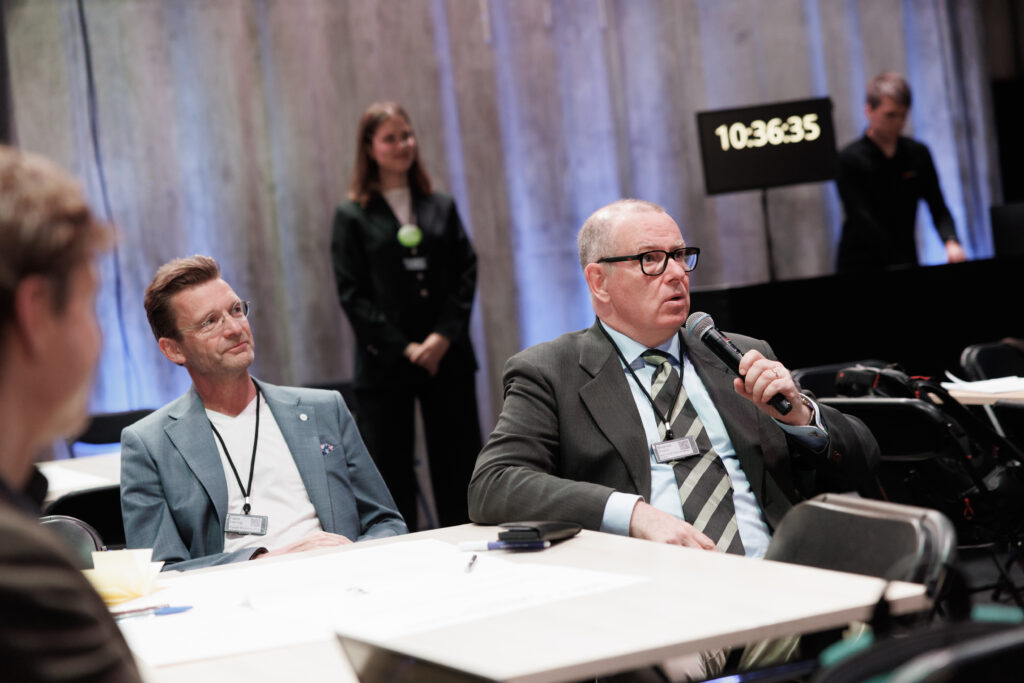
The group work highlighted that resilience in spatial planning extends beyond crisis management. Rather than focusing solely on emergency response, spatial resilience involves long-term territorial preparedness, adaptability, flexibility, and the capacity for transformation. Participants shared experiences from different countries and governance contexts, demonstrating both the diversity of challenges across the Baltic Sea Region and the shared need for more integrated, forward-looking spatial planning approaches.
The session also served as an input in the recently approved Baltic ReSeaLand project which is the first integrated land–sea resilience assessment in Europe, responding directly to the priorities set out in the VASAB Ministerial Tallinn Declaration on Spatial Resilience.
Overall, the session demonstrated that resilience is becoming an increasingly important guiding principle for spatial planning in the Baltic Sea Region. As the region faces climate pressures, geopolitical uncertainty, demographic change, and infrastructure vulnerabilities, spatial planning is emerging as a critical framework for shaping territories that are not only sustainable, but also adaptable, connected, and capable of thriving amid uncertainty.
Annual Forum 2026 parallel sessions
The regional recipe for a strategic environmental assessment in maritime spatial planning
Hidden treasures of the Baltic Sea and where to find them
SmartAging 2040 – Ageing as a driver of resilience in the Baltic Sea Region
Ukraine cooperation at local level – from crisis response to practical capacity-building
Flood simulation exercise showcases crisis response roles
Resilience is built, not assumed – sustaining the health and care workforce under pressure
Mind the Gap – Permanent Cross-Border Platforms as silo-breakers between Regions and the EU
Advancing Spatial Resilience in the Baltic Sea Region
How can regional food systems contribute to Nordic and Baltic resilience?
Strengthening crisis communication and cooperation in the Central Baltic Region
Co-creating Resilience – How Interreg Cooperation Helps the Baltic Sea Region Stay Strong Together