
 Back
BackAnnual Forum 2024: Strengthening Water Resilience in Baltic Sea Region Tourism
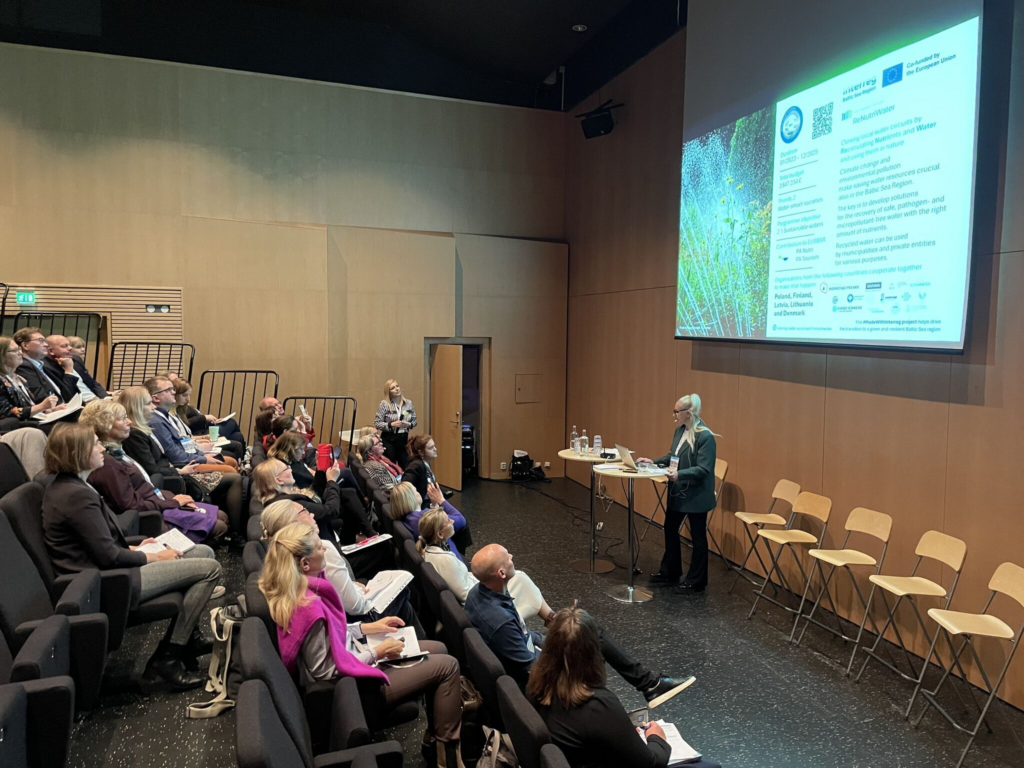
The workshop Sustainable Tourism and Water Resilience, organized in collaboration between EUSBSR Policy Areas Tourism and Nutri, addressed water management challenges faced by coastal touristic towns in the Baltic Sea Region. These areas experience sharp fluctuations in tourist numbers and drought conditions, leading to significant water resource issues. The workshop focused on how these challenges impact tourist businesses and coastal municipalities.
Representatives from the projects WaterMan, ReNutriWater, and Nursecoast II (all funded by the Interreg Baltic Sea Region programme) presented their views on the challenges facing the Baltic Sea Region and the solutions they are developing. Climate change has caused water shortages during the summer holiday season in many parts of the Baltic Sea Region, creating new stress and even limitations to water usage, particularly for the region’s tourist destinations. Solutions to this problem can also offer win-win situations for nutrient pollution management and help keep the sea healthy.
Tobias Facchini from Region Kalmar and Monika Wojciechowska from Savonia University discussed their projects, WaterMan and ReNutriWater. They highlighted how reclaimed water from sources such as wastewater treatment or industry can be used in green infrastructure or agriculture. Using reclaimed water would alleviate the stress on drinking water supplies while keeping nutrients in circulation for beneficial uses away from the sea. The projects emphasize that the safety of these solutions must be clear and communicated to stakeholders.
Anu Reinikainen from Luke (Natural Resources Institute Finland) discussed how the influx of large numbers of tourists during the short summer season causes wastewater treatment systems to become overloaded, leading to additional nutrient emissions and ecosystem damage. Project NurseCoast II is working on new solutions for small wastewater treatment plants, including nanobubbles, constructed wetlands, and package plants. With these the pollution could be reduced and the sea kept healthy and attractive for travellers and residents.
Professor Gunilla Rosenqvist from Uppsala University Campus Gotland introduced the project Blue Centre Gotland (BCG), a collaboration between Uppsala University, the County Administrative Board of Gotland, and Region Gotland. The project is part of the Blue Food initiative, which aims to leverage Swedish waters to position Sweden as a leader in sustainable seafood production. She also shared her insights on sustainable tourism in general but particularly from Gotland’s persperctive as an island. She highlighted several key challenges, such as geographic isolation, limited natural and human resources, a limited job market, and a non-diversified economy heavily dependent on tourism. The island faces issues with balancing permanent housing and summer residences, youth emigration, and infrastructure challenges. She noted that the major question is how the needs of all—nature, residents, visitors, industry, and water resources—can be balanced.
Ellen Lundqvist from Leader Gute and Kati Ahtee from Gotland Tourism Association presented on the topic of “Sustainable Tourism, Water & Gotland.” and the local EU-funded project Sustainable Plejs. They highlighted the importance of sustainable tourism for Gotland, also emphasizing the need to balance economic, social, and environmental impacts. The presentation covered the challenges faced by Gotland’s tourism industry, such as seasonal dependency, limited resources, and overcrowding during peak seasons. They discussed the potential of local food and nature tourism, and the necessity of sustainable tourism practices. They pointed out that the perspective is shifting from sustainable to regenerative tourism, which aims to leave a positive impact on the visited place. This approach encourages visitors to actively contribute to the local community through activities such as planting trees, restoring cultural sites, and consuming locally produced foods.
Following the presentations, the panelists engaged in a lively group discussion, with active participation from the audience. The discussion emphasized how the solutions presented by projects would be relevant for Gotland and other tourism destinations and how cooperation in these topics is still needed. The workshop attracted a large number of participants, highlighting the importance of these topics for the region. The coordinators of Policy Area Tourism and Policy Area Nutri, as the organizers of the workshop, extend their sincere thanks to all the presenters and participants for their valuable contributions and insights.