
 Back
AlgaeFood: When seaweed finds its way onto the plate
Innovative local food production: Offer someone a piece of seaweed with a “Bon appetit!” and you are likely to be met with a degree of scepticism. Until they taste it, that is. More often than not, the next thing you hear is: “That actually tastes quite nice.”
Could seaweed become part of our regional food culture?
The seaweed that grows along the Danish-German coast not only contributes to water quality, but can also be used as food – unfortunately, this happens all too rarely! Because seaweed is actually a ‘superfood’ and it is a regional resource with great potential. Depending on the species of algae, the seaweed contains protein, minerals and vitamins – and it grows in the sea without requiring agricultural land.
The Baltic Sea Region faces environmental and climate pressures, uneven value-chain development and challenges affecting resource use, innovation and the resilience of rural and coastal communities. Innovative solutions in agriculture, forestry, fisheries, aquaculture and other bio-based industries are essential to the Baltic Sea Region’s sustainability, competitiveness and rural vitality. The Member States of the EU Strategy for the Baltic Sea Region have set this work as one of the priority areas for macro-regional cooperation across the region.
But the road from seaweed to table is long. It requires knowledge about edible species and the preparation, sustainable production, processing and marketing of these species – and, more importantly, it requires consumers who are prepared to purchase and eat seaweed.
This was AlgaeFood’s starting point. The Danish-German project aimed to establish regional seaweed – also known as macroalgae – more firmly in food culture, bringing together researchers and practitioners, the food industry and producers, schools and consumers.
From “yuk” to “that actually tastes quite nice“
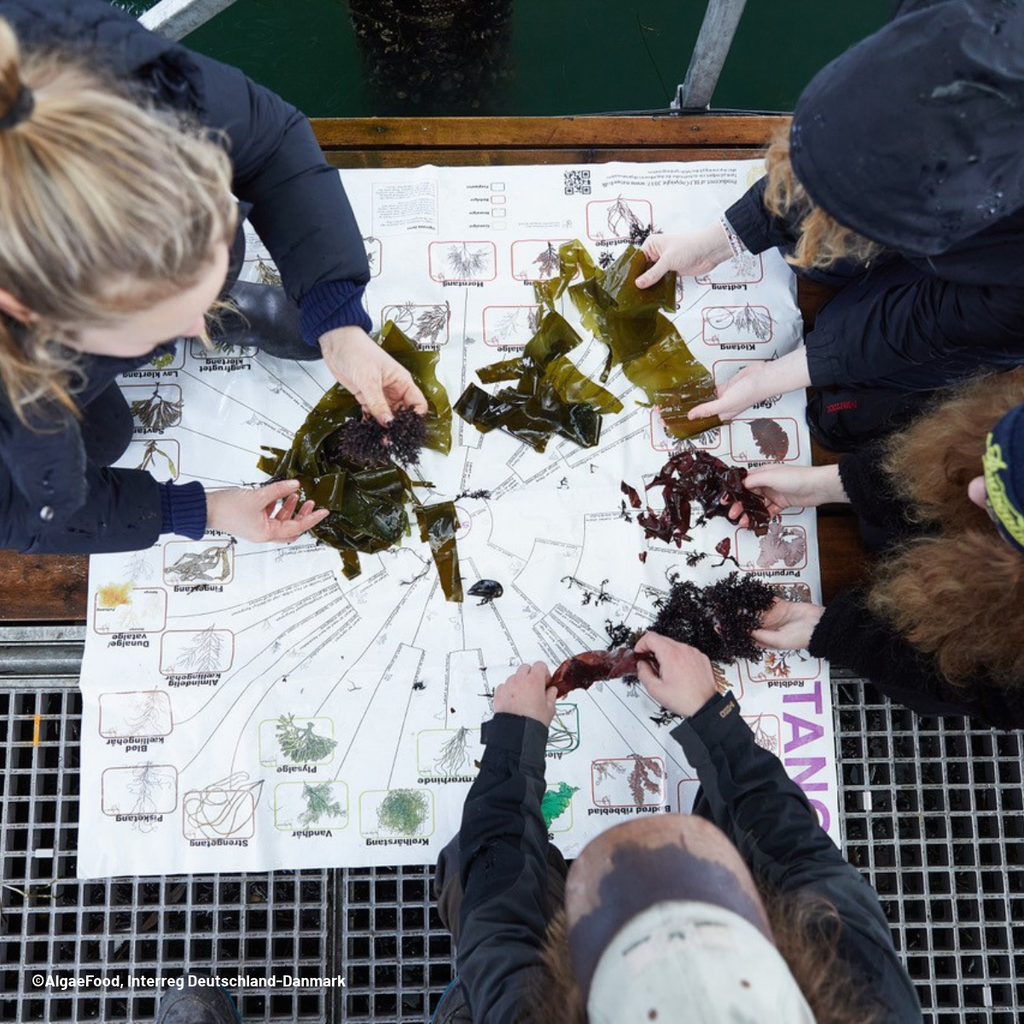
Most of us are familiar with the slippery seaweed that washes up on the beach. But few of us would think of it as something to eat. One of AlgaeFood’s most important lessons was therefore surprisingly simple: if people are to embrace seaweed as food, they need the opportunity to get to familiarise themselves with it.
More than 500 pupils in Denmark and Germany were given this opportunity. More than 20 school visits and other learning activities offered the pupils seaweed and algae safaris and the chance to get to know the various species, examine them and taste them.
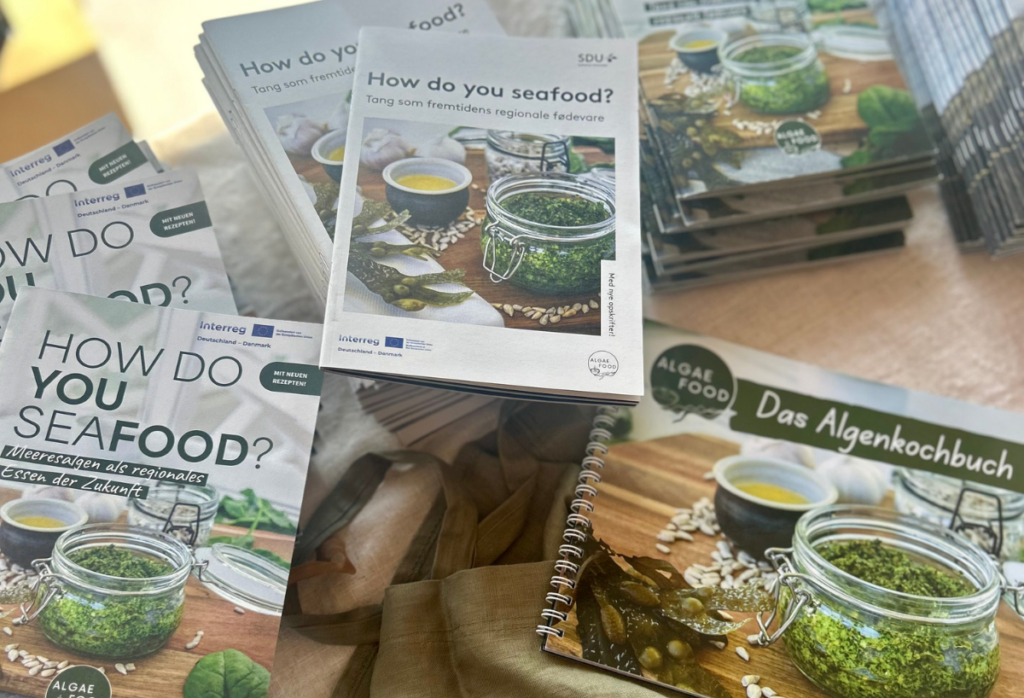
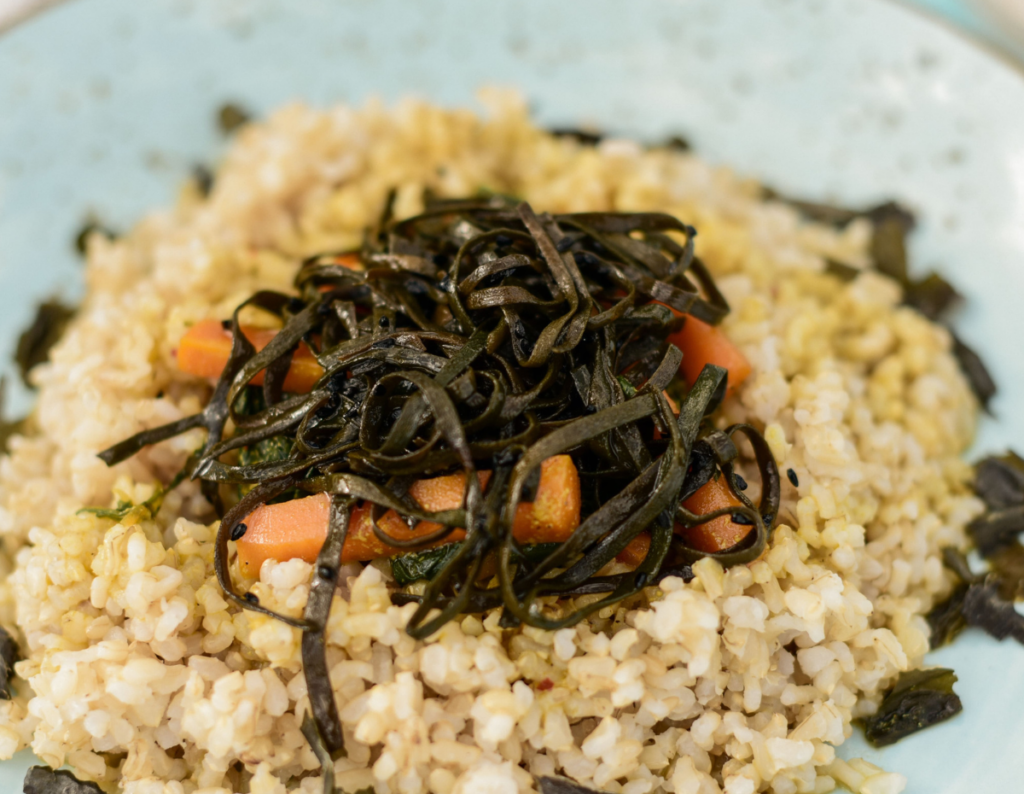
The experiments resulted in more than 22 new recipes and two cookbooks which were developed in collaboration with trainee chefs. The teachers also got involved. Train-the-Trainer activities gave them the opportunity to learn how they themselves would be able to work with seaweed and algae in class. Fifteen new educational exercises were designed in order to ensure that the subject can live on.
What happens after the tasting session?
This is exactly where the next challenge starts. Because if seaweed is to become a food that is able to form part of everyday life, it requires more than a few good recipes. Products, suppliers and marketing are required – and places where people are actually able to buy seaweed.
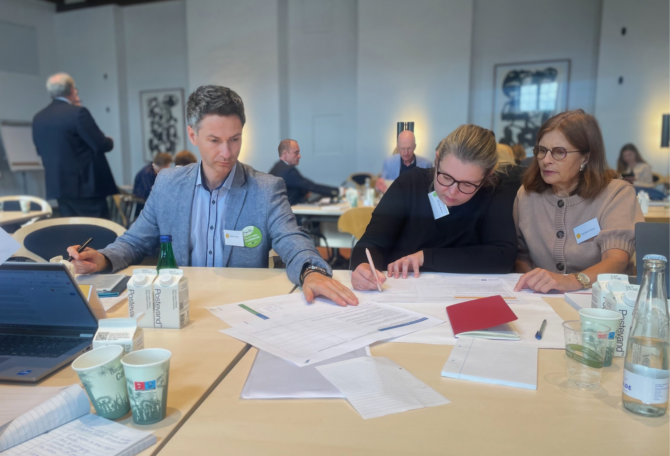
AlgaeFood also brought together a number of stakeholders in this area. Researchers worked on the attributes and possible applications of the regional algae. Chefs and trainee chefs developed new dishes. Producers and fishmongers contributed with their practical experience. More than 40 activities in Denmark and Germany involved cooking, tasting, experimenting and discussion.
Bringing product development, marketing and food culture together was a key focus for the AlgaeFood project partners.
The three years of the AlgaeFood project have shown that changes also start on a small scale. People have become familiar with regional seaweed and have tasted it. Trainee chefs have experimented with it and developed new recipes. Stakeholders from the food industry have identified new opportunities and identified contacts across the border.
What can Denmark and Germany learn from each other?
Denmark and Germany share a coast and thereby a marine environment in which many of the seaweed and algae species used can be found. But the two countries have still each had their separate experiences.
This can especially be seen when it comes to the so-called sea gardens. Denmark already has a range of community-based sea gardens. Here groups of enthusiasts share the care of algae and mussels and combine food production for their own use with a sense of community, experiences in the natural world and knowledge about the sea.
In Germany, this approach has so far been limited. This meant that for the German project partners it was especially valuable to look at what Denmark was doing. As part of AlgaeFood, knowledge was exchanged about sea gardens and a concept was developed for the establishment of sea gardens in Northern Germany.
But, of course, knowledge sharing also went the other way.
The German partners contributed their experiences in marketing, organic food and collaborations with the fine-dining sector and businesses. The Danish partners had particular knowledge gained from local fishmongers, sea gardens and regional stakeholders in the food industry.
What will we be left with when the project ends?
After three years of AlgaeFood, at the end of the project, a regional food culture surrounding seaweed and algae has not yet been established. But the partners have been left with one realisation: A new food culture does not arise through a single product or a single campaign. It develops step by step over time – including across borders and in partnerships.
Over three years, AlgaeFood was given a grant of EUR 1.9 million from the Interreg Deutschland-Danmark EU programme. The project was undertaken by the University of Southern Denmark (Odense), oceanBASIS GmbH (Kiel), CRM – Coastal Research & Management OHG (Kiel), Peninsula Nature ApS (Bjert) and Fjord& Bælt (Kerteminde).