
 Back
BackSuccessful pilot: The InnoCulture Conference 2024
Policy Area Culture, together with its partners ARS BALTICA, the Baltic Sea Cultural Centre, the CCI Contact Desk and Goyki 3 Art Inkubator, co-hosted the first edition of the InnoCulture Conference as a pilot for a regular Culture Forum within the EUSBSR. With over 60 participants from around the Baltic Sea Region exploring culture’s innovative potential, a base for further development was successfully established.

The InnoCulture Conference was hosted as a lunch-to-lunch event at the Baltic Sea Cultural Centre in Gdańsk, Poland. After exploring the city voluntarily on guided walks around the old town and shipyard, this history-rich event location began buzzing with life as the over 60 participants started arriving and networking over delicious food. The conference programme commenced at noon with a so-called ‘Speed Networking’ lead by ARS BALTICA allowing people to meet new acquaintances and get the innovative mindset flowing. Following this warm-up, Kaarina Williams, Senior Adviser for Baltic Sea Region Affairs at the Ministry for European Affairs of Land Schleswig-Holstein, one of the two Policy Area Culture coordinator institutions, moderated the event and therefore welcomed everyone warmly to Gdańsk and the conference at whole. After the introduction of all event organizers, namely Policy Area (PA) Culture, Baltic Sea Cultural Centre, ARS BALTICA, and CCI Contact Desk, Goyki 3 Art Inkubator, it was already time for the two keynote speakers of the day to give their inspirational input.

Inese Suija-Markova, among many other qualifications Deputy Mayor of Cēsis Municipality and Deputy Chair of Vidzeme Planning Region Development Board, held her speech on the topic ‘The Missing Palette: Why Innovation Needs Art and Culture’. She highlighted the five superpowers only culture as a sector could unite:
- Spark curiousity
- Unleash creativity
- Nurture compassion
- Create commonality
- Celebrate humanity
She continued by stating that Curiousity, Creativity and Compassion (Empathy) being the essential preconditions of innovation, meaning invention and implementation creating value. Apart from giving practical examples, she went on to challenge the myth stating that it takes a genius or lone innovator to develop innovation. On the contrary, so she explained:
“Innovation is a mindset and behaviour created and practiced at the intersection of different sectors and knowledge areas, in diversity, and a highly collaborative environment.”
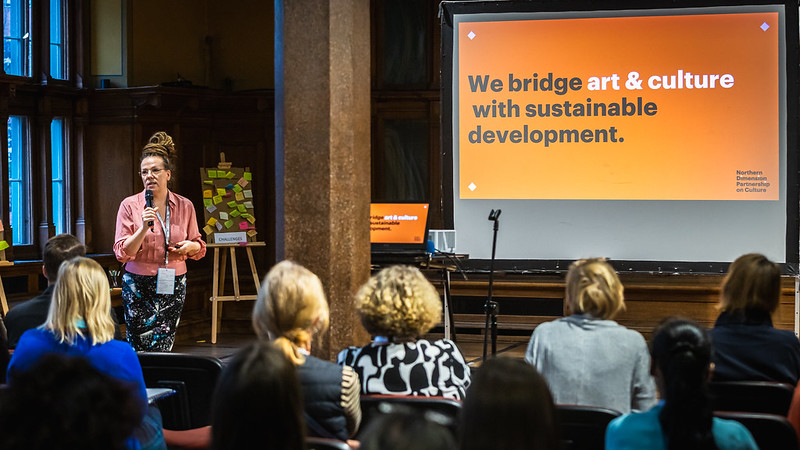
The second keynote speaker of the day, Krista Petäjäjärvi, expert in arts-based innovations on multiple levels, one being her position at the Northern Dimension Partnership on Culture – NDPC Secretariat in Riga, added to this notion following the topic ‘Art in Innovation: Why should we care?’ She began by giving research-based proof for the importance of art for innovation. For example, within the framing of the 17 UN Sustainable Development Goals (SDGs) it is stated that artists, cultural professionals and policy makers are drivers of innovative partnerships. She further elaborated that trend research from 2023 shows many artists and creatives seeking ways to expand their practices to work for positive societal change and a vital part of achieving this follows the concept of ‘Creative Cross-Innovation’. In this collaborative process where professionals from the arts, culture and creative fields share their expertise, methods as well as creative approaches and ‘cross-over’ in unseen ways to other sectors and industries of the society, the success factors are:
- Eye-level collaboration of artists/creatives with professionals from other fields
- A joint mission with a clear reason for the collaboration
- Artistic/creative expertise having an essential role and included in the foundations of the process
- Novel unseen formats of cross-disciplinary collaboration processes
After giving practical examples, the role of art in innovation was defined as creating access to available sources of knowledge; expanding the possible avenues of communication, raising awereness; creating spaces of equal engagement; empowering the creativity in everyone involved. In conclusion, Krista Petäjäjärvi stated:
“To exclude artists from innovation systems diminishes the potential for radically new solutions. However, only with supportive policies, funding, and facilitation of practical explorations can arts in innovations evolve from a curiosity to a driving force in crafting more sustainable futures.”

Following a coffee break, the first session of the two-day workshop formats. Our workshops brought the spark of creativity to real-life challenges, linking culture with community, entrepreneurship, health, mobility, and sustainability. Fostering exchange, they inspired and gave room for innovative ideas and creative solutions. Review the workshop introductions here:
Group 1 Culture X Health – Marta Ciesielska (Arts on Prescription)
This participatory lab will explore European perspectives on enhancing mental health and well-being through arts-based solutions and multi-stakeholder alliances involving cities and regions. Participants, including researchers, health and arts sector representatives, and Arts on Prescription practitioners, will collaborate to develop policies that integrate arts into health promotion and well-being initiatives. Inspired by a World Health Organisation report highlighting the health benefits of the arts, the lab will focus on sharing best practices and experiences, particularly from regions like Denmark and Sweden that have made significant progress. The “Arts on Prescription in the Baltic Sea Region” project, involving partners from Denmark, Finland, Germany, Latvia, Lithuania, Poland, and Sweden, serves as a model for implementing and evaluating such initiatives. The event aims to create recommendations for national funding programmes to expand arts interventions for health. It targets policy-makers, researchers, cultural and health professionals, and anyone interested in arts and well-being, with promotion on social media and partner websites to reach a broad audience.
Group 2 Culture X Sustainability – Lara Löser (Goethe-Institut / CCI Contact Desk)
Welcome to the ‘Culture x Sustainability’ workshop, conducted by the Goethe Institut and the CCI Contact Desk. This engaging and insightful session will explore the intersection of culture and sustainability, discussing how the cultural and creative industries can contribute to a more sustainable future. Together, we will delve into innovative ideas, practical strategies, and real-life examples that showcase the potential for cultural initiatives to drive positive environmental and social change. Get ready to be inspired, learn from each other, and explore the endless possibilities at the nexus of culture and sustainability!
Group 3 Culture X Entrepreneurship – Fabian Baßenhoff (Hamburg Music)
This workshop aims to explore best practices in entrepreneurship within the creative sector, raising awareness of tools and ideas that drive success. By engaging participants from diverse creative backgrounds cross-sectoral innovation shall be sparked and valuable insights provided on how entrepreneurial thinking can be enhanced. The key question driving our discussions: “How can we learn and benefit from each other’s work in fostering entrepreneurship?” This workshop also addresses the need to connect entrepreneurs with the cultural and creative sectors to foster growth and innovation.
Group 4 Culture X Mobility – Kasia Sobczak (Goyki 3 Art Incubator), Tamara Kamińska (Music Export Poland)
Join us to explore the challenges and opportunities related to temporary cross-border movement for artists and cultural professionals. This workshop will focus on the critical role of residency programs in supporting their work and provide a comprehensive overview of EU programs in this area. Participants will gain insights into how to carry out joint mobility projects with international partners and take part in discussions on best practices and innovative approaches. Our goal is to provide participants with the knowledge and resources necessary to navigate the complexities of cross-border cultural exchange and to encourage meaningful international collaborations.
Group 5 Culture X Community – Dorota Kamrowska-Załuska, Hanna Obracht-Prondzyńska (Urb Cultural Planning)
The field of cultural practice for social change is expanding, focusing on engaging community members through cultural activities to foster social resilience and empowerment. According to Alexis Frasz in her article “Culture and Community Power Building,” the arts play a critical role in transforming individuals from passive participants in democracy to active agents within it. When people engage in shared cultural experiences, they develop relationships and a sense of agency that can be leveraged in various contexts, such as addressing urban challenges or developing long-term community strategies. This engagement not only empowers communities to push for change but also enhances individuals’ health and well-being by fostering social cohesion.
The upcoming workshop aims to introduce cultural planning as outlined in the UrbCulturalPlanning project, emphasizing its role in promoting innovation and engaging communities through creative processes. Participants will learn tools for designing bottom-up initiatives that leverage local cultural resources. Using the cultural planning roadmap, the workshop will guide attendees in developing strategies for community engagement and empowerment through cultural assets like libraries, art centers, and local theaters. The workshop will be led by Professor Dorota Kamrowska-Załuska and Dr. Hanna Obracht-Prondzyńska, both experienced in urban design and community projects.
Day 1 ended with a short wrap-up before everyone was invited to network with food and drinks in the cellar bar below the Baltic Sea Cultural Centre.
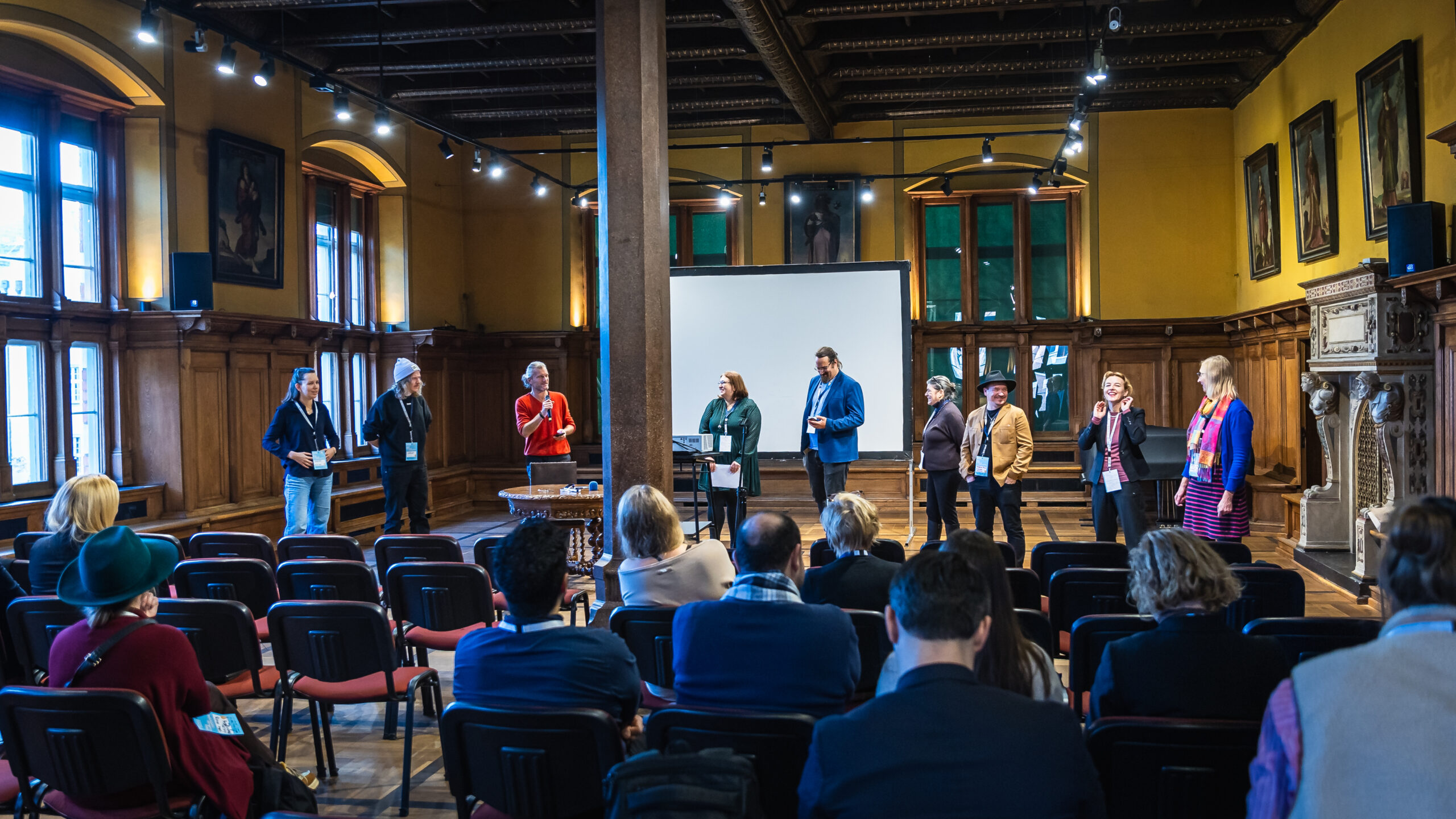
Day 2 began with another networking exercise lead by ARS BALTICA, freeing the mind up for the last conference day and giving more opportunity for connecting with fellow conference participants. This was followed by nine projects from across the Baltic Sea region presenting themselves to the plenum for future networking, before everyone returned to the workshop groups from the previous day. The workshops were concluded in a plenary session with short summaries giving a glimpse of the discussions within the individual groups.
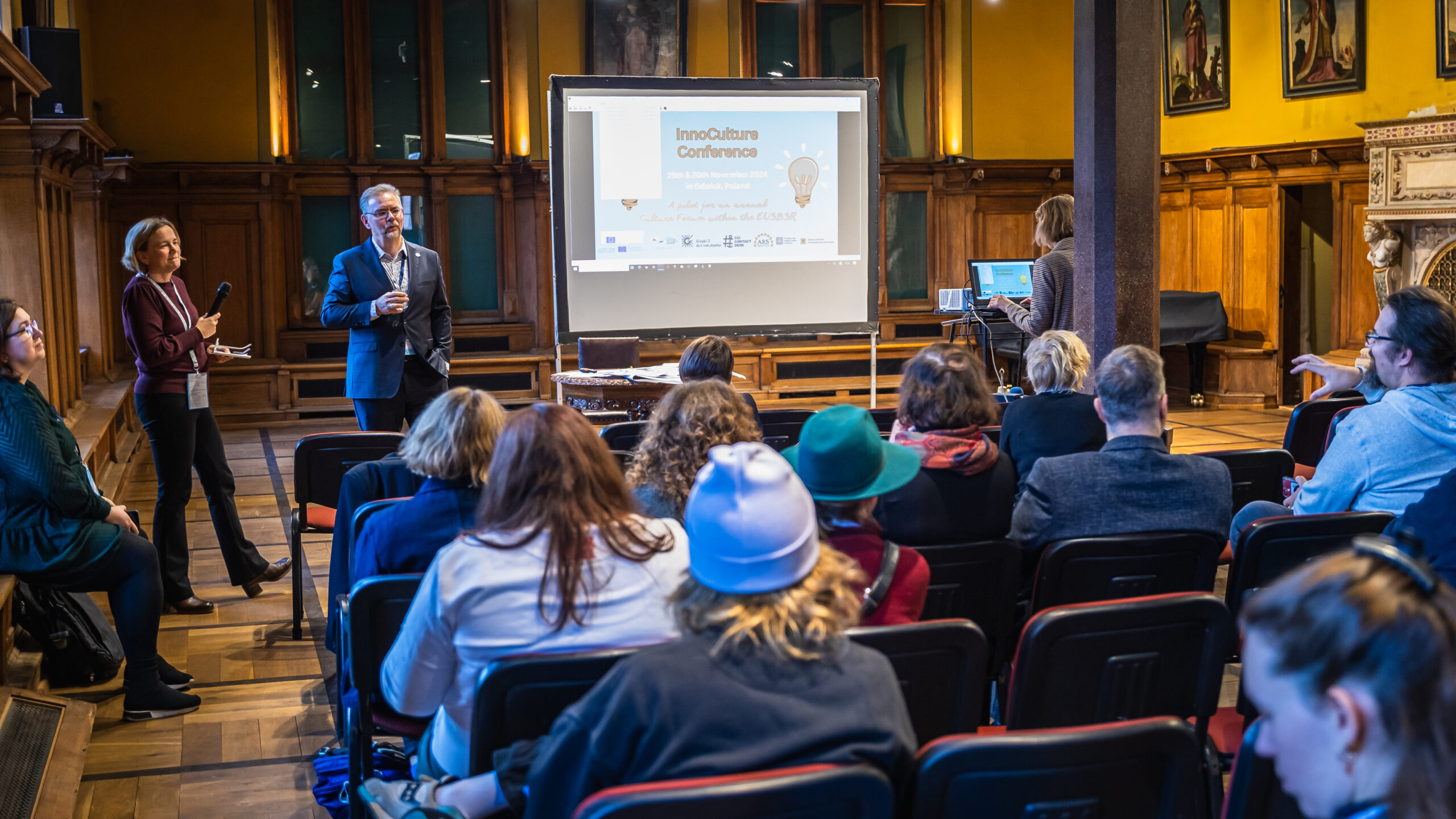
Preparing the closing of the conference, keynote speaker Kazimierz Musiał, among other things senior adviser for priority area Regional Identity in the Council of the Baltic Sea States Secretariat in Stockholm and responsible for matters related to culture, higher education, and youth, highlighted the topic of ‘Cross Sectoral Cooperation on Culture, Creativity and Innovation – A Strategic Imperative for the Baltic Sea Region’. He promoted collaborative policy-making, investing in cultural education and embracing AI solutions. Following his input, a lively discussion within the plenum was initiated with different views voiced. Rounding this off, he stressed that when wanting to reach and communicating with the policital level, addressing individuals directly and staying persistent is still a vital part of the process.
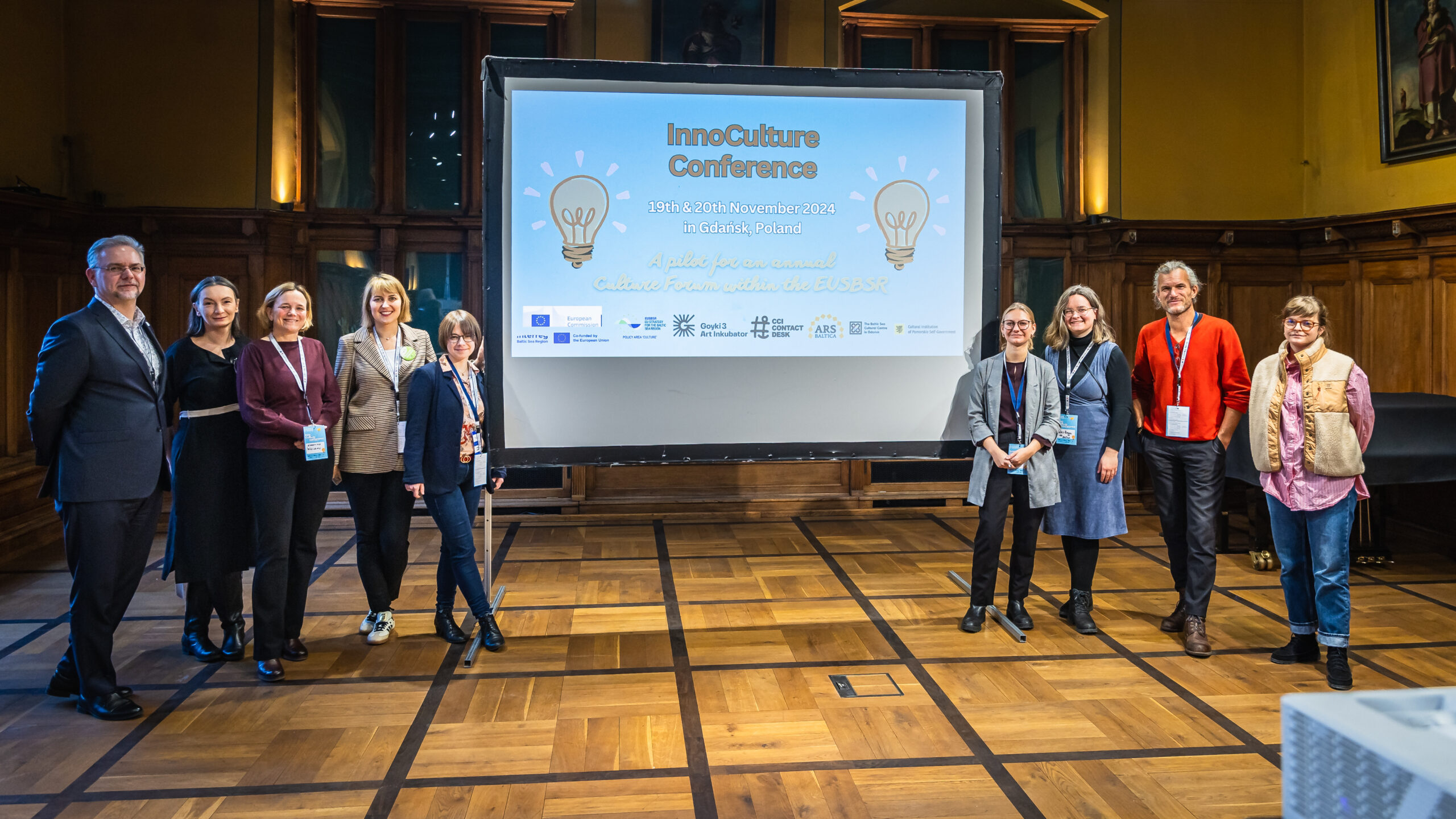
Concluding, this first edition of the InnoCulture Conference is just the beginning. While there is still more potential to unlock, more cross-sectoral exchange being only one of many aspects, this conference has set the stage for meaningful growth and collaboration in the future. We as organizers once more thank all our participants, keynote speakers, workshop leaders, and partners for making this vision a reality and look forward to future editions of this conference!
Get a deeper visual impression of the event by browsing Paweł Jaremczuk’s pictures of the conference here.
Related content
New funding opportunities at Swedish Institute
26 February 2026