

 Back
BackProject BEST ACE Successfully Concluded: Biogas Business Roadmap Released
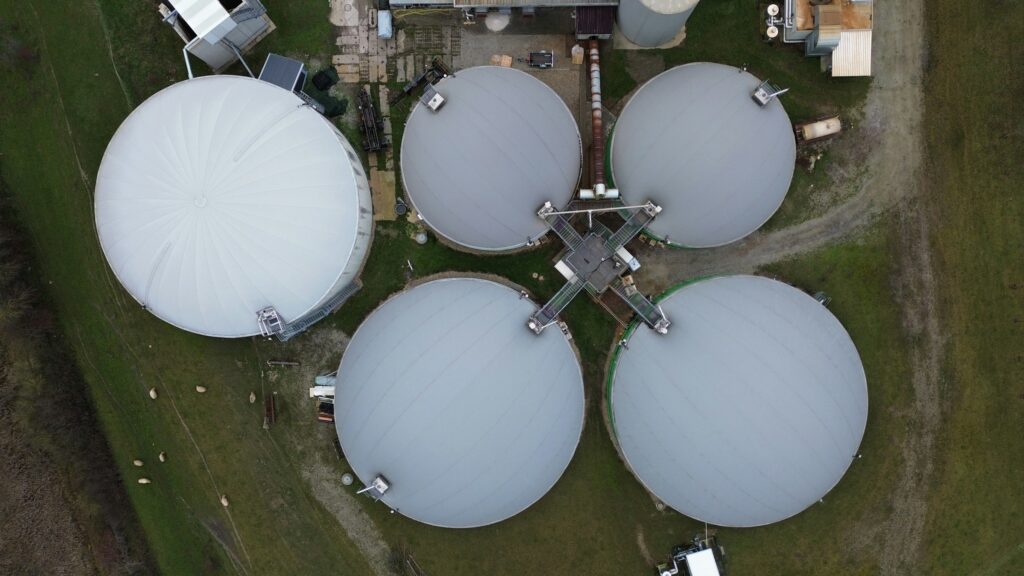
The project ‘Biogas – Established Sustainable Technology in A Circular Economy’, commonly known as ‘BEST ACE’, has reached its conclusion. In October, the project’s final seminar took place, during which the ‘Biogas Business Roadmap’ was released to the public. BEST ACE contributes to the implementation of the EU Strategy for the Baltic Sea Region and particularly to the Actions defined by Policy Areas Transport and Energy.
Transport is responsible for a substantial part of the EU’s greenhouse gas emissions, making it the second biggest emitting sector after energy. Significant reductions in emissions from the transport and logistics sector are needed when the EU aims to achieve its long-term climate goals. Member states of the EU Strategy for the Baltic Sea Region have identified connectivity, climate-neutral transportation and facilitation of innovative technologies as priorities for cooperation in the Baltic Sea Region.
Project Purpose and Findings
The Best ACE project was launched to assess the current use of liquefied biogas (LBG) in the countries surrounding the Baltic Sea and to develop a roadmap for the future. Liquefied biogas, a cleaner alternative to natural gas, holds significant potential for long-haul heavy truck transportation. LBG could be also an alternative fuel for other type of vehicles. However, recently adopted EU regulations limit broader use of biogas in light vehicles (prohibition of production of combustion engines after 2035) and in urban buses (clean vehicle directive is pushing for an electrification of city buses).
Use of liquefied biogas may also help shipping industry to meet EU emission regulations, however the sector needs biogas in huge quantities which is a challenge taking into consideration availability and capacity of current production facilities. As a result, it may take some time before LBG becomes a viable option for bunkering ships.
Challenges Facing the Biogas Sector
With the market for light vehicles and buses closing in the future, and the new markets (such as long-haul trucking and shipping) not yet fully ready, there is a time gap that could significantly impact the biogas industry. This gap poses a risk to the substantial investments that have already been made in biogas production facilities and infrastructure across the Baltic region.
To reduce this impact, it is essential for states to accelerate market development and adoption processes, ensuring that the biogas industry can bridge his competitiveness in different market sectors. The Biogas Business Roadmap offers guidance to support sustainable growth and secure production in light of upcoming environment.
Why is the biogas so important?
It is produced from natural waste, so it is huge step towards environmentally friendly circular economy. For individuals, the use of biogas as a fuel means cleaner air, with fewer particles and lower nitrogen oxide (NOx) emissions. Additionally, biogas is cleaner than liquid fuels, reducing dirt and pollution in workplaces. Noise pollution is another consideration—biogas engines are quieter than traditional diesel engines, creating a more pleasant environment for both drivers and pedestrians.
Acknowledgments
The Coordinators of Policy Area Transport would like to thank to Project Manager Tommy Lindström from Energikontor Syd AB – Energy Agency Southern Sweden. It has been a pleasure to collaborate and share insights throughout the project’s journey.
For more information, the Biogas Business Roadmap document can be accessed here.
BEST ACE is funded by Interreg Baltic Sea Region programme. It helps develop natural gas grid infrastructure and use biomethane efficiently in long-haul transport and maritime industry.
Related content
New funding opportunities at Swedish Institute
26 February 2026
Baltic energy resilience in the face of Russian invasion of Ukraine
26 February 2026
Save the Date: BSSSC Day of Cities and Regions 2026 in Tallinn
28 January 2026