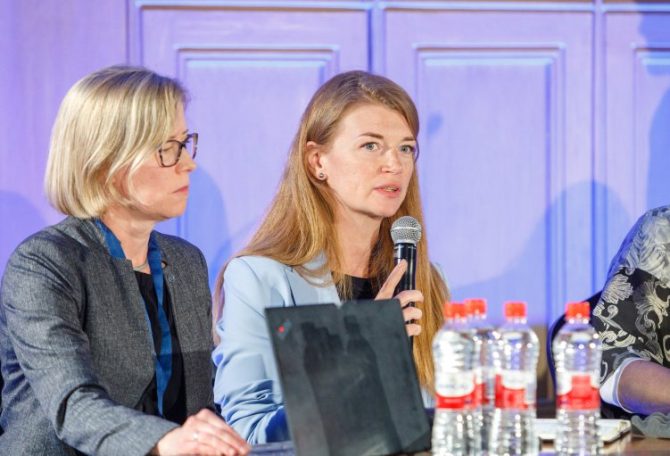

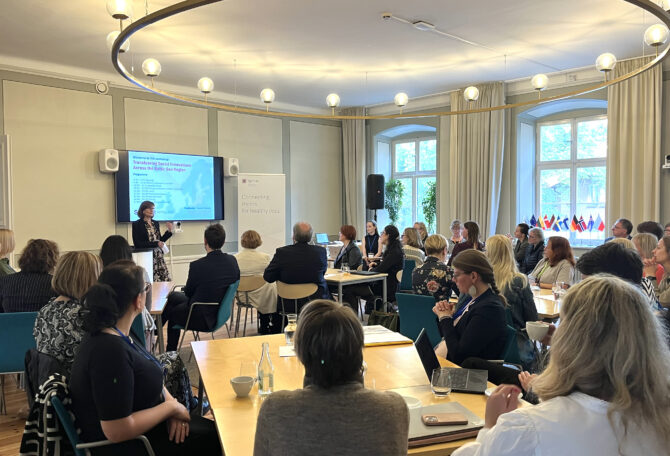
The conference “Acting on Health: The Role of Arts in Well-being” organized by the PA Health coordinator NDPHS Secretariat, celebrated a conclusion of the Interreg-funded “Arts on Prescription (AoP) in the Baltic Sea Region” project. Held at the iconic Martynas Mažvydas National Library of Lithuania on November 13, the day highlighted the growing momentum of social prescribing. Insightful discussions, presentations, and artistic engagements reflected the project’s dedication to developing a scalable and evidence-based AoP model and the readiness to continue the work.
The grand finale of the “Arts on Prescription” project brought together almost 100 participants from across Europe. “I believe and know that AoP and Social Prescribing contribute to building a healthy and resilient society.”, in an opening statement said Marija Jakubauskienė, Minister of Health of Lithuania. Ms. Jakubauskienė’s powerful message emphasized the nation’s dedication to innovative public health strategies and celebrated the value of the AoP project. The conference was moderated by Nils Fietje, WHO Regional Office for Europe and hosted by the improv comedy theatre Ruutu10 from Estonia.
https://www.youtube.com/watch?v=Li9ZzLFznHo
The conference took the attendees on a journey from personal stories to high-level policy recommendations. The opening session grounded the conference in the lived experiences of those directly involved in AoP.
The Link Worker Perspective: Millie Kealy Jensen (Odense) reflected on the core of link work: listening, building trust, and supporting participants as they navigate social and emotional reconnection with their community.
Facilitating Creativity: Karsten Auerbach (Psychiatric Hospital Odense) shared his evolution from offering art sessions in 2002 to the clinical pilot “Painting oneself out of a corner.” Karsten highlighted the value of safe spaces for creative exploration, describing art as a shared language that connects us all.
Participant Voice: Sven Grewe (Bremen) shared a moving testament to the power of routine and social connection, detailing how joining an everyday-poetry group positively impacted his well-being.
The second session provided a comprehensive overview of how the AoP model was adapted across the Baltic Sea Region. Partners from Denmark, Germany, Latvia, Poland, and Sweden presented key learnings from their three-year pilot programs:
Latvia: Successfully utilized local heritage sites to reduce participant anxiety and build social connections despite diverse group dynamics.
Sweden: Focused on long-term sick individuals, emphasizing the complex and essential role of the link worker in connecting participants to creative activities.
Poland: Demonstrated the value of co-design when working with young adults (ages 16-29).
Germany: Tested an innovative “inclusive model” where participants joined existing cultural courses, leading to sustained engagement beyond the prescription period.
Denmark: Focused on the critical task of bridge-building between sectors through twinning and national network building.
To ensure scalability, AoP must be built on professional support and robust data. The third session explored the infrastructure required for success. Dr. Ernests Pūliņš-Cinis addressed the mental health perspective for practitioners, outlining tools to prevent burnout and clearer criteria for referring participants to clinical specialists when necessary. We also call it “Facilitating the Facilitators”. Concerning the evaluation & impact, the AoP project’s University partners presented the core research findings:
Quantitative & Economic: Carsten Hinrichsen & Isabelle Mairey (University of Southern Denmark) demonstrated measurable outcomes and cost-benefit insights essential for policymakers.
Qualitative: Liisa Laitinen (Turku University of Applied Sciences) highlighted strengthened self-esteem, reduced loneliness, and a fostered sense of social cohesion among participants from a qualitative evaluation.
The fourth session tackled the critical challenge of longevity, securing the suture through sustainable funding, and moving from short-term projects to sustainable, long-term financing. From “Cost” to “Investment” Nils Fietje challenged the traditional view of funding, framing AoP as a strategic investment in community health rather than an expense. The session explored the “economic ripple effects”—how funds invested in AoP stay in the local economy by employing facilitators and activating community venues. Lina Papartyte (EuroHealthNet) discussed the European financial outlook, encouraging organizations to explore “Smart Capacitating Investment” models. From European perspective we narrowing it down to national strategies. Eglė Saudargaitė (Ministry of Culture, Lithuania) provided a crucial policymaker perspective on embedding social prescribing into long-term strategic documents, while acknowledging current barriers such as fragmented financing rules and lack of collaboration between ministries.
The day culminated in a forward-looking panel discussion, moving the conversation from “what is” to “what could be.” Bea Walker (National Academy for Social Prescribing, UK) led a discussion centered on expanding interventions and integrating the Art of Prescribing into the broader social prescribing framework, with the UK being highlighted as a frontrunner in this regard. Atis Egliņš-Eglītis (Deputy Mayor of Cēsis, Latvia) delivered a powerful message to municipal leaders: “Culture is democracy, economy, education, and health.”, while Neringa Grigutytė (Ministry of Health, Lithuania) provided the crucial link to national health policy. She emphasized the reality of integrating social prescribing into national strategies and the arguments needed to convince health ministries to embrace arts-based interventions. As the concluding address for the conference Dr. Ülla-Karin Nurm (PA Health) shared the project’s core policy recommendations, urging a shift from “pilot mode” to embedding arts-based approaches into mainstream mental health care pathways. “By incorporating AoP into mental health strategies, we can achieve a triple return on investment—boosting wellbeing and social connectedness, increasing productivity, and supporting local economies. This is not just about culture or creativity. It is about designing smart, sustainable public health policy that recognises the social determinants of health and invests in prevention rather than cure. Across the Baltic Sea Region, we have the evidence, the partners, and the infrastructure. What we need now is the political will to embed this approach within national frameworks.”, concluded Dr. Nurm.
Throughout the day, the participants were engaged in multiple artistic activities—moving and playing instruments with Latvian musician Helēna Kozlova; traveling through human emotions and expressing them in drawings facilitated by Karsten Auerbach from Denmark; and even becoming the source of a poem written by Irish/Danish artist Madeleine Kate McGowan as a reflection of the day. The artistic engagements encouraged participants to unfold their own creativity and experience a glimpse of how arts and culture can impact and uplift our mental health and well-being.
Latest news
The Strategy contributes to the recovery of Ukraine
21 November 2023
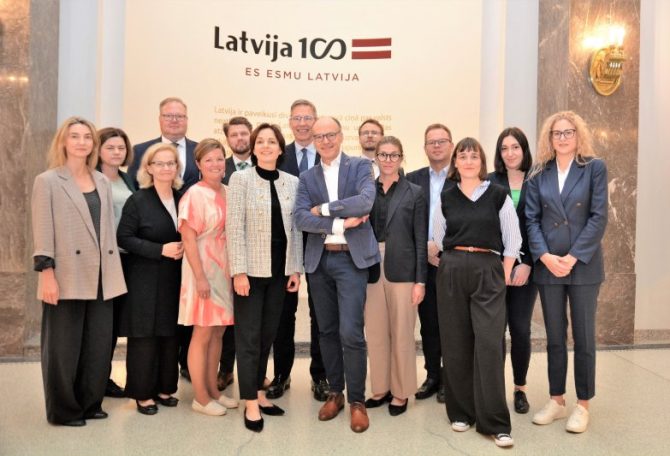
EUSBSR National Coordinators Group meeting in September 2023
18 October 2023
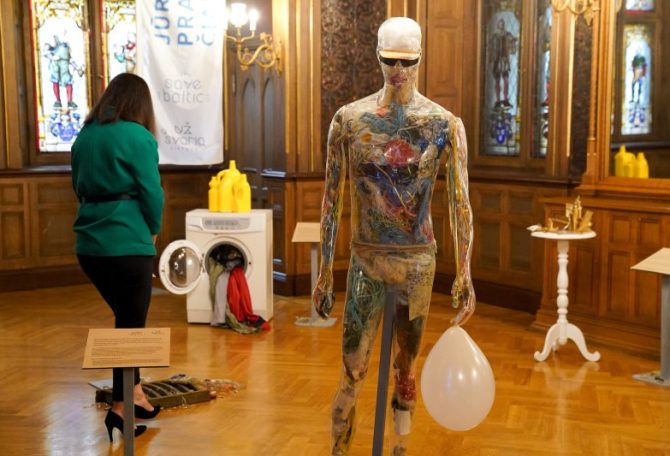
“Let’s Save the Baltic Sea” environmental campaign
12 October 2023
Latvia takes over the EUSBSR Presidency 2023-2024
03 July 2023