
 Back
BackFrom NEETs to FEETs
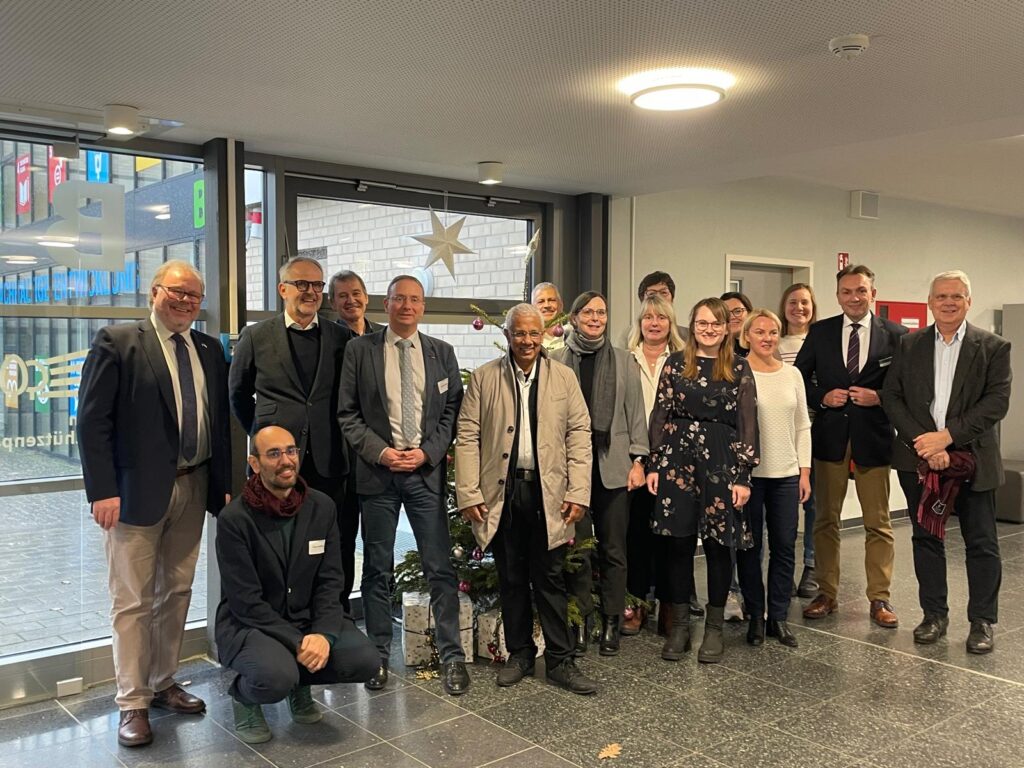
Under the headline, “From NEETs to FEETs” Interreg Europe organized a peer review which was hosted at the Schleswig-Holstein Institute for Vocational Education and Training in Kiel in the week before Christmas.
The two abbreviations stand for “Not in Educated, Employed or Trained” and “Fully Educated, Employed and Tax paying”. A peer review is a two-day meeting focusing on a regional policy challenge together with a group of carefully selected peers with relevant experience and a team from Interreg Europe. Included in a peer review is (1) An in-depth analysis of the policy challenge, (2) An exchange of experience with relevant policymakers, and a presentation of potential solutions.
Three challenges were addressed:
Policy Area Education was represented by two peers, Anders Bergström and Gunnar Anderzon. The other peers represented the Public Employment Service in Lithuania, the Region of Puglia in Italy, the Réunion Island, and the Region East Belgium. Hosts were Schleswig-Holsteins Institute for Vocational Education. The hosts presented three challenges that the group of peers addressed in a co-creation format where solutions were developed jointly by the team of peers, hosts, and facilitators. The challenges were (1) How to make young people to choose a vocational education and training program after school? (2) How to reduce dropouts from vocational education and training programs? (3)How to make NEETs choose to continue their educations?
From Policy Area Education experiences were shared from the long-lasting work on developing measures preventing early school leaving and re-integration of NEETs in education, training or in the labour market. The flagship, School to Work has been instrumental in the developing of measures and for supporting member states when implementing the measures nationally, regionally, and locally. The hosts showed interest in the early warning systems identifying pupils at risk of dropout of school and the Youth Guidance Centres, the centre of excellence being developed in a co-creation process in the framework of Policy Area Education. Centres are now being established in Lithuania and Poland. In Denmark, Finland and Germany the present centres are further developed using the results from EUSBSR.