
 Back
BackNutrient recycling and biomass valorisation for a resilient Baltic Sea Bioeconomy
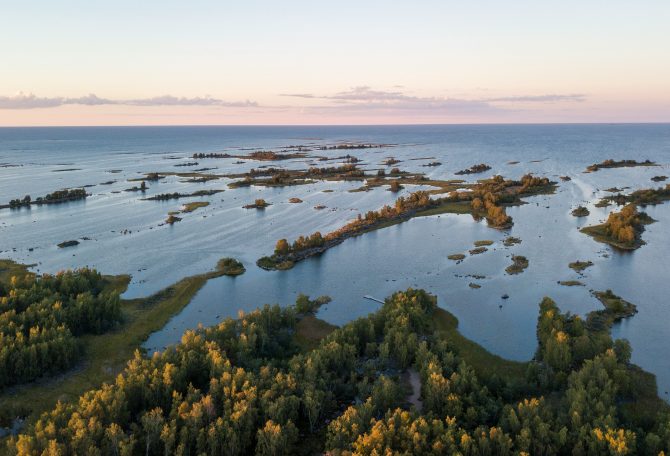
Eutrophication is still a considerable problem in the Baltic Sea, despite of the many efforts made to improve the state of the sea. This is caused by oversupply of nutrients (N and P) mainly released from the agricultural sector and wastewater. Due to the
impact of climate change, the challenge will be even greater in the future.
The global phosphorus resources are limited and often situated in geopolitically delicate areas. Imports of nitrogen fertilizers are concentrated in a few countries and prices and availability are sensitive to market fluctuations. At the same time, valuable nutrients, e.g. in manure, are wasted instead of being used effectively for plant nutrition. As the geopolitical situation in the Baltic Sea Region changes, resilience of agricultural production, including nutrient use efficiency and recycling, should be even more in focus.
Nutrient recycling is at the heart of a sustainable and resilient food system. The potential of bioeconomy and circularity is particularly high in the more efficient utilization of organic side streams as a raw material for renewable energy and fertilizing products. It is important to develop and take into use new sustainable methods in farming and nutrient recycling, enhancing the security of supply in farming, e.g. in fertilizers and energy as well as developing farming practices to better adapt to the changing operational environment both economically and ecologically.
New innovations, investments and products for the nutrient recycling sector are constantly being developed, but more work is still needed to mainstream nutrient recycling into a genuine, profitable nutrient circular economy. We need new recovery and production processes of organic nutrients, product development and service solutions as well as more expertise and cooperation. In particular, biomass logistics, with different processing methods and digital solutions in addition to physical storage, transport and distribution methods, is not yet sufficiently developed. The production and analysis of research-based information are basic prerequisites that are still needed. Nutrient recycling can also be improved through new types of financing arrangements that can direct private funding more effectively towards nutrient recycling.
The economical adaptation could include for example developing of new performancebased support systems. The introduction of performance-based funding models requires development of measuring the results and effectiveness of actions/measures. PA Bioeconomy strives to contribute to the development of this matter.
The Baltic Sea Region has significant potential for biomass valorisation due to its abundant natural resources. However, the current practices are not fully optimized, leading to inefficiencies and environmental concerns. Technological advancements and innovative approaches are needed to enhance the utilization of biomass and reduce waste.
By focusing on sustainable practices, the region can improve its resource management and contribute to a bioeconomy and enhance circularity.
The main challenges include technological barriers, economic constraints, and logisti-cal issues. There is a need for investment in research and development to create effi-cient biomass processing technologies. Additionally, economic incentives and support-ive policies are crucial to encourage stakeholders to adopt sustainable practices. The opportunities lie in the potential for job creation, economic growth, and environmen-tal benefits through improved biomass valorisation.
Policy Area Bioeconomy Coordinator Comment
Policy Area Bioeconomy and other Policy Areas of the EUSBSR, are among the key players to tackle the challenge regarding the state of the Baltic Sea. Firstly, the challenge is common to all the member states in the Baltic Sea Region and, secondly, it is not possible to solve it with activities of only one country or in a short time frame. Im-proved recycling of nutrients from agriculture is one of the solutions. There have been several successful transnational cooperation projects dealing with nutrient recycling in agriculture since the EUSBSR was launched, such as Baltic DEAL, Baltic MANURE, Recycling of Phosphorus, Manure Standars, Baltic Slurry Acidification and SuMaNu, to mention a few. Currently, the project CINURGI is continuing this work, e.g. by support-ing the implementation of the HELCOM Regional Action Plan for Nutrient Recycling.
However, new affordable solutions are still needed to solve the problem and to improve nutrient recycling in agriculture. The influence of climate change is currently cutting down the results already achieved, while the geopolitical situation makes the opera-tional environment unpredictable. PA Bioeconomy can further support the implemen-tation of the HELCOM Regional Action Plan for Nutrient Recycling by advising and sup-porting project promoters that are looking for funding to develop new solutions and tools e.g. for nutrient recycling in agriculture. Better involvement of farmers can be supported by inviting them to events where new solutions are presented and discussed as well as by ensuring their participation in the relevant projects. Knowledge ex-change, especially peer-to-peer learning of farmers and other relevant stakeholders has proven to be the most efficient method in adopting new ways of doing things.
The EUSBSR’s Policy Area Bioeconomy also aims to promote sustainable practices and enhance the bioeconomy in the region with the particular focus to rural areas, as the biggest sources of biomass are there. Increasing biomass valorisation aligns with the strategy’s objectives of sustainability, prosperity, and regional cooperation. By improv-ing the utilization of biomass, we can reduce environmental impacts, create economic opportunities, and foster collaboration among stakeholders.
Several initiatives are already underway to enhance biomass valorisation in the Baltic Sea Region. For example, the SUBMARINER Network promotes innovative uses of marine resources, including algae and other marine biomass. The Interreg BSR Programme sup-ports projects that focus on sustainable bioeconomy practices, including biomass val-orisation. These initiatives demonstrate the potential for transnational cooperation to achieve common goals and drive progress in the region.
Acceleration of bioeconomy and promoting sustainable business models in rural areas is a significant contribution to the goals of EU Strategy for the Baltic Sea Region. As the EU Baltic Sea Region is not a homogeneous region, countries are performing differ-ent platforms and instruments promoting sustainability and bio-based business, trying to encourage and streamline cross sectorial cooperation. The analytical documents “Bioeconomy in Lithuania. New Opportunities for Rural Areas and Agriculture” in 2019 and “Industrial Symbiosis – an end or a means? State of Art in the Baltic Sea Region” in 2024, initiated by PA Bioeconomy, provide a comprehensive picture of solutions at the practical level.
We can be pleased to have such initiatives as project BioBoosters financed by the In-terreg Baltic Sea Region Programme, that serves as an excellent platform gathering different stakeholders to share the know-how in circular production and trigger green business opportunities. Projects as KISMET, StratKIT+ and other meaningful national initiatives such as Bioregion of Gauja National Park in Latvia are increasing awareness
Policy Area Bioeconomy Coordinators
Ministry of Agriculture of the Republic of Lithuania
Vitalija Fokienė
vitalija.fokiene@zum.ltMinistry of Agriculture of the Republic of Lithuania
Securing the Future – Views from the Policy Area Coordinators
This text is originally published in the “Securing the Future – Views from the Policy Area Coordinators” publication. The publication consists of thematically focused articles that are aligned with the Strategy objectives. The texts support informed discussion on topics relevant across the Baltic Sea Region.
Download the full publication here.
Related content
New funding opportunities at Swedish Institute
26 February 2026
Save the Date: BSSSC Day of Cities and Regions 2026 in Tallinn
28 January 2026
BioBoosters Network meeting
15 December 2025