
 Back
Baltic Sea Region mental health work presented at the WHO Regional Committee for Europe
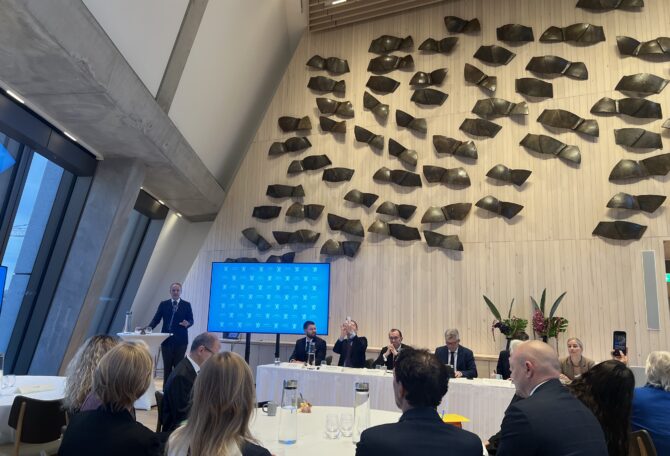
The approach of the Baltic Sea Region Mental Health Platform was presented to health ministers and delegates of the 53 Member States of the WHO European Region at the 76th session of the WHO Regional Committee for Europe (RC76), held in Copenhagen on 27-29 October 2026. Ülla-Karin Nurm, Director of the NDPHS Secretariat, which leads the platform and coordinates Policy Area Health in the EU Strategy for the Baltic Sea Region, took the floor under three agenda items.
A session with mental health on the agenda
The Regional Committee is WHO’s decision-making body in the European Region and sets the direction for regional health policy. This year, Member States adopted “Ageing is living”, the regional strategy on healthy ageing for 2026-2030. They were also consulted on a new strategy to tackle noncommunicable diseases (NCDs) and advance well-being through health promotion, due for adoption in 2027. WHO/Europe also raised the possibility of a complementary regional strategy on mental health and well-being for the same period, which is still under discussion. The consultation comes 40 years after the Ottawa Charter for Health Promotion.
Mental health also featured in other items. The report on the work of the Regional Office notes that one in three doctors and nurses report symptoms of depression, and the ageing strategy covers mental as well as physical health.
Early action and caring for caregivers
In the debate on the report on the work of the Regional Office, Ülla-Karin Nurm stressed the need for early action, as one in seven young people in the Region has a mental health condition. She described how the platform brings together work on supportive communities, schools and workplaces through arts and culture, physical activity, nature and the design of spaces, and translates it into policy recommendations. Responding to the report’s figures on health workers, she noted that resilience also means caring for caregivers.
Healthy working life and mental health across the life course
Turning to “Ageing is living”, the NDPHS Secretariat Director welcomed the strategy’s investment across the life course and argued that workplaces deserve recognition as settings for healthy ageing. “We cannot ask people to stay longer at work without ensuring work lets them stay healthy longer,” she said, adding that good work also supports mental health and keeps people connected. As an example, she pointed to SAFE (Solutions for Age-Friendly Employers), a platform project funded by Interreg Central Baltic, that works with health and social care employers and contributes to the platform’s work on mental health at work and across the life course.
Mental health as a priority in its own right
The platform featured most prominently in the consultation on NCDs and mental health, where Ülla-Karin Nurm voiced support for a dedicated strategy on mental health and well-being. “Some risk factors are shared, but much of what shapes mental health lies elsewhere, in social connections and the places where people learn, work and live,” she said. Because many causes lie outside health care, she also supported a mental health in all policies approach. “The EU Strategy for the Baltic Sea Region, where we coordinate Policy Area Health, offers a unique framework for utilizing Ottawa Charter principles for mental health promotion: we are bringing together education, culture, sport and urban planning across different levels of governance,” she added.
Presenting the platform as an example of a mental health in all policies approach, she explained that it connects sectors and communities, helps scale up effective non-clinical interventions and turns the results into policy recommendations. In schools, for example, young people in the SchoolChanger platform project, funded by Interreg Baltic Sea Region, help shape their school environments, at a time when anxiety among children and adolescents has almost doubled since 2010.
Looking ahead
As strategy development at WHO/Europe continues over the coming year, the platform will continue to share its findings wherever they can inform the process. WHO/Europe is represented in the platform’s steering group, and we look forward to continued cooperation with colleagues at the Regional Office.