

 Back
BackAnnual Forum 2025 – Are Our Green Fuels Ready for Green Shipping Corridors?
Behind the panel discussion: Who, what, where?
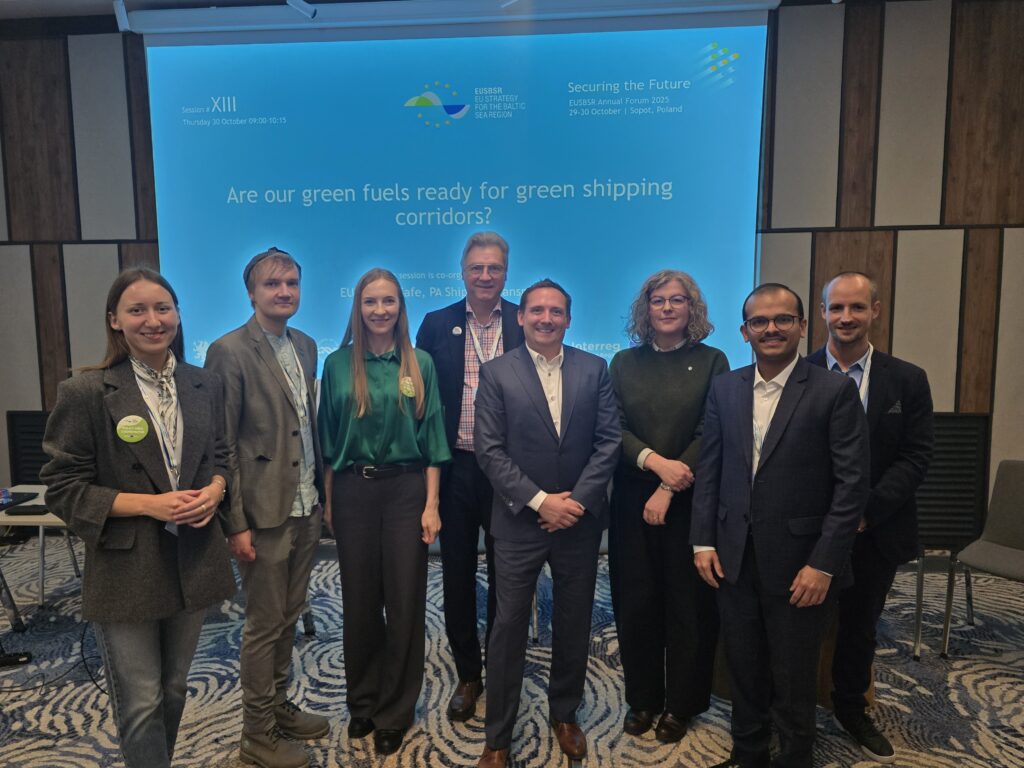
The Annual Forum of the EU Strategy for the Baltic Sea Region (EUSBSR), held on 29–30 October in Sopot, gathered policymakers, researchers, and industry experts from across the region to discuss how to strengthen resilience, energy security, and climate-neutral growth. Among its highlights was the joint session organised by Policy Area (PA) Transport, PA Safe, and PA Ship — “Are Our Green Fuels Ready for Green Shipping Corridors?”
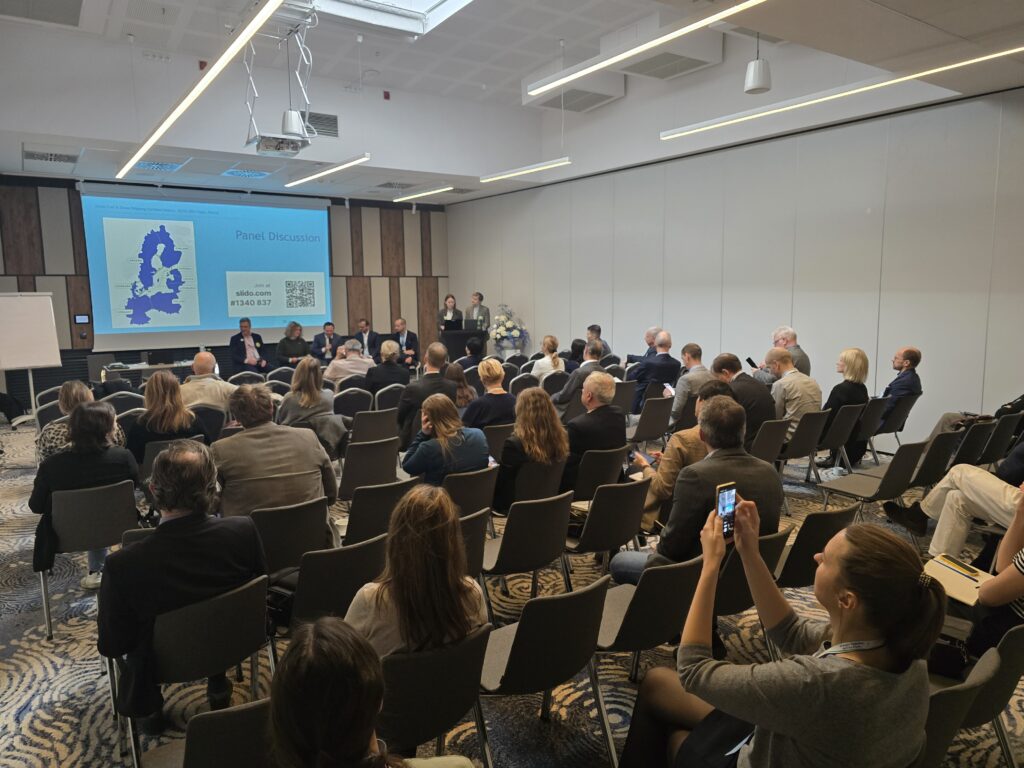
The discussion explored the readiness of ports, logistics chains, and maritime actors for large-scale adoption of green fuels in the Baltic Sea Region. The session was moderated by Ulf Siwe (Swedish Maritime Administration, PA Safe) and co-organised by Annabel Keerd (Ministry of Climate, Estonia, PA Transport), Dr Miglė Panasenkienė (Transport Innovation Association, Lithuania, PA Transport), and Sami Vesterinen (Traficom, Finland, PA Safe). Key insights came from project representatives Stefan Breitenbach and Vivin Sudhakar (Port of Hamburg Marketing, Blue Supply Chains and H2Derivatives@BSP), Ignė Stalmokaitė (IVL Swedish Environmental Research Institute, H2Derivatives@BSP), Rafał Koba (Gdynia Maritime University, INCONE60 Green), and Kyriakos Kourtidis (PA Ship Youth representative), who addressed how regional initiatives and ports can together accelerate the development of sustainable and resilient green shipping corridors across the Baltic Sea.
More about the Projects
The panel discussion started with introductions to the projects. Stefan Breitenbach from Port of Hamburg Marketing represented Blue Supply Chains, which aims to decarbonise port operations holistically throughout the transport chains by electrification, providing alternative fuel strategies and setting up green transport chains. As the Blue Supply Chains is completed in 2025, project H2Deri@BSP is the continuation of the alternative fuel strategies in the region. Vivin Sudhaka from Port of Hamburg Marketing, continued the presentation by introducing the latter project to the audience. H2Deri@BSP aims to assist port authorities, terminal operators and energy providers to integrate green hydrogen derivative fuels into port operations to reduce CO2 emissions and to turn seaports into green energy hubs. Ignė Stalmokaitė from IVL (Swedish Environmental Research Institute) continued with the presentation from the project H2Der@BSP by showing the audience results from the first completed market analysis. Rafał Koba from Gdynia Maritime University gave perspective to the discussion from small and medium sized ports with a presentation from the project INCONE60 Green-an initiative designed to increase sustainability in small port operations and logistics and to utilize cutting-edge technology. The project aims to minimize environmental impact while ensuring that the logistics sector can meet the demands of a growing global economy. All the panellists and projects brought their knowledge and perspectives to the discussion, resulting in a beneficial discussion on the development of green shipping corridors.
The Green Shipping Corridor Paradox
The paradox of functioning green shipping corridors lies in their often unsustainable green fuel supply chains. Simultaneously, solely the variety of fuels that are available can deter ship operators from transitioning from conventional fuels to green fuels. Given the availability of fuels and legislative uncertainty, newcomers need to be provided with incentives and encouraged with a shift in mindset. The panel discussion addressed the current hurdles related to green fuels and showcased examples of projects supporting green shipping corridors.
Insights of the Panel Discussion
The Baltic Sea region is building its capacity to provide a variety of green fuels, however there is a lack of consistency in regional and national policies, found the panellists. Koba suggested that in order to encourage companies to innovate and compete, regulators should set performance targets rather than dictate specific technologies. Hereby, to speed implementation, approval processes for new technologies should be streamlined, for instance by using a centralized approval system recognised across all member states. He added that financing pilot projects is critical to reduce risk and attract private investment.
Concerning high costs for newcomers, Stalmokaitė stated: “one of the key challenges linked to the uptake of green shipping corridors is the limited availability of cost- and risk- sharing mechanisms between shipping actors and society”. For instance, actors can help bridge the cost gap by pooling. She added: “in this context, we are seeing the emergence of the first green shipping corridors based on new business models, such as trading surplus emission reductions”. Breitenbach noted that governments could play a role in absorbing some of these costs through subsidies or incentives, carbon pricing, green bonds or financing.
Nevertheless, Baltic ports are evolving the regional readiness of green fuels. For instance, ports like Vordingborg are developing their own infrastructure for alternative fuels. The Port of Hamburg is progressing rapidly to support major alternative fuel types- methanol, ammonia, shore-electricity and hydrogen. In Hamburg, there is a Sustainable Energy Hub, mainly located in the port areas with large-scale industrial and terminal companies with sufficient distance from residential areas and critical infrastructure. Furthermore, the Port of Hamburg is developing a 100 MW electrolyzer project- the Hamburg Green Hydrogen Hub. Aiming to build partnership and develop a concept for a larger EU initiative on green shipping corridors, IVL has recently launched a seed project “Baltic Sea Green Shipping Corridors”, funded by the Swedish Institute in cooperation with the Port of Klaipėda and the Baltic Ports Organization.
The panellists elaborated on the pros and cons of specific green fuels. Koba explained how green hydrogen is produced by splitting water, using renewable electricity, commonly wind and solar power. In this process, water consumption is about 9 litres per kilogram of hydrogen, whereas ports can use seawater instead of freshwater, reducing pressure on drinking water supplies. He stated: “the Baltic region has excellent wind resources, making hydrogen production here highly efficient”.
Within the framework of the H2Derivatives@BSP project, IVL has conducted a comprehensive market analysis of hydrogen and hydrogen derivatives supply and demand in the region. The results show that there is a growing momentum towards renewable maritime fuels, yet hydrogen derivatives production and consumption remain at an early stage in eight countries bordering the Baltic Sea. More information can be found here: Knowledge base for renewable fuels in shipping – IVL.se. Moreover, Hamburg is positioning itself as a major hydrogen hub in Northern Germany. The Federal Government and the City of Hamburg have approved funding of over €250 million (under the European IPCEI scheme) for the two abovementioned hydrogen infrastructure projects.
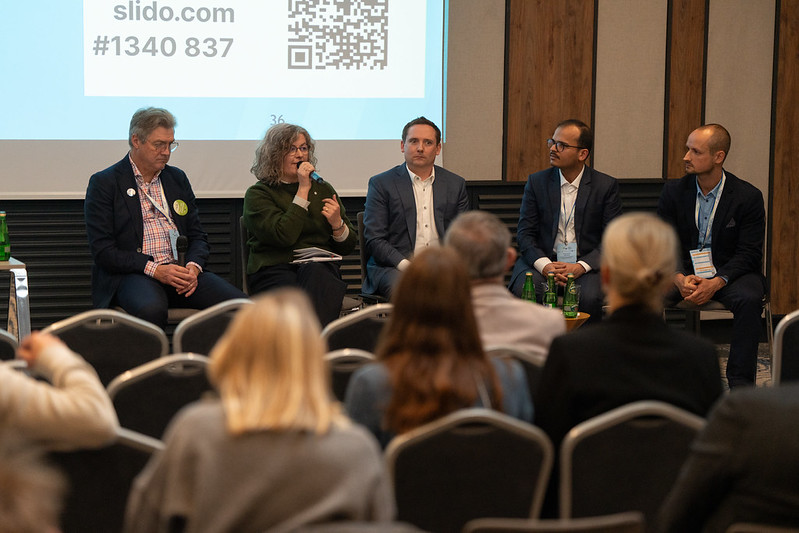
When it comes to liquified natural gas (LNG), it is a transitional fuel rather than a long-term solution for decarbonization. Nevertheless, LNG is far cleaner than heavy fuel oil in terms of local pollutants, such as SOₓ, NOₓ and particulate matter, explained Breitenbach. He noted that LNG reduces CO₂ emissions by about 20-30% compared to heavy fuel oil. Nonetheless, the challenge is methane slip- unburned methane that escapes from engines during combustion. Methane is notably more damaging to the climate than CO₂ in the short term. The solution requires advanced engines with better methane controls, strict monitoring of engine performance, and transitioning to renewable methane. However, Koba noted: “the key insight is that not every port needs to offer every fuel type”. Different ports can specialise in various fuels, creating an efficient network approach. Through digital coordination platforms like SeaTech, ports can collaborate and develop infrastructure for different fuel types.
The panelists discussed the value of green shipping corridors improving resilience of the Baltic Sea. On one hand, green fuels are approved by societies, noted Breitenbach. Approval from local communities increases social sustainability and builds trust among the public in the maritime industry. Increasing access to green fuels in ports has also a positive spillover effect on hinterland connection, affecting a broader spectrum of stakeholders. Besides, supplying green fuel for the entire value chain can expand the definition of a green shipping corridor, stated Sudhakar. On the other hand, Stalmokaitė stated that the concept of a green shipping corridor can be handled as a tool for facilitating decarbonization. Some of its functions are enhancing port planning as well as reducing dependency and vulnerability brought by conventional fuels. An industry undergoing a paradigm shift by exploring the opportunities of improving resilience, Stalmokaitė added that establishing a green shipping corridor can be seen as an opportunity. Overall, the panellists agreed that green shipping corridors have a notable role in offering stability for the future of the Baltic Sea region.
The role of EU and EUSBSR on Green Shipping Corridor initiatives
“Investment must come from multiple sources: EU funding programs like Interreg, national governments, shipping companies, and private banks offering green financing. EU regulations add costs to shipping, roughly €50-€100 per ton of CO₂. Large international shipping companies can absorb these costs more easily than smaller ports and regional operators, who need targeted support to stay competitive. That is where EU programs like Interreg are essential. Without their support, regional competitiveness would suffer significantly.” – Rafał Koba
Regional EU strategies like EUSBSR provide stability that local politics cannot. Even when local decision-makers change, the regional framework persists with continued funding. Projects, such as INCONE60 and INCONE60 Green showcase its importance. Multi-year EU programs create the predictability ports and operators need for long-term investments. Ports can confidently invest in infrastructure knowing the EU commitment continues despite local political changes. This consistency is crucial for success.
We should broaden our thinking beyond “corridors.” Today’s Baltic maritime activity includes offshore wind service, aquaculture support, and alternative fuel operations—not just scheduled shipping routes. This network approach is more resilient and efficient than isolated corridors alone.
Conclusions from the Discussion
The panel discussion concluded that while technological progress and pilot projects across the Baltic Sea Region are advancing rapidly, achieving truly sustainable maritime transport requires stronger policy alignment, financing mechanisms, and long-term commitment. The EUSBSR provides the stability and cooperation framework needed for such progress, enabling ports and projects to drive innovation and resilience. Ultimately, the transition to green shipping corridors depends on collective action, linking policymakers, industry, and society to secure a climate-neutral and competitive future for Baltic maritime transport.
Securing the Future – Views from the Policy Area Coordinators
“Securing the Future – Views from the Policy Area Coordinators” publication consists of thematically focused articles that are aligned with the Strategy objectives and support informed discussion.
To read more about the Green Corridors, read the article “Saving the Sea, One Ship at a Time: A Call for Sustainable Maritime Action in the Baltic Sea”.
Download the publication here.
More about the Annual Forum
- Securing the Future – Views from the Policy Area Coordinators
- Building the Baltic Sea Region’s AI Future: From Hype to Real Impact
- New Circular Economy Solutions: Perspectives to Circular Economy in a Panel Discussion
- Energy Transformation: pathways to Baltic Sea region‘s energy resilience
- The Soft Core of Hard Security: Community Cohesion and Agency in Times of Insecurity
- Routes That Resonate: Tourism and Culture as Bridges in the Baltic Sea Region
- Economy of Wellbeing of People: Building Sustainable Working Lives in the Baltic Sea Region
- Regions bordering Russian Federation and Belarus
- Beyond Borders: Turning Interreg Results into Policy Action
- Are Our Green Fuels Ready for Green Shipping Corridors?
Related content

New funding opportunities at Swedish Institute
26 February 2026