
 Back
BackAnnual Forum 2024: Recreating opportunities for twin towns – a new role in a modern, global and digital world
Town twinning remains an important basis for city partnerships and international cooperation. However, due to the changing global landscape it demands a more strategic and sustainable approach.
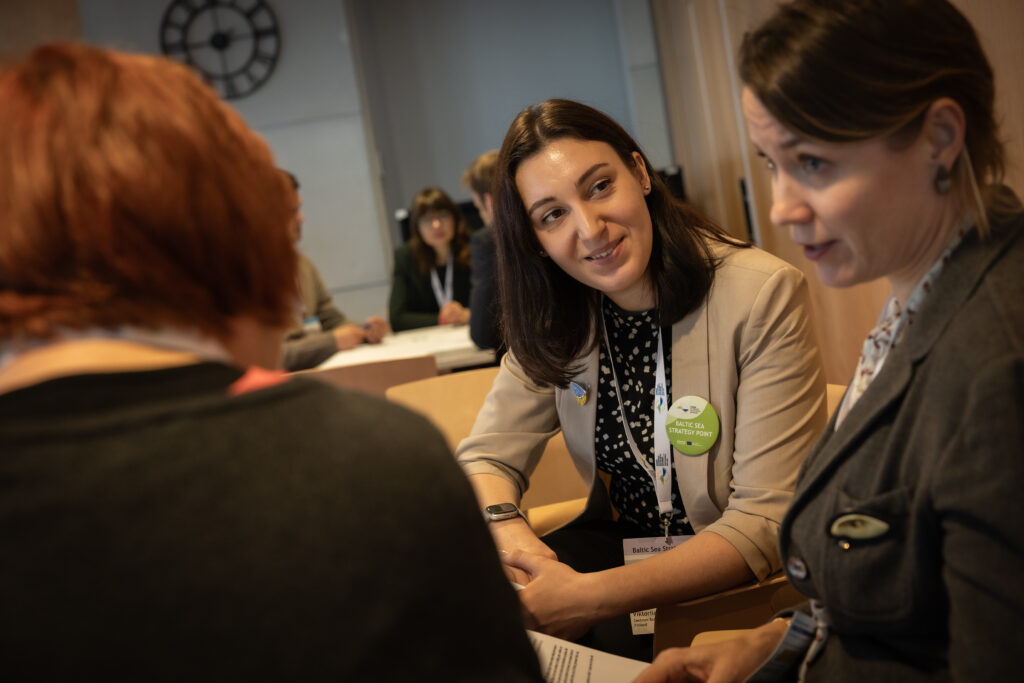
This is a conclusion of a workshop on a new role of twin towns organized by the City of Rostock, which was held as a part of the Annual Forum of the EU Strategy for the Baltic Sea Region on 30 October in Visby, Sweden.
The concept of twin towns in Europe was conceived after the Second World War to rebuild diplomatic relationships and to reconcile citizens. It was implemented mostly through cultural and educational exchanges and for a long time presented a valuable form of city diplomacy. To some towns, it was also the only possibility for an international cooperation on municipal level.
In recent years, especially in the European Union, the original role of twin towns, as peace promoting agents, has somewhat faded and the partnerships became either inactive or integrated in multilateral projects. The latter often refers to EU-funded projects which offer unlimited possibilities for cooperation with many European cities, not just in the field of culture and education but also concerning city development, mobility and environment.
The goal of the workshop was to propose strategies to reactivate town twinning relationships and to explore opportunities between twin towns in the Baltic Sea Region and the Ukraine in order to bring recommendations and ideas for the development of sustainable business and youth projects in accordance with the Strategy goals.
The workshop targeted mid-level management in municipalities and ministries responsible for international relations, EU-projects and youth, NGOs, youth organisations, educational institutions, entrepreneurs, city developers and representatives of Ukrainian municipalities. The participants were divided into five groups thematically relevant to their professional background, each having a different assignment to work on and to deliver a proposal.
The first group, whose task was to propose activities for reactivation of a partnership among Baltic cities, agreed that twinning offers immense opportunities for cooperation and networking. However, it can only be successful if the cities know each other better. This means that each twin town should thoroughly assess the existing partnership and its potentials, use long lasting resources, run deeper discussions about mutual challenges and determine together projects which would be mutually beneficial. Additionally, it was confirmed that regular exchanges and visits on staff level are crucial for an effective cooperation and should be implemented in the city strategies. In this regard, many attendees agreed that it is easier and more sustainable to search partners for EU-funded projects or advice among long-lasting colleagues and known recourses than to attend for this purpose forums and conferences.
The participants having to propose youth projects concluded that common activities with twin towns can only result from common interests, which luckily many cities in the Baltic Sea Region share. They opted for a traditional approach and proposed exchange projects between schools, teachers and students as well as cultural exchange in form of organizing joint concerts, sports or art events. This group also emphasized the importance to revitalize the long lasting resources and to keep the cooperation sustainable.
The third group, working on a business project, suggested that twin towns could be utilized as model towns for development and respected source of experience, knowledge and resources. In their presentation they offered two projects as an example: Liveable Cities and Transparent Communities.
How can twinning with Ukrainian cities provide a successful means of support for their reconstruction was in focus of the last two working groups. Speaking of infrastructural projects, many stakeholders, coming from regional government and public companies to software experts and service providers are to be involved in their implementation. Therefore, it was concluded that twinning with Ukrainian municipalities can facilitate the implementation of infrastructural projects but it can only be a part of the solution.
On the other hand, a town in the Baltic Sea Region can be an important partner in capacity-building projects with a Ukrainian town, especially concerning topics such as political participation, inclusion, peace and post-conflict reconciliation. Finally, the European Union provides significant financial resources for projects which Ukrainian towns and twinning which should be taken into account. At the end, the workshop showed that twin towns have potential to modify their primary peace messenger role and become substantial partners in the implementation of sustainable projects and capacity-building initiatives. Furthermore, it is clear that twin town relationships in the Baltic Sea Region can significantly contribute to connecting the region, fostering good neighbourhood relationships and mutual development.