
 Back
Cohesion builds the favourable precondition for a competitive Europe and the Baltic Sea Region
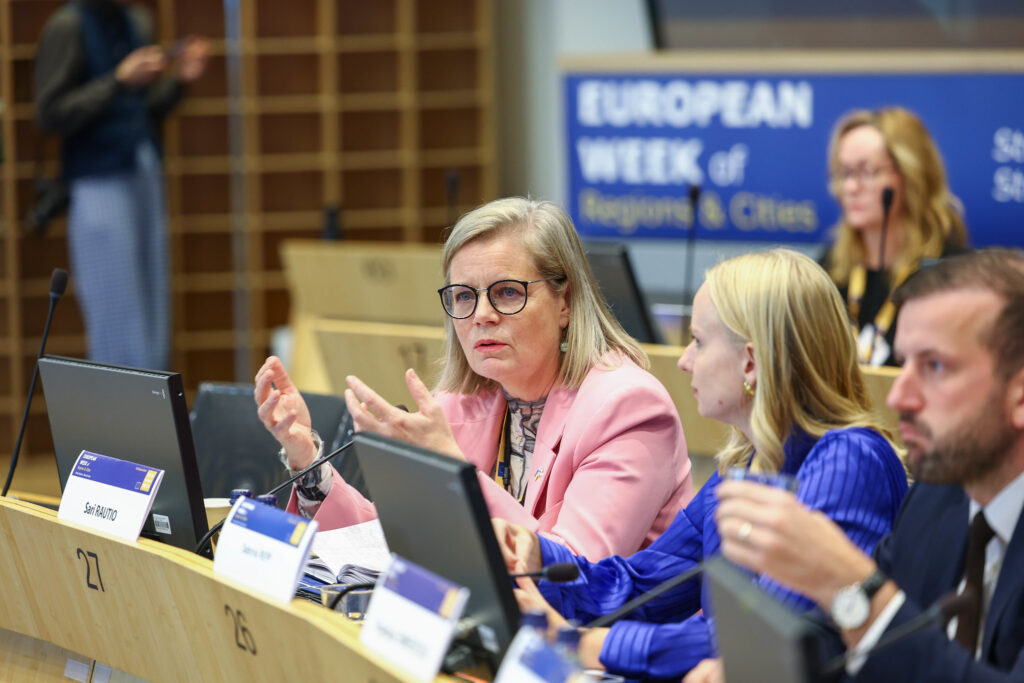
The Baltic Sea Region, like all macro-regions, faces challenges that no country, region or city can tackle alone. Resilience, competitiveness, climate work and connectivity all require territorial solutions. This was the starting point for the session “Fit for purpose – EU Strategy for the Baltic Sea Region builds a competitive, prosperous and carbon neutral region” at the EU Week of Regions and Cities 2026.
The EU Strategy for the Baltic Sea Region Action Plan (2026, pending Commission approval) gave the framework for the discussion. The recently updated Action Plan is the most geographically and thematically comprehensive framework for transnational work in the Baltic Sea Region. The Member States of the Strategy highlight the urgent need to respond to challenges such as a rapidly evolving security environment and increasingly complex multi-hazard risks: accelerating climate change and persistent environmental pressures, demographic change, and the demands of the green and digital transitions.
In the process of updating the Action Plan, the Member States were unanimous about strengthening resilience in a comprehensive and holistic manner. This is also what the speakers in the panel emphasised.
Resilience in the Baltic Sea Region
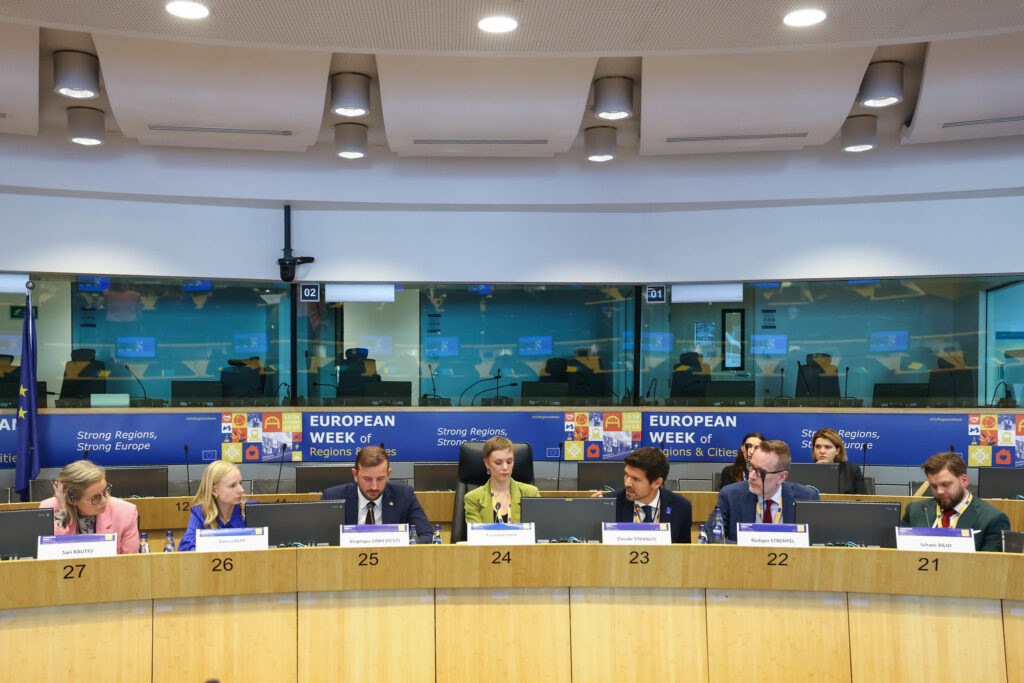
Davide Strangis, Secretary-General of CPMR, commended the Baltic Sea Region for its comprehensive understanding of resilience, which covers not only security questions but also ecological and societal issues. “We should have a 360-degree approach to resilience. Theoretically, there is room on the agenda for both the ecological and the security side of things, but we need to find the room in the budget. EU is trusted with such high ambitions, but then we question the resources.”
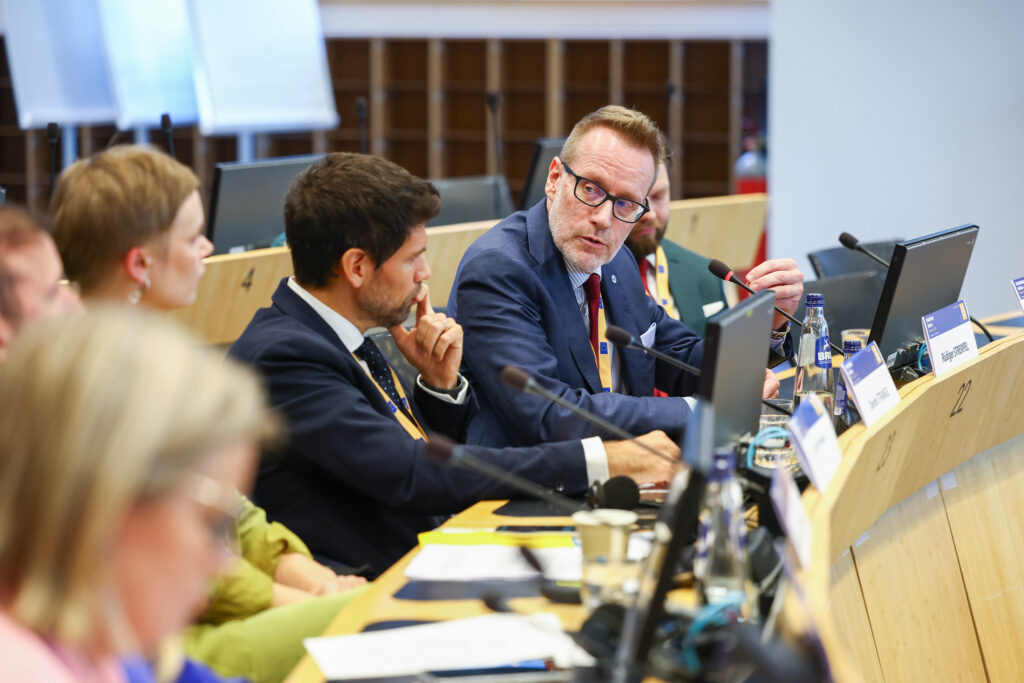
Rüdiger Strempel, Executive Secretary of the HELCOM Secretariat, emphasised that we are living in a polycrisis: “We have the triple planetary crisis of pollution, climate crisis and biodiversity loss, and at the same time, political pressure to invest more in security. In a degrading environment, people are less resilient.” According to Strempel, the issues are not antithetical: “There is a clear environment-security nexus. The environment impacts security, and with dual-use measures and wise allocation of resources, we can cover both.”
Virginius Sinkevičius, a Member of the European Parliament and Vice-Chair of the Greens, complemented the Baltic Sea Region for the successful Baltic interconnection in 2025, showing that we have a history of successful regional solutions that increase resilience.
In the EU, regions and cities have no similar decision-takin position as the Parliament, the Commission and the Council. Sari Raution, President of the European People’s Party Group at the Committee of the Regions, is convinced of the role that the regions still play: “Understanding of how the ecosystem works is key to well-functioning multilevel governance. Cities and regions are the closest to the EU citizens and understand the emerging needs and changes early.”
Similarly, Sinkevičius highlighted the importance of engaging the people on the ground: “A declaration will not do the work. We need people’s buy-in to get the real influence.”
“We need to defend cohesion policy and funding” – Sabrina Repp, Member of the European Parliament
Sabrina Repp, Member of the European Parliament (S&D) directed the resilience discussion to funding, stating that only with a strong EU budget can we make a strong Strategy for the Baltic Sea Region: “Some countries are calling for horizontal cuts. Less money and more topics is an impossible combination.” Repp emphasises the importance of defending cohesion policy and funding, saying that European competitiveness is built on cohesion, and that this will create the favourable preconditions for strengthening the economy, too.
The EU is in the middle of the discussions for the next multiannual financial framework. Many questions remain open, but the Irish Presidency’s main focus, leading the discussions, seems clear: competitiveness, security and austerity. There are positive signals for the macro-regional approach, and it now seems that the macro-region strategies will sustain their role as the framework for the territorially linked countries to discuss and agree on joint emphasis areas.
The importance and political gravity of territorial frameworks has increased, particularly as the geopolitical circumstances in the Baltic Sea Region and across the EU has grown more dire. The democratic countries are coming together, and the cooperation networks are growing stronger, descriped Strempel his observations since 2019, when he joined HELCOM.
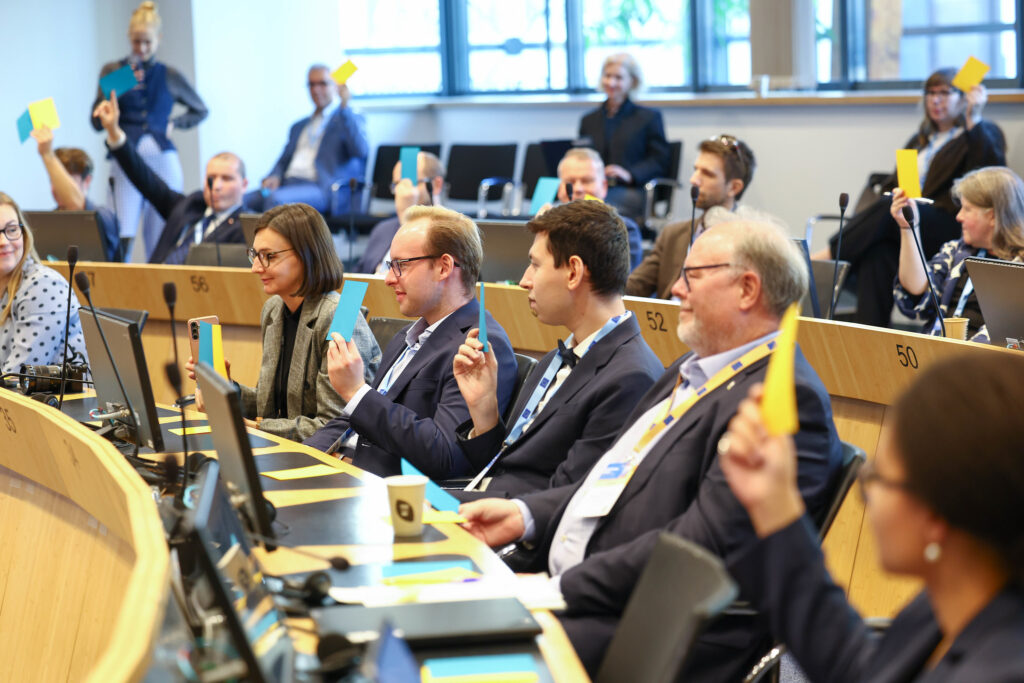
The session was organised jointy by the Baltic Sea Strategy Point and the CPMR Baltic Sea Commission Secretariat.