
 Back
BackWater-smart cities: regenerating water and nutrients for a resilient Baltic Sea Region
Floods, droughts, and water shortages are no longer distant threats. They are already reshaping how we live, especially in cities. With climate change accelerating, the need to rethink how we manage water and protect ecosystems has never been more urgent.
Across the Baltic Sea Region, a powerful movement is underway. Cities, scientists, planners, and communities are joining forces to build water-smart cities. These cities see wastewater not as waste, but as a valuable resource. They view nutrient runoff not as pollution, but as value to be reclaimed. And they design urban landscapes where nature and infrastructure work hand in hand to strengthen resilience.
Supported by the European Union, four groundbreaking projects — ReNutriWater, Nursecoast II, CityBlues, and WaterMan — are already proving that water innovation isn’t just a future vision. It’s here, tested on the ground, and ready to scale.
Why This Matters?
Climate change is breaking old rules. Cities face both floods and droughts, sometimes in the same season. When stormwater overwhelms infrastructure or water supplies dry up, the consequences are severe: pollution, disruption, and increased pressure on people and ecosystems. Yet these challenges also present an opportunity to rethink urban water systems, to embrace regenerative and circular solutions, and to build cities that thrive amid change.
ReNutriWater: Wastewater with Purpose
It’s time to stop thinking of wastewater as “waste.” Treated water and recovered nutrients can irrigate urban green spaces, enrich soils, and help cities adapt to dry spells.
ReNutriWater leads the way with pilot projects in Baltic municipalities that recycle treated wastewater for irrigation and landscaping. The project developed practical tools including:
- A handbook for municipalities launching water reuse initiatives
- A self-assessment tool to explore local reuse potential
- Business models to support sustainable investments
For cities battling water stress and nutrient loss, ReNutriWater offers a clear, practical path to close the loop and enhance resilience.
Nursecoast II: Cleaner Tourism, Healthier Coasts
Tourism is vital to the Baltic economy, but during peak seasons, small towns often face overloaded sewage systems. The result? Algae blooms, ecosystem damage, and threats to the very nature that attracts visitors. Nursecoast II fights back by promot-ing nature-based solutions like constructed wetlands and decentralized treatment systems. Operating in six countries, the project helps municipalities adopt green in-frastructure that supports tourism and protects the environment. Sharing knowledge across borders accelerates success and adapts solutions to local needs.
CityBlues: Designing with Nature
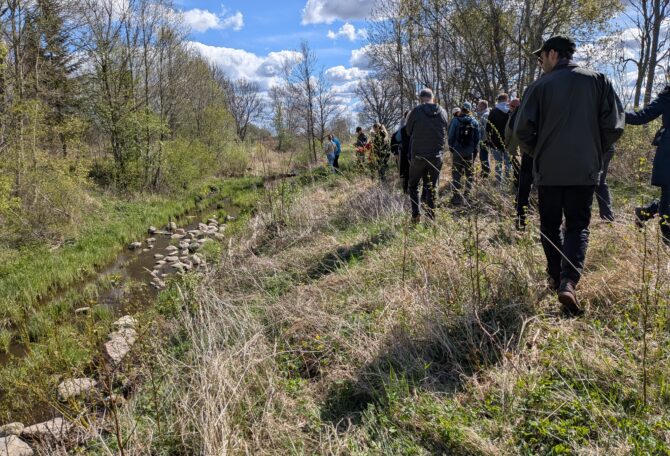
When you think of cities, you might picture concrete, traffic, and pipes. CityBlues of-fers a different vision. Cities like Aarhus, Tampere, Malmö, and Tartu are transform-ing stormwater management with urban meadows, wetlands, and bio-retention sys-tems. These green infrastructures absorb runoff, filter nutrients, reduce flood risks, and boost biodiversity.
Beyond aesthetics, CityBlues provides a full lifecycle model that guides cities in plan-ning, funding, maintaining, and eventually adapting or removing these systems. This approach ensures urban water management evolves sustainably over time.
WaterMan: Making Reuse the Rule, Not the Exception
In much of Europe, water reuse still feels niche. WaterMan is changing that by providing local authorities with tools, guidance, and support to reuse treated wastewater and stormwater safely and effectively.
Their Water Recycling Toolbox offers tailored advice, and their helpdesk supports mu-nicipalities just starting out. The project also advocates for policies that reflect the Baltic region’s unique conditions — wetter climates where reuse is about sustainability, not just scarcity. WaterMan’s message is clear: water reuse should be mainstream eve-rywhere.
What’s next and why is this interesting to you?
The EU’s Water Resilience Initiative and HELCOM’s Baltic Sea Action Plan set bold goals: less pollution, more reuse, and smarter water systems. These four projects are ahead of the curve, delivering tested tools and real-world solutions that cities can use now. Whether you live in a city, work in infrastructure, shape policy, or simply care about clean water and a liveable planet, this story involves you.
This is urban climate action in real time. It’s circular. It’s scalable. And it’s already working. Now, it’s time to bring water-smart thinking to every city that needs it.
Policy Area Nutri Coordinators
National Water Management Authority of Poland (PGW Wody Polskie)
Jan Pryzowicz
jan.pryzowicz@wody.gov.pl
Securing the Future – Views from the Policy Area Coordinators
This text is originally published in the “Securing the Future – Views from the Policy Area Coordinators” publication. The publication consists of thematically focused articles that are aligned with the Strategy objectives. The texts support informed discussion on topics relevant across the Baltic Sea Region.
Download the full publication here.
Klara Ramm, ReNutriWater
Anna Vilhula, City Blues
Salla Leppänen, City Blues
Murel Truu, City Blues
Ksawery Kuligowski, Nursecoast II
Tobias Facchini, WaterMan
Marcin Żuchowski, WaterMan
Elsi Kauppinen, Policy Area Coordinator, EUSBSR Policy Area Nutri