
 Back
BackThe role of Vessel Traffic Services systems in maritime safety and vessel traffic monitoring
The modern development of maritime transport requires increasingly effective tools to ensure navigational safety, protect the marine environment, and efficiently manage vessel traffic. One of the key elements of this system is vessel traffic services – VTS – which are systems for the supervision and organisation of ship movements in designated maritime areas. In Poland, three vessel traffic services systems are in operation: Gdańsk Bay, Słupsk Bank, and Świnoujście–Szczecin, each tailored to the specific characteristics of the region it serves.
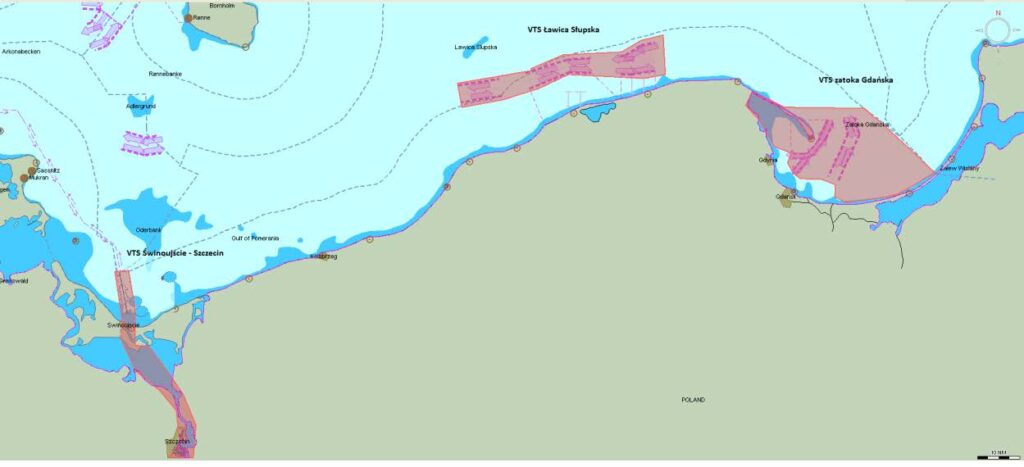
The primary function of vessel traffic services systems is to support the decision-making of ship crews and traffic management authorities. By integrating radar systems, Automatic Identification System (AIS), Very high frequency (VHF) communication systems, and closed-circuit television (CCTV) cameras, it is possible to continuously identify vessels, monitor their positions and courses, and respond to hazardous situations.
In accordance with the International Convention for the Safety of Life at Sea (SOLAS) Convention, as well as International Maritime Organisation (IMO) and European Union guidelines, vessel traffic services systems provide three basic services: informational and navigational assistance, and traffic organization. Their application helps to reduce the risk of collisions, mitigate the effects of adverse weather on navigation, and im-prove traffic efficiency.
Vessel traffic services also play a strategic role in the context of the Trans-European Transport Network (TEN-T). Their operation enhances the cohesion and efficiency of the network, promoting sustainable maritime transport development.
Impact of wind farms on the operation of Vessel traffic Ser-vices systems and maritime safety
The expansion of renewable energy infrastructure in the Baltic Sea, particularly off-shore wind farms, is one of the key challenges facing current vessel traffic management systems. New installations necessitate reconfiguration of shipping routes, which affects both traffic organization and the role of vessel traffic services systems. These changes bring technological benefits but also operational risks.
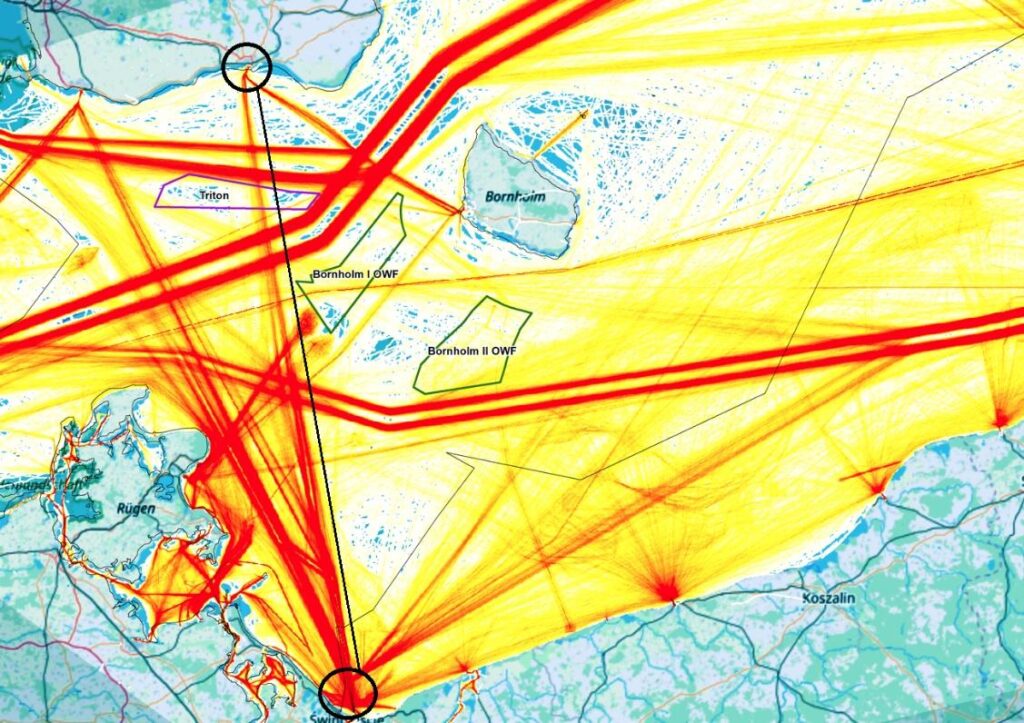
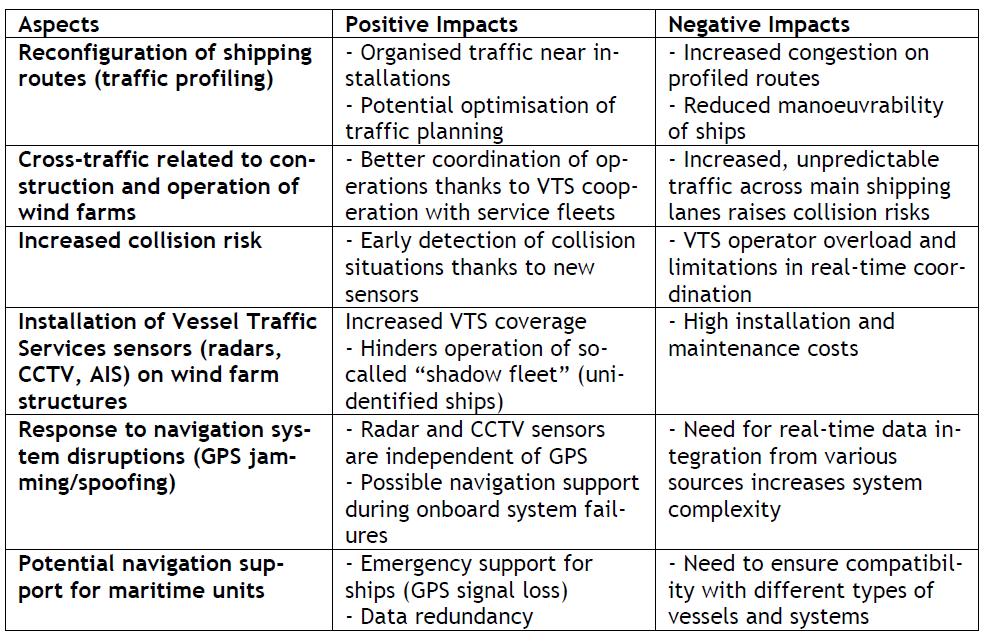
Wojciech Durczak who works as VTS Manager, Vessel Traffic Services, in Szczecin, Poland believes that this will lead to the development of vessel traffic services systems and the extension of their coverage to new maritime areas. Possible advantages, according to Durczak are shown in the table below.
Table 1: Introduction of new VTS systems – Positive and Negative Impacts of wind farm construction on traffic safety aspects.
How these developments are reflected in the EU Strategy for the Baltic Sea Region, and especially in the Policy Area for Maritime Safety
Offshore wind farms will bring more renewable energy to the Baltic Sea Region, which will be needed to replace old fossil fuel generated electricity. The offshore wind farms’ electricity will also produce new e-fuels that will speed up the greening of transport, with the maritime sector being a prime target. The planning and implementation of offshore wind farms requires interdisciplinary cooperation. Within the Strategy, Policy Area Safe cooperates with policy areas for energy, maritime spatial planning, clean shipping, bioeconomy and transport, to help find good guidelines for the countries and the prospectors. Throughout, there will be more or expanded Vessel Traffic Services systems across the region that will help increase maritime safety.
One initiative from Estonia is to create common guidelines for safety distances around and within offshore wind farms. Another initiative led by the policy area is further research on the co-existence of offshore wind farms and navigation in ice during win-tertime. Ships are not sailing along shipping lanes in wintertime, but choose the route with the thinnest ice even if it is longer: How can the risk of collisions be calculated and mitigated?
The shadow fleet poses an increased threat to the environment of the Baltic Sea. The quality of ships and crew is lower. Another aspect is the cost of handling an accident. It might not be covered by the poor or lacking insurance of these ships. The countries in the region are trying to use the insurance coverage as a means of stopping the shadow fleet to enter the Baltic Sea. But some ships still do. A common operational picture based on the Vessel Traffic Services centres across the region is an important piece to identify detailed risks and prevent collisions and groundings. In the future we can imagine a common Baltic Sea Vessel Traffic Services following vessel movements as flights are tracked in the aviation sector.
Conclusion
Vessel Traffic Services systems, one of sixteen IMO Maritime Services, form the back-bone of maritime safety and effective vessel traffic management. Their further devel-opment, aligned with international requirements and technological advancements, is essential to ensure the safe and sustainable development of maritime transport.
Policy Area Safe stimulates and support ideas and projects that improve Vessel Traffic Services systems across the region. Harmonized development and implementation of new guidelines and standards, like S-100, are important building blocks to keep the Baltic Sea safe and alive for future generations.
Policy Area Safe Coordinators
Securing the Future – Views from the Policy Area Coordinators
This text is originally published in the “Securing the Future – Views from the Policy Area Coordinators” publication. The publication consists of thematically focused articles that are aligned with the Strategy objectives. The texts support informed discussion on topics relevant across the Baltic Sea Region.
Download the full publication here.