
 Back
BackAnnual Forum 2024: The Future of Regional Innovation in the Baltic Sea Region
Baltic Sea Regions Seek Stronger Role in EU Innovation Policy
2024 is a pivotal year for the EU. The recent European Parliament elections and the incoming 2024-2029 Commission have set the stage for a period of significant change. Decisions on the long-term EU budget and Cohesion Policy, which will directly impact regions , are on the horizon. As these proposals unfold, uncertainty looms over the EU’s future trajectory.
The Baltic Sea Region has a significant opportunity to strengthen regions in how they shape the future of regional innovation policy within the European Union. As the EU embarks on the reform of its Cohesion Policy for the post-2027 period, and the EUSBSR Action Plan, the Baltic Sea Region Smart Specialisation Directors’ Network is advocating for a stronger, more integrated, and place-based approach to innovation. The October EUSBSR Annual Forum was the venue for an interactive seminar -, “What Does the Future of Regional Innovation Collaboration in the Baltic Sea Region Look Like in the Next Programming Period Post-27?” – bringing together key stakeholders from the Baltic Sea Region S3 Director Network to discuss the region’s priorities and challenges as well as Conference of Peripheral Maritime Regions (CPMR). Participants engaged in lively discussions with the speakers from the Network, which was set-up in 2018 to bring together Regional Development Directors from across the Baltic Sea Region, with the aim of strengthening interregional innovation collaboration across the macro-region.
Key Takeaways from the Seminar
- Place-based Innovation: Participants emphasised the importance of maintaining a place-based approach to innovation, aligning with the principles of Smart Specialisation, and recognising the unique strengths and challenges regions face when and fostering tailored solutions.
- Strengthening Regional Collaboration: The BSR was highlighted as a natural testbed for cross-border collaboration and cutting-edge innovation. Participants called for increased cooperation among regions to unlock their collective potential and address shared challenges.
- Enhanced Multi-level Governance: The seminar underscored the need for stronger multi-level governance to effectively address regional innovation needs. This involves closer collaboration between EU institutions, national governments, and regional authorities.
- Resilience and Security: In light of geopolitical challenges, participants stressed the importance of building regional resilience through innovation and technology-driven investments. The BSR can play a crucial role in strengthening Europe’s security and defence capabilities.
- Optimising Resources: To maximize the impact of innovation investments, participants advocated for a more efficient allocation of resources and better coordination of funding programmes.
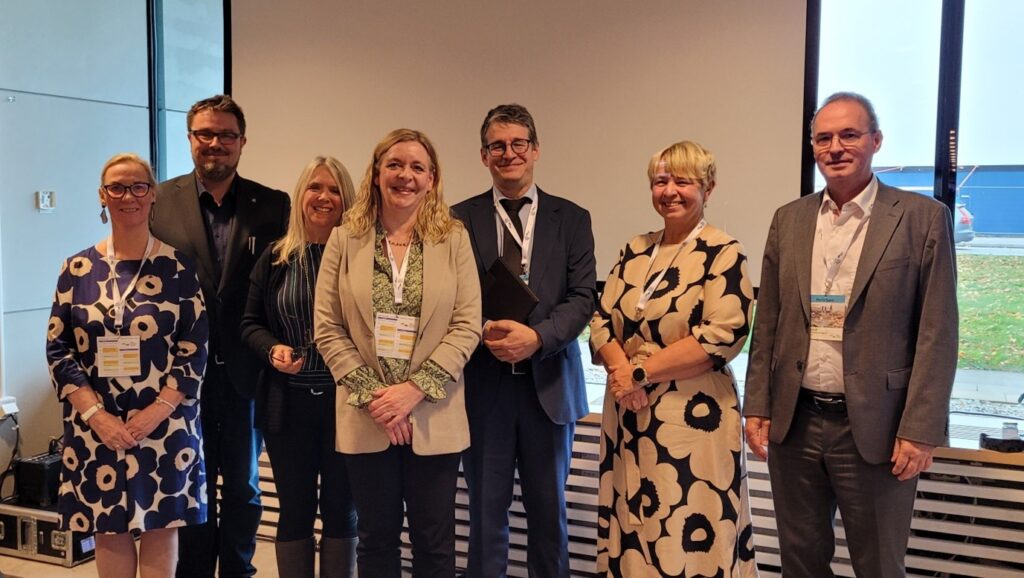
The Baltic Sea Region’s role in EU innovation was a central theme at the seminar. As Jonas Lundström, Region Västerbotten, emphasized, “The EU needs the Baltic Sea Region to deliver its competitiveness goals. And the Baltic Sea Region needs Cohesion Policy, S3 and the Macro-regional Strategies to deliver this!” Jonas Lundström also noted, “The post-2027 S3 requires a design upgrade to respond to a new era of EU challenges, such as defense and security”, reflecting the need for a post-2027 Smart Specialisation upgrade, responding to new EU priorities.
The Baltic Sea Region was highlighted as a natural testbed for cross-border collaboration and cutting-edge innovation. Tarja Nuotio, Region of Southwest Finland, highlighted the importance of multi-level governance: “Multilevel governance is a special and intrinsic value for the Baltic Sea Region – let’s use it to foster innovation!”
To maximize the impact of innovation investments, participants advocated for a more efficient allocation of resources and better coordination of funding programmes. Jens Unruh, Brandenburg, suggested that “Baltic Sea Region -driven interregional innovation collaboration could be boosted by improved structures to help regions to synchronise regional funding calls.”
Tiina Rajala, Council of Oulu Region, echoed this sentiment, stating, “We must strengthen how we connect S3 across the Baltic Sea for more strategic, impactful innovation cooperation.”
A recurring theme throughout the seminar was the need for a more integrated approach to EU policymaking. As Jorge Nùñez Ferrer, CPMR, pointed out, “Cross-regional cooperation should be a priority in Cohesion Policy, not a side dish.” He emphasised the need for policies that are designed with a territorial perspective, taking into account the specific needs and challenges of regions, and building critical mass through improved alingment of efforts.
Participants also highlighted the need to address wider bottlenecks across the Baltic Sea Region, such as the lack of resources and the need for better cooperation between entrepreneurs, universities, and other stakeholders. There was a consensus that a more flexible approach to EU programmes, combined with long-term investments, is necessary to optimise regional development and ensure the engagement of all local stakeholders, not least citizens who must be better engaged in fundamental change processes, linked to Green Deal and a new era of EU Economic Security.
As the EU prepares for the next programming period, the Baltic Sea Region is well-positioned to shape the future of regional innovation policy. By emphasising place-based approaches, cross-border and interregional collaboration, and multi-level governance, the macro-region can champion a place-based drive across the EU for a more innovative, resilient, and sustainable Europe.
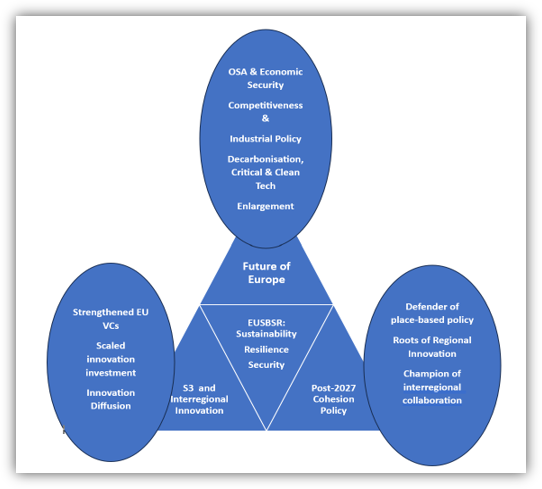
As the EU navigates its future direction, the Baltic Sea Region S3 Directors’ Network is ready to seize the opportunity to strengthen its position as a leader in regional innovation and cooperation and are preparing a position paper about the post-2027 Cohesion Policy and S3 agenda The paper will be available from mid-November 2024. The diagram below reflects the key themes in this paper.
The BSR S3 Directors’ Network: A Catalyst for Regional Innovation
The Baltic Sea Region (BSR) S3 Directors’ Network is a dynamic platform that brings together nine regional directors from across the Baltic Sea to drive and foster collaboration. Building on the EU’s Smart Specialisation Strategy (S3), the network aims to strengthen the macro-region’s position as a global innovation hub focusing on place-based innovation policy design to strengthen joint action.
The session was organised by the BSR S3 Directors Network through Region Västerbotten and South West Finland, CPMR BSC and Policy Area Innovation
If you would like to receive a copy of the paper mentioned above, please contact marta.bahta@regionvasterbotten.se