
 Back
BackAnnual Forum 2024: Have your say on Interreg funding in the Baltic Sea Region after 2027
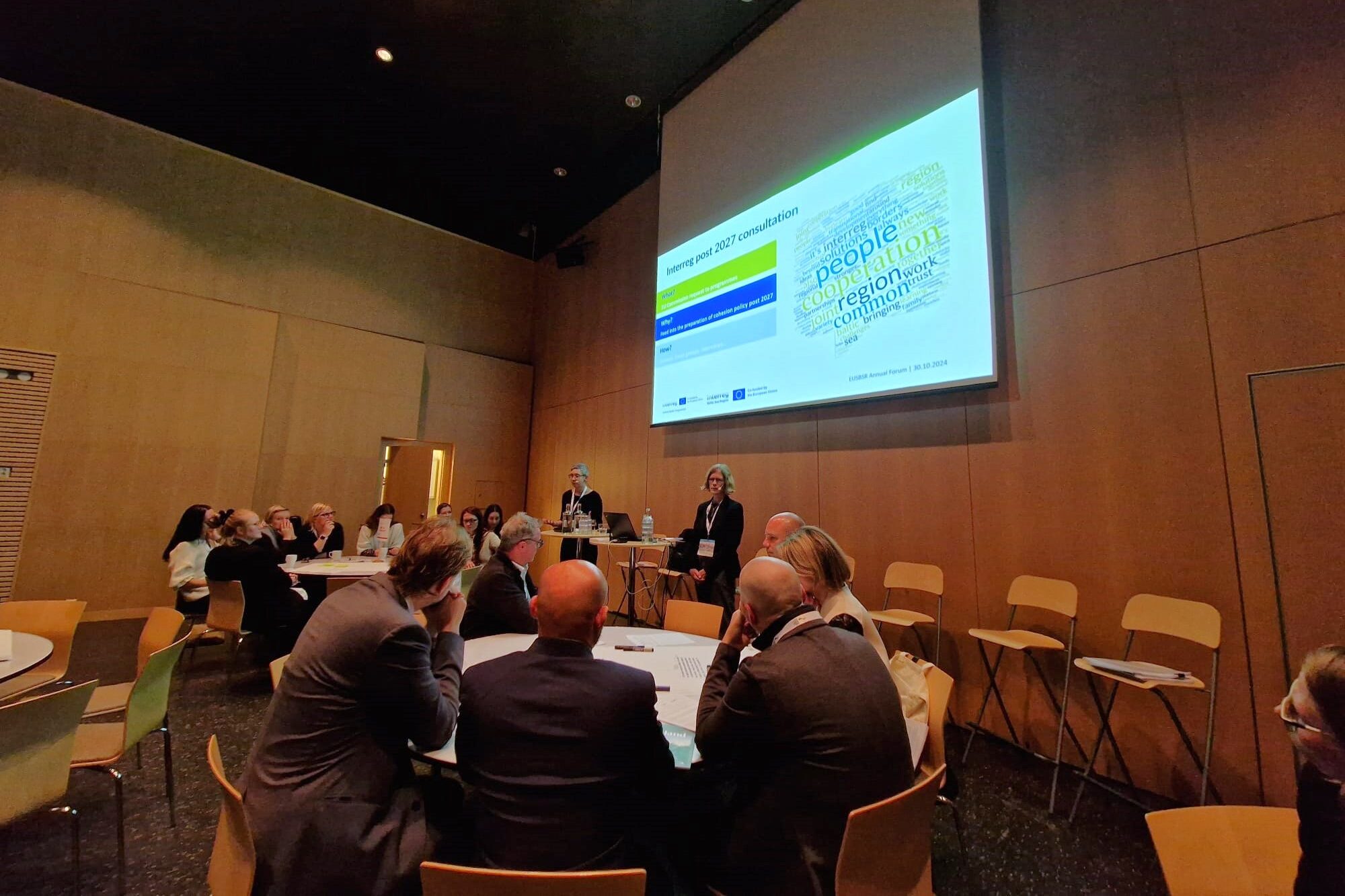
Interreg Baltic Sea Region and Central Baltic programmes organised a workshop as part of the Annual Forum to discuss the outcomes of the stakeholder consultations of Interreg Baltic Sea Region and Central Baltic about the future of transnational and cross-border cooperation in the Baltic Sea region.
Transnational and cross-border cooperation is essential for strengthening the resilience and security of the region, improving the environmental state of the Baltic Sea and securing a green transition in the region. The 70 participants of the workshop “Have your say on Interreg funding in the Baltic Sea Region after 2027” confirmed these conclusions from the stakeholder consultations of Interreg Baltic Sea Region and Central Baltic Programmes. The round tables at the workshop discussed statements from the consultations that the Programmes have carried out during 2024 about the need for cooperation in the future.
A broad perspective on security and resilience
Strengthening security and resilience was strongly confirmed as an important theme for the future transnational Interreg programme. The scope should be kept wide and flexible enough to respond to new developments during the next funding period. A common vision for resilience and security in the Baltic Sea region emerged as one of the ambitions. Engaging youth was emphasised as essential for achieving this goal. Another aspect that was brought out was that also regions without higher education institutions should be involved in cross-border cooperation projects.
The most effective measures to secure the environment
When discussing cross-border cooperation for a better Baltic Sea environment, participants highlighted the need to measure impact even after an intervention has ended to ensure the spread of the most effective methods. Funding would also be needed to spread best practices, not only for testing new innovations. Further, the need to better engage the policy level was brought up as currently “if it’s not forbidden, it’s unfortunately allowed.” The group discussing transnational cooperation for better water management and biodiversity concluded: “We must view the environment as a key stakeholder”. A cross-sectoral approach and preventive mindset were seen as essential, too.
Cross-sectoral partnerships for green transition
The group considering the green transition from the transnational cooperation point of view called for a broad approach to funding, including new topics like smart grids, mineral harvesting, and carbon capture and storage. They saw a need for visible results, improved access to policymakers, a focus on inhabitants, and more scalable projects. Harmonization of the vocabulary across programmes would help the applicants. Cross-sectoral partnerships involving companies and research institutions, as well as policy makers were considered important to achieve tangible results towards green transition in cross-border cooperation. To attract companies to implement publicly funded innovation projects, it was considered important to provide partnerships with an operational environment where they could achieve and see real results. Implementing pilots and scaling up the results would be an integral part of the project set-up.
The EU Commission initiated the stakeholder consultations to be carried out by Interreg Programmes. The aim is to find out the future needs for Interreg and so support the preparation of the proposals for the Cohesion Policy post-2027. Interreg Baltic Sea Region and Central Baltic Programmes will consider the workshop outcomes as part of their consultation process when compiling the reports on stakeholders’ views by the end of the year.