
 Back
BackCelebrating the Macro-Regional approach – joint high-level event at the European Week of Regions and Cities
EUSBSR was selected to be part of the 22nd edition of the European Week of Regions and Cities in 2024. This is the biggest annual Brussels-based event dedicated to cohesion policy, and a relevant place to discuss also the territorial strategies. Together with Conference of Peripheral Maritime Regions (CPMR), the Baltic Sea Strategy Point organised a session on regional cooperation and the role of macro-regional strategies.
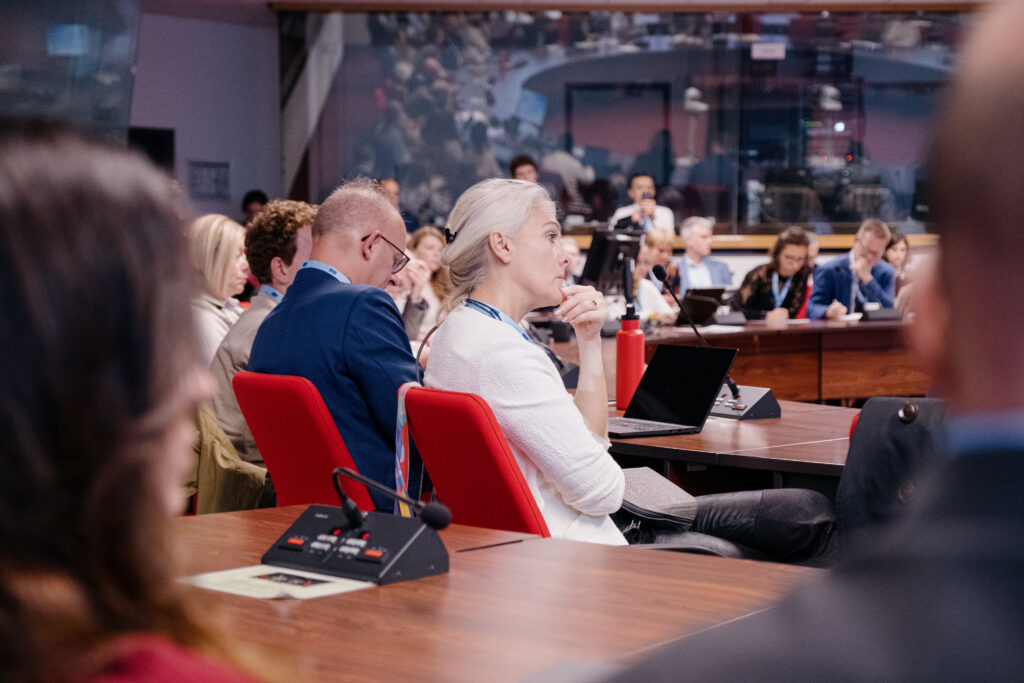
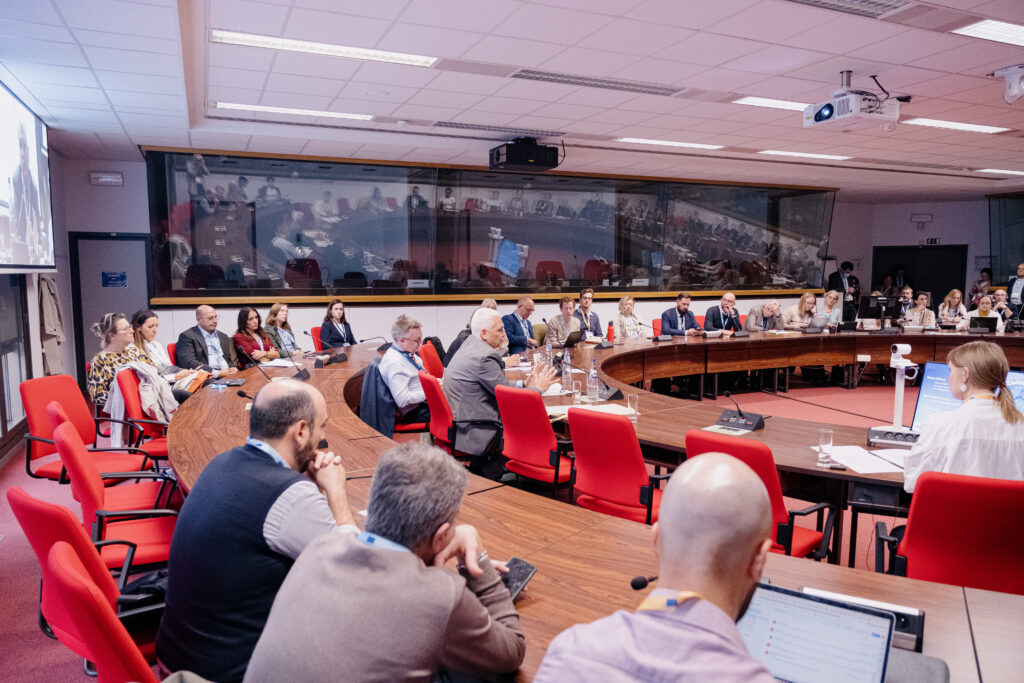
Room 3A of the European Commission’s Borschette-Building in Brussels was full to the brim in the afternoon of Tuesday 8 October. Stakeholders from all over Europe had come together to celebrate and discuss one of the EU’s less known, but all the more important territorial cooperation strategies: The Macro-Regions. For over 15 years, the strategies have allowed stakeholders join forces and pool resources and knowledge to achieve results of macro-regional importance with high EU added value. Focal points of the discussion where the origins of the territorial cooperation concept and its future potentials. The topic was discussed also from the perspective of the emerging Macro-Regions the Mediterranean and Atlantic. This event was organised within the 2024 European Week of Regions and Cities by the Baltic Sea Strategy Point (BSP) – support unit for EU Strategy for the Baltic Sea Region (EUSBSR) and the Conference of Peripheral Maritime Regions (CPMR).
The discussion kicked off by highlighting the achievements of the EU Strategy for the Baltic Sea Region (EUSBSR). Despite being the oldest Macro-Regional Strategy and remaining the most important framework of cooperation in the Baltic Sea Region, the EUSBSR like any other structure has to work tirelessly to sustain its relevant also in the future. Urgent environmental challenges, addressing social and territorial cohesion, contributing to the economic success of the region and to the competitiveness of the EU are just as important today as at its establishment in 2009. The achievements and lessons learnt from this now well-matured strategy prove valuable for the reform of existing and the potential establishment of new Macro-Regions.
This links closely to the work of the CPMR, which has been closely involved in the creation of all existing and emerging Macro-Regional strategies since the early 2000s. The discussion continued to highlight that today more than ever, the current geo-political context in Europe calls for reinforced cooperation at all levels. Regional development cannot be understood without territorial cooperation which is at the heart of the European Project. CPMR believes that Macro-Regional Strategies provide a deep cooperation approach and allow for the implementation of multi-level governance, given a rightful role to local and regional authorities. In this line, strong efforts have been taken from the CPMR towards the development of a Mediterranean Macro-Regional Strategy and an Atlantic Macro-Regional Strategy.
Representatives from the CPMR Intermediterranean Commission and CPMR Atlantic Arc Commission were accompanied by Moray Gilland, Head of Unit in charge of Macro-Regions (DG REGIO), in a panel moderated by Anja Karppinen, Communication Officer of the Baltic Sea Strategy Point. The audience spanned from regional authorities and European networks to stakeholders from civil society and representatives from territorial cooperation structures.
Fokion Zaimis, Deputy Governor of Achaia of the Region of Western Greece, Vice-President of the CPMR Intermediterranean Commission emphasised: “Macro-Regional strategies have done a great deal to promote transnational integration and multi-level governance in the EU and beyond. A Europe of Macro-Regions can increase the resilience of the EU and non-EU members as a whole by increasing cooperation, strengthening capacities at all governance levels as well as the relations of EU with non-EU members”.
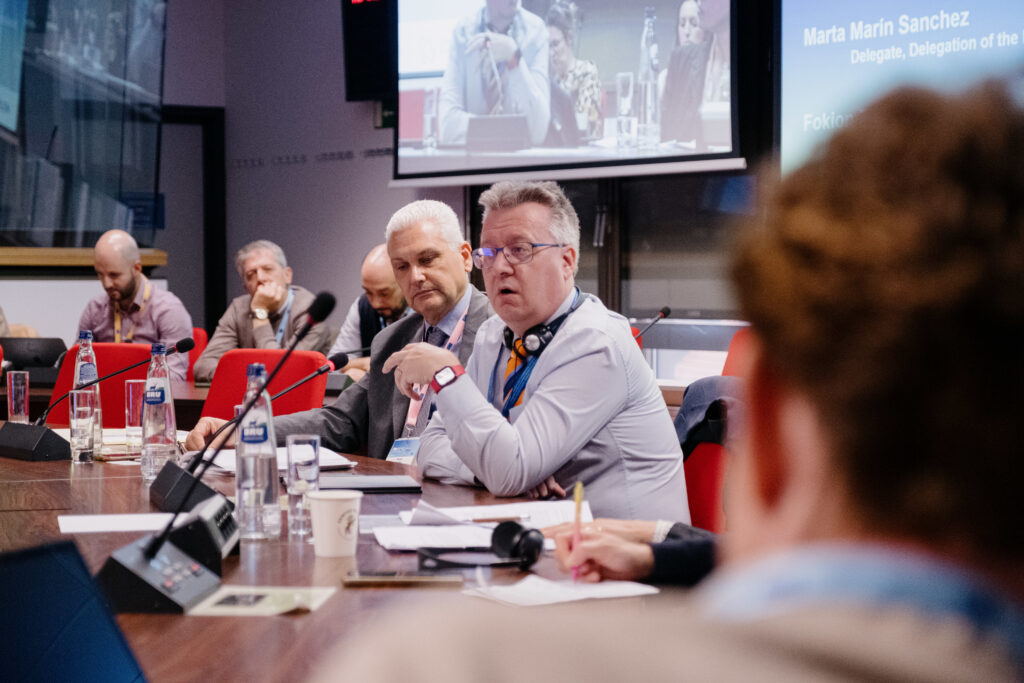
Marta Marín Sanchez, Delegate of the Basque Country to the EU, Vice-Presidency of the CPMR Atlantic Arc Commission added: “The idea of establishing an Atlantic Macro-Regional Strategy is not just a strategic vision, but an urgent necessity to identify flagship common projects to tackle challenges that affect Atlantic territories. It presents a unique opportunity to settle a multilevel governance-based cooperation, to align policies, pool resources and collaborate with the EU institutions in ways that no single country or region could achieve independently”.
From his side, Moray Gilland highlighted the benefits of Macro-Regional Strategies to bring people and territories together to talk, cooperate, and dialogue: “The more you work on all types of cooperation, the more you see the benefits of it. Nobody works in isolation anymore. It is not easy and straightforward, but it is rewarding for the citizens that benefit from it”.