
 Back
BackCPMR Baltic Sea Commission regional representatives call for a stable, secure and resilient Baltic Sea Region
Gathered in Kotka for the 29th General Assembly of the CPMR Baltic Sea Commission at the invitation of Ms Henna Hovi (Member of the Board of Kymenlaakso Region), regional leaders from 20 regions from Estonia, Finland, Germany and Sweden discussed the topics of security and cooperation in the Baltic Sea Region. Regional representatives adopted the Kotka Resolution, that details their joint vision for the Baltic Sea Region, addressing new EU leaders, following the EU elections in June 2024.
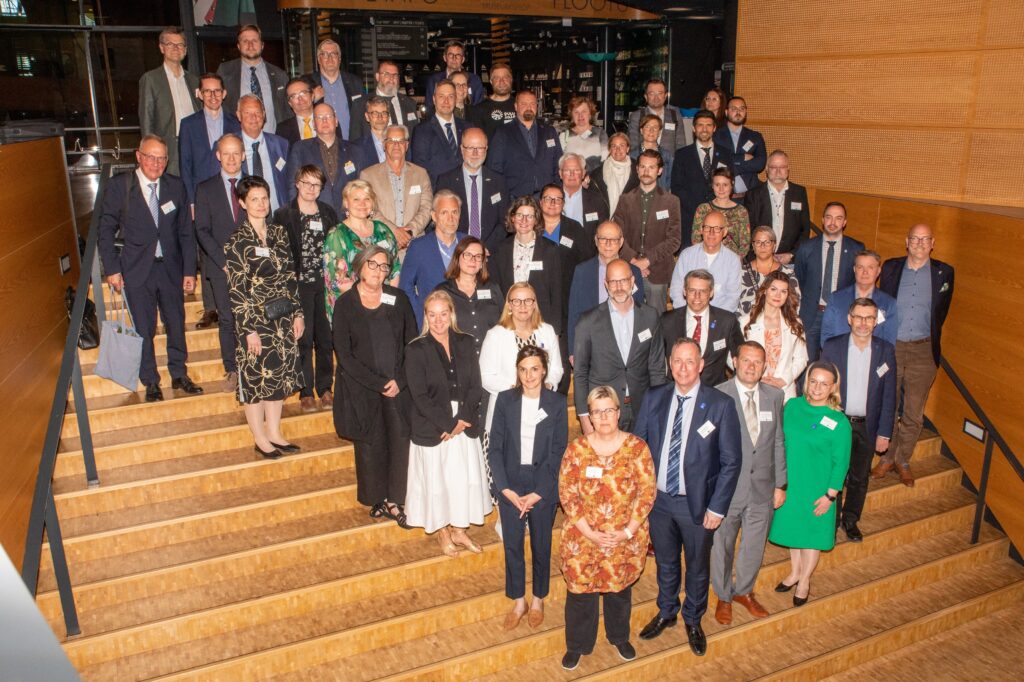
At the occasion of the CPMR Baltic Sea Commission General Assembly, regional representatives discussed pressing challenges that require a joint response, such as the fight against climate change, protecting the Baltic Sea environment, territorial accessibility, and energy security. Discussions focused also on the specific challenges faced by border regions, including Kymenlaakso, due to the geopolitical shift and closed borders with Russia. Economic slowdown, decline of transport traffic, and a decrease in the number of tourists have all had negative consequences for border Regions. Building a resilient future for Easter border regions is essential.
BSC regional leaders reaffirmed their willingness to work together for a more balanced territorial development in the Baltic Sea Region. They also called on the new EU leaders to develop an ambitious future generation of EU policies with regions fully involved in their design and implementation. These policies should serve a long-term EU agenda, supported with adequate funding.
Discussing with Mr Petri Koistinen, Policy Officer at the European Commission (DG REGIO), regional representatives also called for an ambitious Cohesion Policy post-27 that is in line with the shared-management, subsidiarity and multilevel governance principles. President of the CPMR Baltic Sea Commission, Mr Tomas Mörtsell, (Region Västerbotten) stressed “EU Cohesion Policy stands as a cornerstone of long-term investment, deeply rooted in the EU Treaties and plays a pivotal role in achieving balanced territorial development across the Union. This Policy has contributed to the development of the Baltic Sea Regions and must continue to do so in the future!”.
Furthermore, there was a unanimous call from the BSC regions to safeguard a strong Interreg programme in the future, as a key enabler for regional cooperation. BSC Members also welcomed the revision of the EUSBSR Action Plan and committed to provide regional input via a dedicated BSC Task Force. Ms Anja Karppinen from the Baltic Sea Strategy Point presented the calendar of the revision process and the milestones, including the EUSBSR Annual Forum 2024 in Gotland that will address sustainability, resilience and security in the Baltic Sea Region.
Besides the BSC Kotka Resolution 2024, during the General Assembly BSC regions also adopted a Policy Position Paper on hydrogen “Unleashing the clean hydrogen potential of the Baltic Sea Regions to contribute to the decarbonisation of Europe”, and on Arctic issues “Harnessing the potential of the just green transition and securing the stability of the European Arctic”.
The General Assembly of the CPMR Baltic Sea Commission re-elected Mr Tomas Mörtsell (Region Västerbotten), as President of the CPMR Baltic Sea Commission for 2024-2026, and Member Regions elected Ms Talvikki Jori (Member of the Board of Southwest Finland) as 1st Vice-President and Mr Romek Kosenkranius (Mayor of Pärnu, Association of Estonian Cities and Municipalities) as 2nd Vice-President.
Read more about the CPMR Baltic Sea Commission General Assembly here. Read about the CPMR Baltic Sea Commission Summer newsflash, including information about the CPMR BSC activities during the EUSBSR Annual Forum 2024, here