
 Back
Taking catchment-based water management forward
How can cooperation around catchment-based water management move from individual projects towards a more lasting Baltic Sea Region network?
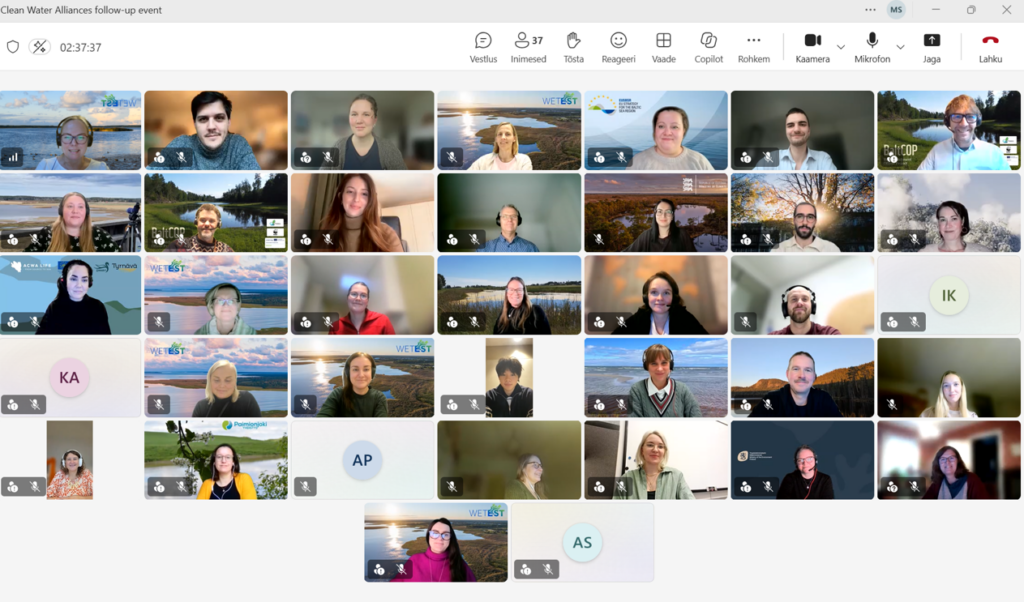
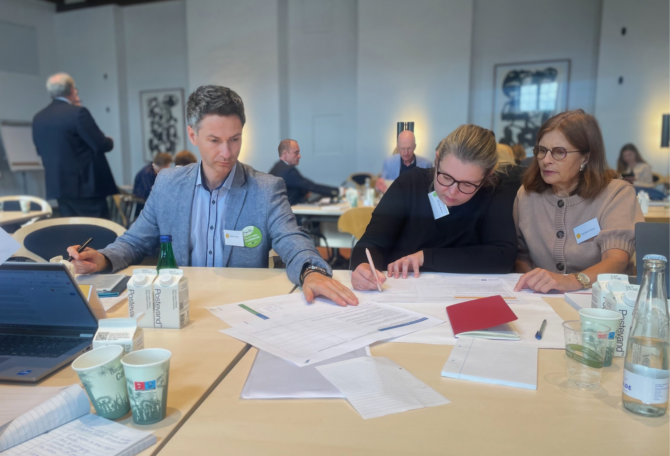
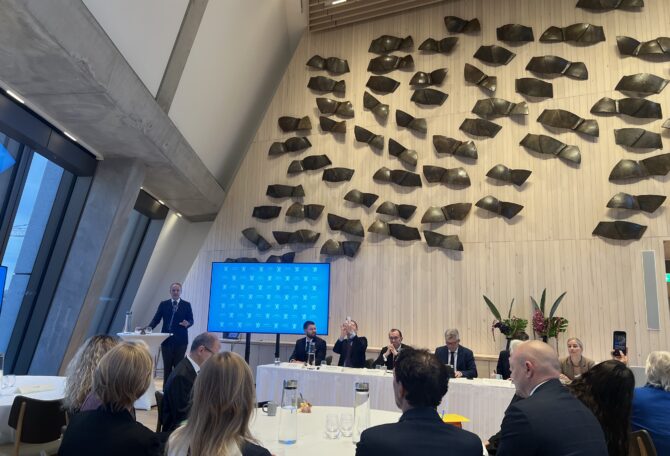
This was the question at the heart of the Clean Water Alliances follow-up event on 11 November 2026. The online meeting continued the discussions started at the Clean Water Alliances event in Tallinn in May, bringing together catchment officers, projects, authorities and other experts to exchange experiences and consider practical next steps for cooperation across the Baltic Sea Region.
The follow-up was organised by EUSBSR Policy Areas Nutri and Hazards together with SIP LIFE WetEST, SIP LIFE ACWA and Interreg Central Baltic project BaltCOP. The programme combined practical experiences from catchment officers with discussion of the newly released BaltCOP Catchment Officer Guidebook, hazardous substances, funding and the future of pan-Baltic cooperation.
The meeting returned to an important message from Tallinn: while countries and catchments have different governance structures and local circumstances, many of the practical challenges faced by catchment officers are remarkably similar. That creates a strong case for learning from each other instead of developing solutions separately.
Catchment officers connect plans with action
Experiences presented from Estonia, Finland and Sweden showed how central coordination can be for turning water management objectives into practical measures.
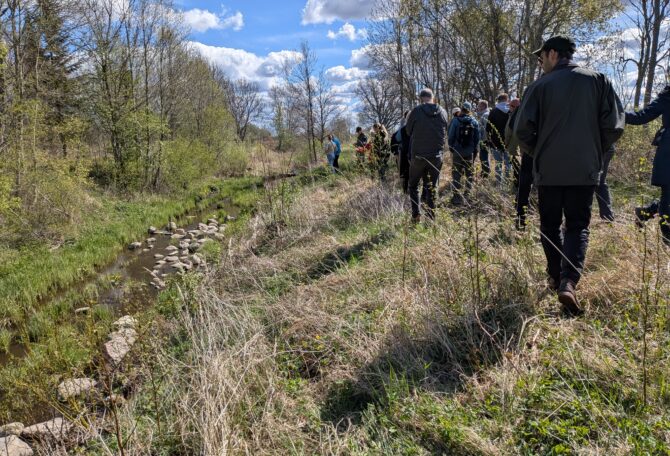
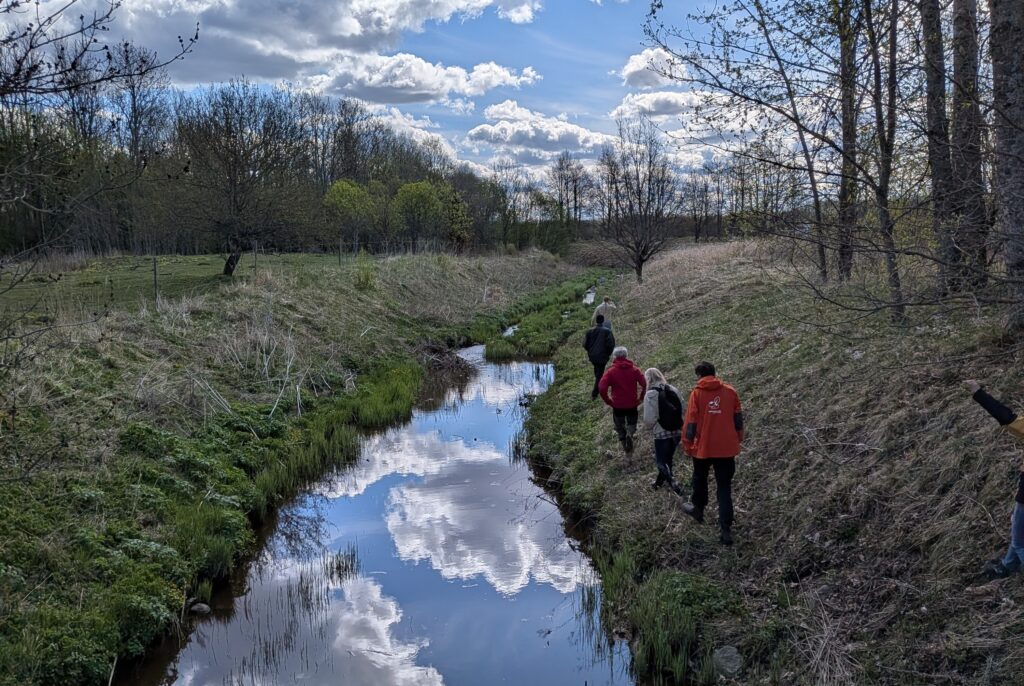
A concrete example came from the River Paimionjoki catchment in Finland. The Paimionjoki Association works across municipalities and brings together landowners, authorities, NGOs and researchers. Local presence and long-term relationships were highlighted as particularly important, as implementing measures on private land depends on trust and understanding local conditions.
The experience also illustrates that coordination is not only about planning. Over the previous two years, the work had moved from identifying priority areas and contacting landowners to designing and implementing practical water protection measures. At the same time, maintaining this momentum requires long-term coordination, continued engagement with landowners and the ability to scale individual measures towards catchment-wide impacts.
These experiences were closely reflected in the new BaltCOP Catchment Officer Guidebook presented during the event. The guidebook gathers practical knowledge from Sweden, Estonia and Latvia and follows the process from initial dialogue through planning, permitting and implementation to the maintenance of completed measures.
Its conclusions point to a broader challenge: coordination capacity can itself become a bottleneck. Relationships and local knowledge take time to build, meaning that catchment coordination needs to be viewed as a longer-term function rather than simply an activity attached to an individual project. The guidebook also emphasises the value of practical tools and cross-border knowledge-sharing so that new catchment officers do not have to start from scratch.
There is no single model for a catchment officer
The discussions also made clear that sharing experience does not mean creating one uniform model. Participants discussing the guidebook stressed that catchment officers perform broadly similar functions, but their specific tasks and ways of working can differ considerably between countries and even between catchments. Guidance therefore needs to provide principles that can be adapted to local circumstances rather than prescribe exactly how the work should be carried out.
One area nevertheless stood out across very different contexts: the human side of catchment work. Building trust with landowners and communities, handling conflicting interests and finding ways to bring people around shared objectives are essential parts of the role. Participants therefore saw a need for practical support not only with technical water management questions, but also with communication, difficult conversations and conflict management.
This may be one of the strongest arguments for regular exchange between catchment officers. The methods themselves cannot simply be copied from one country to another, but experiences of building cooperation can still save others time and help improve practice.
Broadening the approach to hazardous substances
Another discussion explored what the catchment approach could mean for hazardous substances. Participants highlighted challenges related to insufficient data, monitoringand identifying the sources and pathways of hazardous substances. Experiences from Poland included work to connect risk-based approaches with permitting and modelling the transport and spread of hazardous substances in surface and marine waters. The discussion also showed that such models are closely tied to local conditions including flows and land use and therefore cannot automatically be transferred between countries.
At the same time, participants were clear that catchment officers cannot be expected to become specialists in every aspect of hazardous substances. Their role could instead be to recognise relevant issues, help initiate cooperation and guide landowners towards the right expertise and information. This underlines the wider coordinating role of the catchment officer: connecting local needs with specialist knowledge rather than trying to provide every solution themselves.
Long-term work needs long-term resources
Funding remains one of the central challenges. The discussions identified two broad approaches currently available: continued project funding and greater use of blended models combining public or EU resources with corporate contributions. Participants noted, however, that shrinking public funding and repeated project applications make continuity difficult, while corporate actors may be more interested in concrete and visible measures than in financing long-term coordination.
One possibility discussed was to use smaller corporate investments in concrete restoration measures as an entry point for longer-term cooperation. Catchment officers could help connect separate measures into a wider catchment-scale portfolio, making their cumulative environmental and economic value more visible. Over time, cooperation between restoration practitioners and companies could provide a basis for developing blended funding models supporting both practical measures and coordination.
The future-oriented discussions reinforced the same message: permanent or longer-term financing is needed not only for catchment officers themselves, but also for measures, monitoring and research into their effects. Better evidence can in turn help identify effective interventions and communicate their benefits to stakeholders.
Building a Baltic network
Perhaps the clearest message from the November meeting was that participants want the cooperation to continue. Ideas discussed for the future included more systematic sharing of good practices, stronger links between practitioners and researchers, regular webinars and meetings, and better support for developing the competencies of catchment officers. Participants pointed to existing cooperation models where annual meetings are combined with continuous exchange throughout the year as possible inspiration.
An important next step is already emerging. BALCON, the Baltic Catchment Officer Network project funded by the Swedish Institute, is planned to start in 2027. Further exchanges are expected, with the next face-to-face opportunity during the BaltCOP final conference in Nyköping, Sweden, on 13–15 April 2027.
The direction emerging from Clean Water Alliances is therefore not towards a single Baltic model for water management. Rather, it is towards a shared space for learning: one where catchment officers, authorities, projects, researchers and other actors can compare approaches, develop practical tools, identify common policy and funding challenges and build cooperation that lasts beyond individual projects.