
 Back
Age-friendly workplaces: experts assess 19 policy proposals
How can we help people stay well and keep working as they grow older?
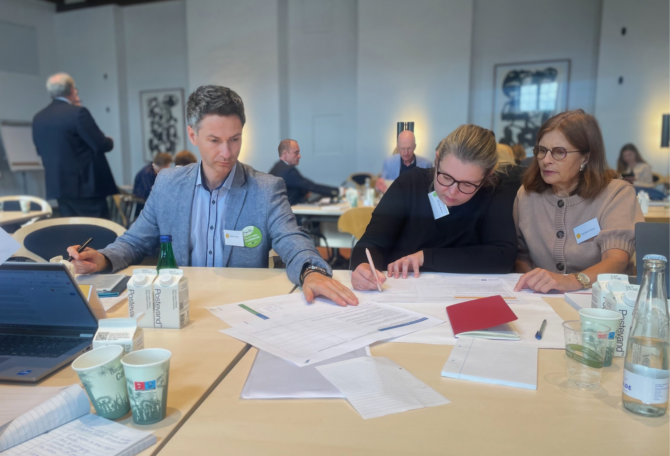
On 4 November 2026, the Solutions for Age-Friendly Employers (SAFE) project brought together nearly 50 experts from Estonia, Finland and Sweden to assess policy proposals for age-friendly working conditions. The online workshop examined two questions for each proposal: how much difference could it make, and how feasible would it be to put into practice?
The online workshop, Age-Friendly Workplaces: Ideas for Action, focused on how policy can help people aged 55+ stay in employment. The SAFE project focuses on health and social care, but the discussion showed that many of the questions apply across sectors. Can employees access training throughout their careers? Can they adjust their work when their needs change? And what support do managers need to make those changes possible?
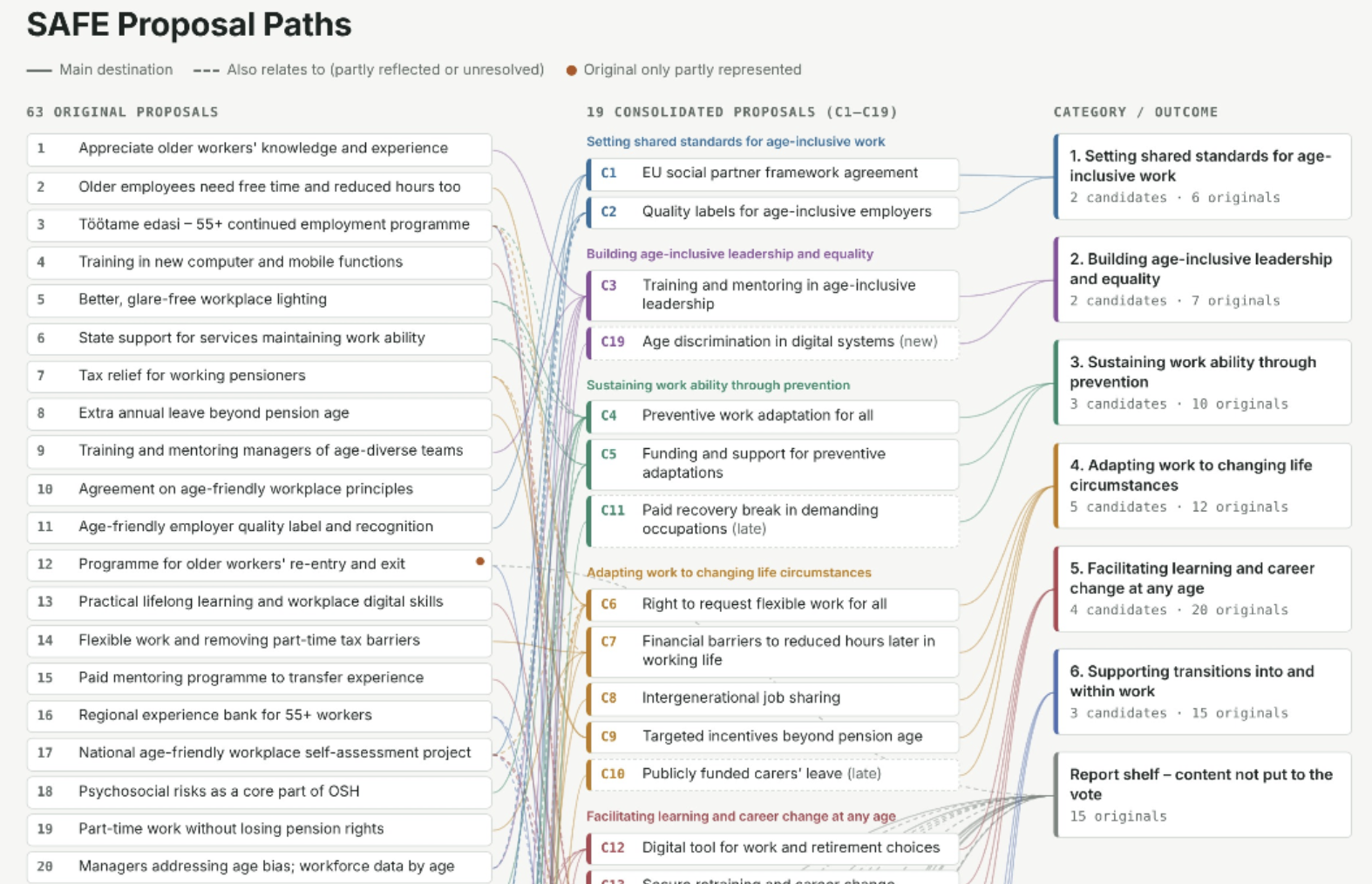
From 63 ideas to 19 policy proposals
Ahead of the workshop, 51 experts from the three countries submitted 63 ideas. The SAFE team combined complementary ideas and organised them into 19 proposals across six themes. These covered shared standards for age-inclusive work, leadership and equality, prevention and work ability, flexibility as life circumstances change, learning and career change, and support for transitions into and within employment. The original ideas remain documented and will inform the wider SAFE report.
The team used an adapted method of concept mapping to evaluate the ideas. Participants rated each proposal on two separate scales from 1 to 10: its expected impact on age-friendly working conditions and its feasibility.
What stood out in the workshop discussion
The panel reflected on the initial ratings and what they could mean for policy. Five themes stood out in the workshop discussion.
- Learning and career guidance should continue throughout working life. Regular career conversations can help people consider training or a change of role before they reach a point where staying in their current job becomes difficult. The proposals included equal access to training during paid working hours and financial support and job protection for people who take time to retrain.
- Managers need practical support to lead teams of different ages. Age-related barriers can go unnoticed in everyday decisions about training, work assignments or career development. One proposal called for training and mentoring to help managers recognise age bias and respond to the needs of an age-diverse workforce.
- Employers and public authorities both have a role. Employers can review job design, offer more flexible schedules and adapt working conditions early to help people maintain their ability to work. Public authorities and social partners can help make those changes possible through funding, advice and policy. One proposal, for example, called for free advice and financial support for preventive workplace adaptations, particularly for small and medium-sized employers.
- Colleagues of different generations can learn from each other. The proposals included structured, two-way mentoring during paid working hours and job sharing that would give experienced employees time to pass on skills as they reduce their hours. These approaches can help organisations retain knowledge while giving employees more options as their needs change.
- Age-friendly working conditions matter across sectors. Access to learning, flexible schedules and early adjustments to working conditions are relevant wherever people need to adapt their work over a longer career. The workshop drew on SAFE’s focus on health and social care while considering proposals that could apply more widely.
From workshop ratings to policy recommendations
The workshop gave SAFE a first view of how experts assessed the proposals and where further discussion is needed. The project will analyse the ratings in more detail and use them, together with the original submissions and the panel discussion, to shape policy recommendations for employers, social partners and decision-makers.
The final report of the policy recommendations will be available in January 2027.
Thank you to the speakers, panellists and experts who shared their ideas and took part in the rating exercise, and to the team who made the workshop possible: Marika Aedviir, Peep Peterson, Tiina Alasoo, Krista Mulenok, Pille Strauss, Ülla-Karin Nurm, Emily Maresch, Heini Maisala and Liisa Nuutinen. We also thank Grete Strandberg and Datafox OÜ for their work on the voting platform.
About SAFE
SAFE – Solutions for Age-Friendly Employer supports age-friendly working conditions for employees aged 55 and over in health and social care. Running from April 2024 to March 2027, the project brings together Tallinn University Haapsalu College (Estonia), Metropolia University of Applied Sciences (Finland), Golden League (Estonia) and the Northern Dimension Partnership in Public Health and Social Well-being (NDPHS) (Sweden), which coordinates PA Health. The SAFE project is part of the BSR Mental Health Platform.

SAFE is co-funded by the European Union through the Interreg Central Baltic Programme.
Related content