
 Back
Back18th meeting of the High-Level Group on EU macro-regional strategies
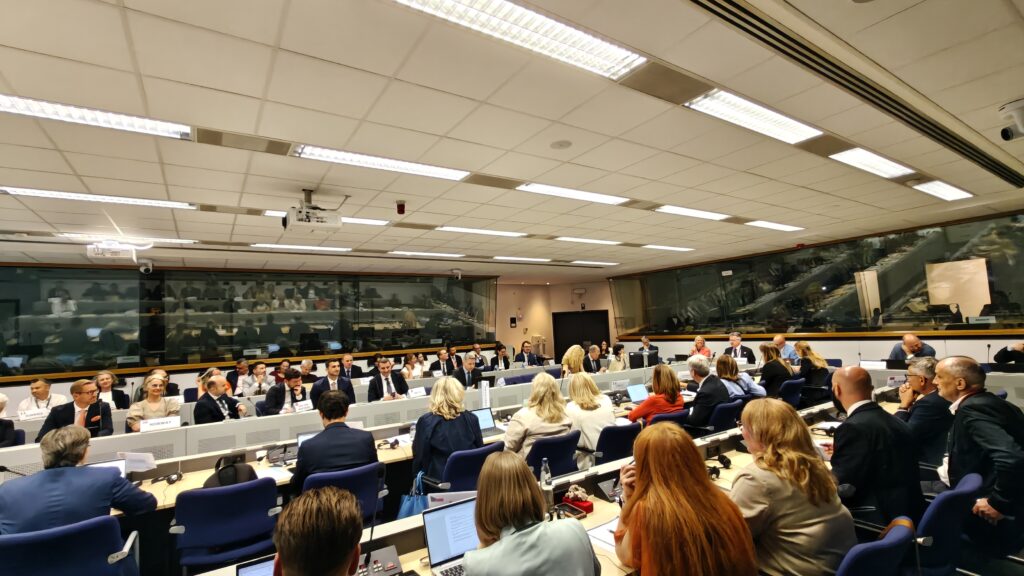
At the 18th meeting of the High-Level Group (HLG) on EU macro-regional strategies, the EU Strategy for the Baltic Sea Region emphasised the role of macro-regional strategies in strengthening the future cohesion policy. The Strategy also highlighted the need for clearer coordination between the increasing number of strategic frameworks operating in the same geographical areas.The discussion also covered Europe’s wider landscape of strategic frameworks. As new issues and strategies emerge this role of the macroregional strategies coordinating the work with many organisations, programmes and policy processes is increasingly important.
The High-Level Group on macro-regional strategies is an EU-level body advising the European Commission on the coordination and monitoring of the four EU macro-regional strategies. It consists of official representatives of all EU Member States and the non-EU countries participating in the macro-regional strategies. Other EU institutions are also invited to contribute to its discussions. The 18th meeting was held on 7 July 2026 in Brussels and chaired by the European Commission’s Directorate-General for Regional and Urban Policy. The EU Strategy for the Baltic Sea Region was represented by the Danish National Coordinator and this year’s Presidency, Bjarke Brix Olsen, from the Danish Ministry for Foreign Affairs.
For more information on the High-Level Group, go here.
The points below reflect contribution to the discussions by the Danish Presidency of the Strategy.
Macro-regional dimension of future cohesion policy
- The current programming period has confirmed that macro-regional strategies are most effective in defining shared regional priorities, connecting different levels of governance, generating cross-policy initiatives, guiding funding choices and turning project results into policy influence.
- The strongest role of macro-regional strategies is coordination across administrative, policy and funding silos. Regional challenges cannot be solved by one country, ministry, municipality, programme or organisation alone.
- Through its 14 Policy Areas, the EUSBSR convenes relevant actors, translates EU and regional priorities into shared Baltic Sea Region outcomes, identifies where mandates and funding instruments need to connect, and supports the development of joint initiatives and project pipelines.
- Adequate governance support is essential for effective coordination. The establishment of the Baltic Sea Strategy Point has helped fill an important coordination and support gap, demonstrating the value of stable governance structures for the implementation of the Strategy.
- Macro-regional strategies can strengthen cohesion policy after 2027 if their role is clearly recognised in the future regulatory and funding framework. Without such recognition, it will be more difficult to connect national and regional investments to shared transnational priorities.
- To secure financing opportunities beyond 2027, macro-regional strategies should become more visible, evidence-based and investment-ready platforms for implementing EU and national priorities.
- The preparation for the next funding period should move from broad priority lists towards portfolios of concrete and fundable initiatives that can be reflected in national, regional and Interreg programming processes.
- The EUSBSR is preparing thematic and funding dialogues to connect funding authorities and EU funding priorities with the Strategy’s Policy Areas and Actions. This can help translate Strategy priorities into proposals that are better suited to available funding instruments.
- Macro-regional strategies and Interreg have complementary roles. The Strategy provides the strategic framework and identifies longer-term regional objectives, while Interreg programmes finance cooperation projects and support Strategy governance.
- Early involvement of macro-regional strategy stakeholders in the preparation of post-2027 Interreg programmes can improve programme design, strengthen coordination between programmes and support a clearer division of tasks across the macro-region.
- The added value of macro-regional coordination is already visible in permanent cooperation platforms, contributions to EU and international policy processes, the transfer of solutions between countries and stronger links between Interreg, mainstream cohesion policy funds and sectoral policies.

The evolving landscape of strategic frameworks
- The Baltic Sea Region has a mature and extensive landscape of cooperation frameworks. The EUSBSR has provided an overarching framework for macro-regional cooperation for 17 years and remains the central reference point for cooperation under the objectives of Save the Sea, Connect the Region and Increase Prosperity.
- The EUSBSR does not operate in isolation. It works alongside complementary regional organisations and sectoral frameworks, including the HELCOM Baltic Sea Action Plan, the VASAB Vision 2040 and the long-term priorities of the Council of the Baltic Sea States.
- The diversity of strategic frameworks brings valuable expertise, political reach, funding links and established stakeholder networks. Different frameworks contribute different strengths in areas such as environmental protection, spatial planning, resilience, security, innovation and sustainable development.
- At the same time, the increasing number of frameworks creates a stronger need for coordination. Priorities, processes and stakeholder groups can otherwise develop in parallel, making it more difficult to understand the respective roles of different organisations and how their results contribute to shared regional objectives.
- A key challenge is institutional capacity. The same ministries, agencies, regional authorities, cities, experts and organisations are often involved in several parallel processes. Poorly aligned agendas can lead to participation fatigue and reduce the capacity to move from discussion to implementation.
- The updated EUSBSR Action Plan responds to this challenge through clearer Actions, impact pathways and indicators across the 14 Policy Areas. It helps connect broad strategic priorities with work plans, funding opportunities and measurable outcomes.
- Funding alignment is an important part of coherent implementation. As the EUSBSR has no dedicated budget, its priorities need to be connected to existing EU, national, regional and other funding sources.
- Closer cooperation between the EUSBSR, managing authorities and funding programmes can help ensure that shared regional priorities are reflected in calls, projects and investment decisions rather than remaining at the level of strategic discussion.
- Experience from the Baltic Sea Region shows that interaction between frameworks works best when it is based on complementarity and a clear division of labour. Policy Area Spatial Planning has, for example, contributed to ecosystem-based maritime spatial planning through cooperation with HELCOM and VASAB, while Policy Area Ship has helped connect discussions on green shipping corridors with existing regional platforms.
- Overlapping frameworks can create fragmentation when roles are unclear, but they can also create critical mass when their respective strengths are deliberately connected.